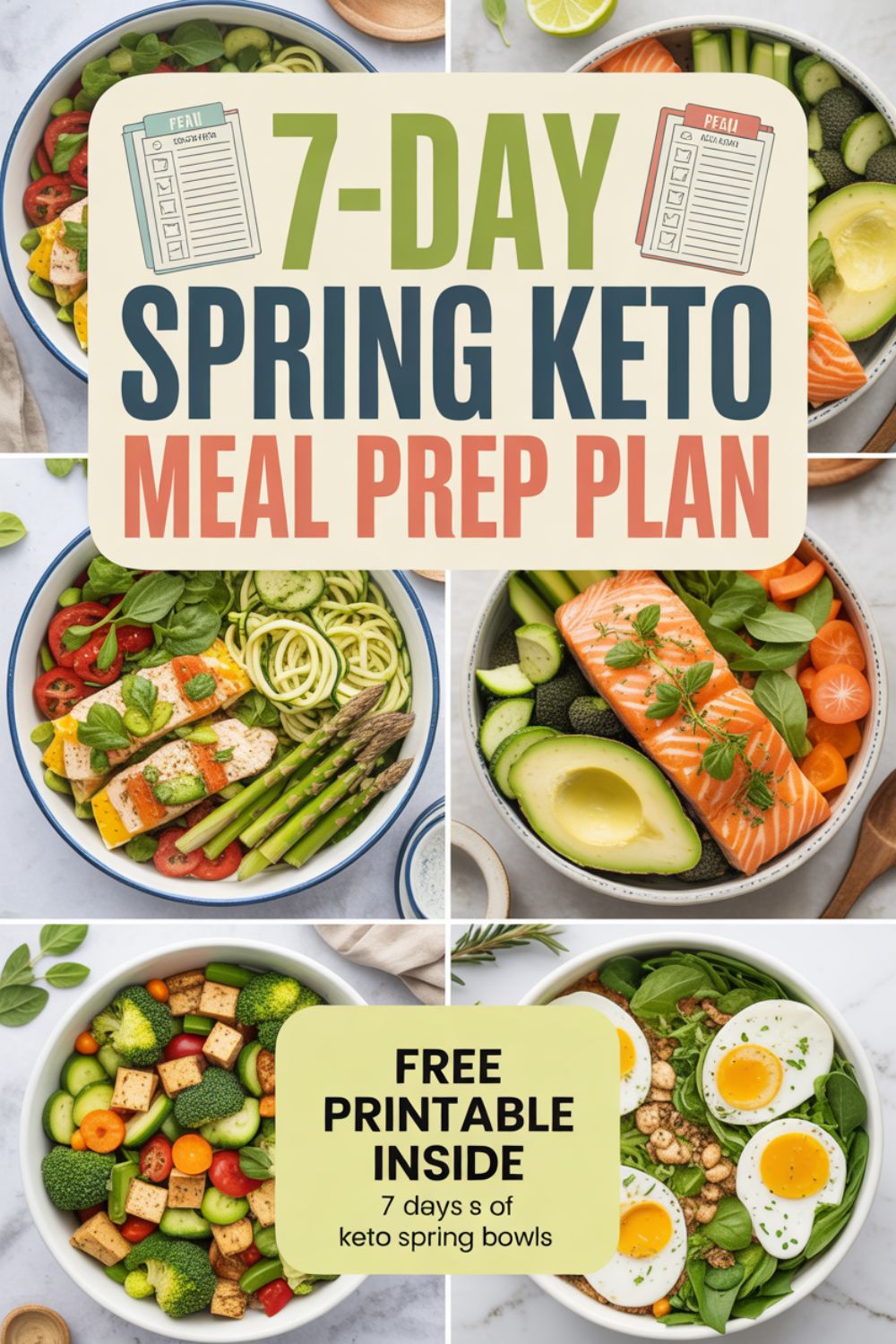
7-Day Spring Keto Meal Prep Plan (Free PDF)
Look, I’m just gonna say it—meal prepping saved my relationship with food. Not in some dramatic, documentary-worthy way, but in the everyday “I’m not standing in front of my fridge at 8 PM wondering what the hell to eat” kind of way. And when you throw keto into the mix? Game changer.
Spring’s the perfect time to reset your meal prep routine because honestly, who wants to eat heavy casseroles when the weather’s finally warming up? This 7-day spring keto meal prep plan is designed for real people with real schedules. No fancy ingredients you can’t pronounce. No spending your entire Sunday in the kitchen. Just solid, satisfying meals that’ll keep you in ketosis without making you feel like you’re missing out.
Here’s the thing about keto—it works when you stick with it, and you stick with it when it’s actually doable. That’s where meal prep comes in. Instead of making food decisions when you’re hangry and tired, you make them once a week when you’re thinking clearly. Trust me, future-you will thank present-you.
Why Spring Keto Meal Prep Actually Makes Sense
Spring produce is ridiculously good for keto. You’ve got asparagus, radishes, leafy greens galore, snap peas (in moderation), and fresh herbs that make everything taste like you actually know what you’re doing in the kitchen. Plus, lighter meals just hit different when it’s not freezing outside.
The ketogenic diet fundamentally shifts your body’s metabolism from burning glucose to burning fat for fuel—a state called nutritional ketosis. Research shows that this metabolic switch can reduce circulating insulin levels, enhance fat oxidation, and create conditions that benefit individuals with obesity, type 2 diabetes, and metabolic disorders. What’s particularly interesting about spring keto meal prep is that it aligns perfectly with seasonal produce that’s naturally low in carbohydrates.
But let’s be real—knowing keto works and actually doing it are two different things. That’s where batch cooking comes in clutch. Studies on meal preparation show that people who cook at home consume fewer calories, eat higher quality food, and have less weight gain over time compared to those constantly ordering takeout. When you prep your meals, you’re making rational decisions about portions and nutrition when you’re not starving.
I’ve learned the hard way that trying to prep seven days of identical meals is a recipe for boredom and eating out by Thursday. This plan uses strategic variety—same core ingredients, different flavor profiles. You’re not eating the same grilled chicken seven times. You’re eating Mediterranean-spiced chicken on Monday, then switching to garlic-herb Wednesday, then maybe a spicy chipotle version Friday.
The Spring Keto Meal Prep Philosophy
Here’s my approach, and you can fight me on this if you want: meal prep should save you time AND taste good. Revolutionary concept, I know. Too many keto meal prep guides give you recipes that are technically keto but taste like sadness. Or they’re so complicated that you need a culinary degree to execute them.
This plan follows three non-negotiable rules. First, every meal hits your macros without you needing to whip out a calculator every time you eat. We’re talking roughly 70-75% fat, 20-25% protein, and 5-10% carbs from quality sources. Second, prep time maxes out at 2-3 hours for your main session. If it takes longer than that, something’s wrong. Third, everything reheats well because nobody has time to eat cold food when they’re trying to get out the door.
When prepping for spring keto specifically, focus on ingredients that are in season and at their peak flavor. You’ll notice this plan leans heavy on leafy greens, cruciferous vegetables, and fresh herbs. That’s intentional. Spring produce not only tastes better but also tends to be cheaper when it’s in season. Win-win.
Your Spring Keto Macro Breakdown
Let’s talk numbers for a second, but I promise to keep it simple. For a standard 2000-calorie keto diet, you’re looking at about 165 grams of fat, 125 grams of protein, and 25 grams of net carbs per day. That breaks down to roughly 55-60 grams of fat, 40-45 grams of protein, and 8-10 grams of net carbs per meal if you’re eating three times a day.
Don’t stress if you’re not hitting these numbers exactly. The whole point of meal prep is that you’ve already done the math once. As long as your overall day lands close to your targets, you’re golden. The beauty of keto is that once you’re fat-adapted, you’re less hungry anyway, so you might naturally eat less frequently.
The 7-Day Spring Keto Meal Plan Breakdown
Alright, here’s where we get into the actual meals. I’ve structured this so that you’re using similar base ingredients throughout the week but preparing them differently enough that you won’t get bored. Everything’s designed to be stored in glass meal prep containers (seriously, invest in good ones—plastic gets gross) and reheats beautifully.
Day 1: Monday Reset
Breakfast: Scrambled eggs with sautéed spinach, cherry tomatoes, and feta cheese. Fat bomb: avocado slices drizzled with olive oil and sea salt.
Lunch: Mediterranean chicken salad with mixed greens, cucumber, olives, red onion, and a lemon-herb vinaigrette. The trick here is to keep the dressing separate until you’re ready to eat—soggy salad is nobody’s friend.
Dinner: Pan-seared salmon with roasted asparagus and cauliflower mash loaded with butter and cream cheese. If you’ve never made cauliflower mash properly, you’re missing out. It’s legit.
Day 2: Tactical Tuesday
Breakfast: Keto yogurt parfait with full-fat Greek yogurt, chia seeds, and a handful of fresh berries (measured carefully—berries add up fast on carbs).
Lunch: Leftover salmon transformed into a salmon salad with mayo, capers, dill, and served over butter lettuce. See what I did there? One ingredient, two completely different meals.
Dinner: Slow-cooked pulled pork with coleslaw made from cabbage, radishes, and a tangy apple cider vinegar dressing. The pork is something you can make in a slow cooker and portion out for multiple meals this week.
Day 3: Wednesday Groove
Breakfast: Two-ingredient keto pancakes (eggs and cream cheese) topped with a pat of grass-fed butter and sugar-free syrup. They sound weird, they look weird, but they work.
Lunch: Pulled pork over mixed greens with avocado, sour cream, and salsa. You’re repurposing that slow cooker pork again—this is strategic meal prepping.
Dinner: Garlic butter shrimp with zucchini noodles and cherry tomatoes. Pro move: spiralize your zucchini ahead of time but don’t cook it until you’re ready to eat. Raw zoodles store way better than cooked ones.
If you’re loving these rotating bowls, you might also enjoy these rotating bowls you’ll never get tired of or check out 25 high-protein meal prep bowls that hit 30g of protein per serving.
Day 4: Thursday Power-Through
Breakfast: Keto smoothie with MCT oil, spinach, avocado, protein powder, and almond milk. Blend the night before, shake in the morning, done.
Lunch: Chicken Caesar salad with homemade Caesar dressing (anchovy paste, garlic, lemon, mayo, Parmesan—the real deal). Skip the croutons, obviously. Add crispy bacon for extra fat and because bacon makes everything better.
Dinner: Keto meatballs with marinara sauce (watch the sugar in store-bought sauce—make your own or read labels obsessively) over spaghetti squash. The meatballs freeze beautifully, so make a huge batch.
Day 5: Friday Light
Breakfast: Frittata loaded with whatever vegetables you have left from the week—spring onions, bell peppers, mushrooms—plus sausage and cheese. Bake it in a cast-iron skillet and portion it out.
Lunch: Leftover meatballs turned into a deconstructed meatball bowl with fresh mozzarella, basil, and a drizzle of olive oil.
Dinner: Grilled steak with compound butter (butter mixed with herbs and garlic) and a massive side salad. Sometimes simple is best.
For more complete weekly meal plans that complement this approach, check out this 7-day keto meal prep plan with free printable or explore how to prep a week of keto meals in just 2 hours.
Day 6: Saturday Flex
Breakfast: Keto breakfast burrito using low-carb tortillas (if they fit your macros), scrambled eggs, cheese, avocado, and salsa.
Lunch: Cobb salad with hard-boiled eggs, bacon, avocado, blue cheese, and grilled chicken. It’s basically a protein bomb disguised as a salad.
Dinner: Baked cod with pesto (make sure it’s made with good olive oil and pine nuts) and roasted radishes. Yes, roasted radishes. They taste like potatoes when roasted, and it’s mind-blowing.
Day 7: Sunday Prep Day
Breakfast: Leftover frittata or a simple omelet with whatever’s left in your fridge.
Lunch: Big ol’ salad using up all the greens and proteins from the week.
Dinner: Make this your prep session for next week. Cook new proteins, chop vegetables, prep your breakfast items. Or just order in and call it a reset day. I won’t judge.
Kitchen Tools That Actually Earn Their Keep
Here’s what I actually use weekly for keto meal prep—no fluff, just the stuff that makes life easier:
Glass Meal Prep Containers (Set of 10)
Microwave-safe, dishwasher-safe, and they don’t turn orange from tomato sauce. The lids actually seal. Revolutionary.
Digital Food Scale
For the first few weeks of keto, you need to weigh stuff. Not forever, but long enough to calibrate your eyeballs. This one switches between grams and ounces.
Spiralizer
Turns zucchini into noodles, makes cucumber salads fancy. Dishwasher-safe or it’s dead to me.
Keto Meal Planning Template (Digital Download)
Plug in your macros, plan your week. It does the math so you don’t have to think about percentages while grocery shopping.
Spring Keto Recipe Bundle (PDF)
50 seasonal recipes that actually use spring produce. Includes shopping lists organized by store section because I’m not a monster.
Macro Tracking App Subscription
Tracks carbs, has a massive food database, and syncs across devices. The free version works fine, but premium removes ads and adds meal planning features.
The Actual Meal Prep Process
Sunday afternoon is when this all comes together. Here’s my exact process, refined over way too many trial-and-error sessions. Start with proteins because they take the longest. Get your oven going for anything that needs roasting, start your slow cooker if you’re using it, and set up a production line on your counter.
I typically roast a whole chicken, grill a few pounds of chicken breasts, cook ground beef or turkey, and prepare at least one type of fish. Sounds like a lot, but they’re all cooking simultaneously. While proteins are doing their thing, wash and chop all your vegetables. Spring greens, asparagus, radishes, cucumbers, bell peppers—whatever’s on your list.
The key is setting up stations. Proteins on one counter, vegetables on another, containers ready to go on the third. Label everything with the day and meal. I use a label maker because I’m that person, but masking tape and a Sharpie work fine too.
Spring Keto Shopping List Essentials
Your shopping list is basically split into proteins, fats, and vegetables, with a small section for keto-friendly staples. For proteins, you’re looking at chicken breasts and thighs, ground beef or turkey, salmon, shrimp, eggs (lots of eggs), and maybe some quality bacon or sausage.
Fats are where keto gets fun. Stock up on avocados, full-fat cheese (cheddar, mozzarella, cream cheese, feta), heavy cream, butter (real butter, not margarine), olive oil, avocado oil, and nuts (in moderation—they’re easy to overeat).
Spring vegetables that fit keto macros include asparagus, spinach, arugula, lettuce, cucumbers, radishes, zucchini, cauliflower, broccoli, Brussels sprouts, and fresh herbs like basil, cilantro, and parsley. Cherry tomatoes are fine in small amounts. Bell peppers work but watch portions—they have more carbs than you’d think.
Don’t sleep on seasonings and condiments. Real deal mayo (made with avocado oil if you can find it), mustard, hot sauce, apple cider vinegar, and a solid collection of spices make the difference between food that’s technically keto and food you actually want to eat.
Looking for more meal prep variety? These 21 keto meal prep ideas or 15 keto breakfast preps might give you some fresh inspiration for rotating your weekly lineup.
Common Spring Keto Meal Prep Mistakes
I’ve made every mistake possible, so learn from my failures. First big one: prepping too much at once. Seven days of identical meals sounds efficient until you’re eating the same chicken breast on repeat and questioning your life choices by Wednesday. Prep 3-4 days max, then do a mini-prep session mid-week.
Second mistake: not accounting for texture changes. Some foods just don’t reheat well. Crispy bacon turns sad and chewy. Fresh salads get wilted and depressing. Zucchini noodles turn into mush if you cook them too far in advance. Know what holds up and what doesn’t.
Third mistake: forgetting about fat. It’s weirdly easy to under-eat fat on keto when you’re meal prepping because you’re being so careful about portions. If you’re not hitting your fat macros, you’ll be hungry and cranky. Add MCT oil to your coffee, drizzle extra olive oil on your salads, eat the damn avocado.
Fourth mistake: not having backup plans. Life happens. Sometimes you don’t feel like eating what you prepped. Keep some emergency keto staples around—canned fish, cheese, nuts, eggs. Don’t let one skipped meal derail your whole week.
Making Spring Keto Meal Prep Work Long-Term
The real test isn’t Week 1 when you’re motivated and excited. It’s Week 8 when you’re tired and wondering if this is really worth it. Here’s how to make this sustainable: rotate your proteins and vegetables every few weeks. Just because asparagus is perfect for spring doesn’t mean you need to eat it every single day.
Build in flexibility. If you prep Sunday and something comes up Monday, roll with it. Eat your Monday meal on Tuesday. Freeze what won’t keep. The containers don’t care what day of the week it is.
Get comfortable with repeating meals you love. I’ve been eating basically the same breakfast for two years because it works and I like it. There’s no rule saying you need constant variety. If you find three solid breakfast options, three lunch options, and three dinner options that you genuinely enjoy, you can rotate those indefinitely.
Also, give yourself permission to buy pre-prepped ingredients when you’re slammed. Pre-washed spinach costs more than a whole bunch you wash yourself, but sometimes the convenience is worth it. Pre-spiralized zucchini noodles exist. Use them guilt-free.
Sarah from our community tried this exact approach and dropped 15 pounds in three months without feeling like she was dieting. Her biggest tip? “Prep like you’re slightly lazier than you actually are. If you think you’ll chop vegetables fresh every night, you won’t. Just chop them all on Sunday.”
Adapting the Plan for Different Goals
This plan is built for maintenance keto at around 2000 calories, but your needs might be different. If you’re trying to lose weight, drop the portions by about 20% and be stricter about measuring. If you’re doing keto for performance or building muscle, bump up the protein and total calories accordingly.
For someone doing intermittent fasting with keto (which, honestly, happens naturally once you’re fat-adapted), condense these meals into your eating window. Skip breakfast, have a bigger lunch and dinner. The beauty of meal prep is that the food’s ready whenever you decide to eat it.
If you’re vegetarian keto, swap the animal proteins for tofu, tempeh, and plant-based protein options. Add more eggs and cheese if you’re lacto-ovo. It’s definitely doable, just requires more planning around protein sources.
For more specialized approaches, you might like these 25 low-carb lunch boxes for weight loss or these 10 keto dinners that reheat beautifully all week.
Frequently Asked Questions
How long do these keto meal preps actually stay fresh?
Most of these meals hold up well for 4-5 days in the fridge. Proteins like chicken and fish are best consumed within 3-4 days, while hardier vegetables like roasted cauliflower or Brussels sprouts can go the full 5 days. If you’re prepping for a full week, freeze half your proteins after day 2 and thaw as needed. Just be realistic—day 7 salad is never going to taste as good as day 2 salad.
Can I do keto meal prep without spending my entire Sunday in the kitchen?
Absolutely. The key is batching similar tasks and cooking multiple things simultaneously. Roast proteins in the oven while chopping vegetables, cook rice in a rice cooker while preparing sauces on the stovetop. Most people can knock out 4-5 days of meals in 2-3 hours once they have a system down. Start with just prepping dinners, then add lunches when that feels manageable.
What if I get bored eating the same meals all week?
Two strategies: either prep the same base ingredients and vary the seasonings and sauces throughout the week, or only prep 3-4 days at a time and do a quick mid-week mini-prep. I find that changing up the flavor profile makes a huge difference—same grilled chicken tastes completely different with Mediterranean spices versus Mexican versus Asian-inspired seasonings.
Do I really need to track macros if I’m meal prepping?
Initially, yes, at least loosely. Once you’ve prepped the same recipes a few times, you’ll internalize what proper portions look like and can eyeball it. But when starting keto, tracking helps ensure you’re actually in ketosis and not accidentally eating too many carbs or too little fat. After a month or two, most people can maintain keto without obsessively tracking every meal.
What’s the biggest mistake people make with keto meal prep?
Not prepping enough fat. People get so focused on hitting protein numbers and staying under carb limits that they forget keto is primarily a high-fat diet. If you’re constantly hungry between meals, you’re probably under-eating fat. Add avocado, drizzle extra olive oil, use full-fat dressings, cook with butter. Your meal prep should leave you satisfied, not counting down the hours until your next meal.
Final Thoughts
Meal prepping for keto doesn’t have to be this massive, overwhelming production. Start small, figure out what works for your schedule and taste preferences, and build from there. This spring keto plan gives you a solid foundation, but feel free to swap things around based on what you actually like to eat.
The whole point of meal prep is to make your life easier, not to add another source of stress. If you skip a week because life got crazy, that’s fine. If you prep three meals instead of seven because that’s all you had time for, that’s still three meals you don’t have to think about.
Spring is genuinely the best time to try keto meal prep because the produce is fresh, the weather makes you want lighter meals anyway, and there’s something about a fresh start that just works. Give this plan a shot for a few weeks. Adjust what doesn’t work. Keep what does. And maybe, just maybe, you’ll find yourself actually looking forward to your prepped meals instead of just tolerating them.
Remember, the best meal prep plan is the one you’ll actually stick with. This isn’t about perfection—it’s about making sustainable choices that support your health goals without turning food into a full-time job. You’ve got this.