7 Days Mediterranean Diet Plan For Seniors (Easy Recipes, Big Nutrition)
7 Days Mediterranean Diet Plan For Seniors (Easy Recipes, Big Nutrition)
Let’s be real — most “healthy eating” plans out there treat seniors like they’re either made of glass or have nothing better to do than spend three hours in the kitchen every day. Neither is true, and frankly, it’s a little insulting. The Mediterranean diet is different. It’s colorful, flexible, genuinely delicious, and backed by mountains of research showing it supports heart health, brain function, joint comfort, and healthy aging overall. And the best part? You don’t need a culinary degree or a full afternoon to make it work.
I’ve been following this way of eating for a while now, and I can honestly say it changed how I think about food. It’s not a “diet” in the restrictive, sad-salad sense. It’s a lifestyle — one that includes olive oil, fish, legumes, fresh veggies, the occasional glass of red wine, and food that actually tastes good. So if you’re a senior (or cooking for one), stick around. This 7-day plan is designed specifically with you in mind — easy recipes, manageable portions, and serious nutrition.
Why the Mediterranean Diet Works So Well for Seniors
Before we jump into the actual meal plan, let’s talk about why this eating pattern makes so much sense for older adults.
Heart health is a big one. The Mediterranean diet is rich in healthy fats from olive oil, nuts, and fatty fish — all of which support cardiovascular function. For seniors, this matters enormously, since heart disease remains the leading health concern in this age group.
Brain health is another major win. Studies consistently link the Mediterranean diet with slower cognitive decline. The antioxidants, omega-3s, and anti-inflammatory foods in this plan genuinely feed your brain, not just your belly. And no, that’s not just a clever phrase — it’s science.
Bone and joint support come from the calcium-rich foods (like leafy greens and dairy), vitamin D from fish, and the anti-inflammatory nature of the whole diet. If your knees have opinions every time you stand up, a diet lower in processed foods and higher in omega-3s might help quiet them down a bit. 🙂
Digestive ease is something seniors often struggle with, and the Mediterranean approach — high in fiber from whole grains, legumes, fruits, and vegetables — keeps things moving without being harsh on the gut.
A Few Ground Rules Before You Start
You don’t need to turn your kitchen upside down. You just need a few basics.
Stock these pantry staples:
- Extra virgin olive oil (your new best friend)
- Canned chickpeas, lentils, and white beans
- Whole grain bread or pita
- Canned or jarred tomatoes
- Brown rice, farro, or quinoa
- Dried herbs: oregano, thyme, cumin, basil
Keep these in the fridge:
- Fresh or frozen fish (salmon, sardines, tuna, cod)
- Eggs
- Greek yogurt (full-fat or low-fat, your call)
- Fresh vegetables: spinach, zucchini, tomatoes, cucumbers, bell peppers
- Hummus (store-bought is completely fine — no judgment here)
You can also check out this Mediterranean grocery list guide to make your shopping trips smarter and less overwhelming. It’s a game changer, especially when you’re starting out.
Day 1: Ease Into It
Breakfast
Greek yogurt with honey, walnuts, and sliced banana. Creamy, filling, and ready in two minutes. Greek yogurt gives you a solid protein hit to start the day, and walnuts deliver those heart-healthy omega-3s without any cooking required. FYI, full-fat Greek yogurt is completely fine for most seniors — the fat actually helps absorb fat-soluble vitamins.
Lunch
Hummus and veggie wrap with whole grain tortilla. Spread hummus generously on a tortilla, layer in cucumber, shredded carrots, spinach, and sliced olives, and roll it up. Simple, satisfying, and packed with fiber.
Dinner
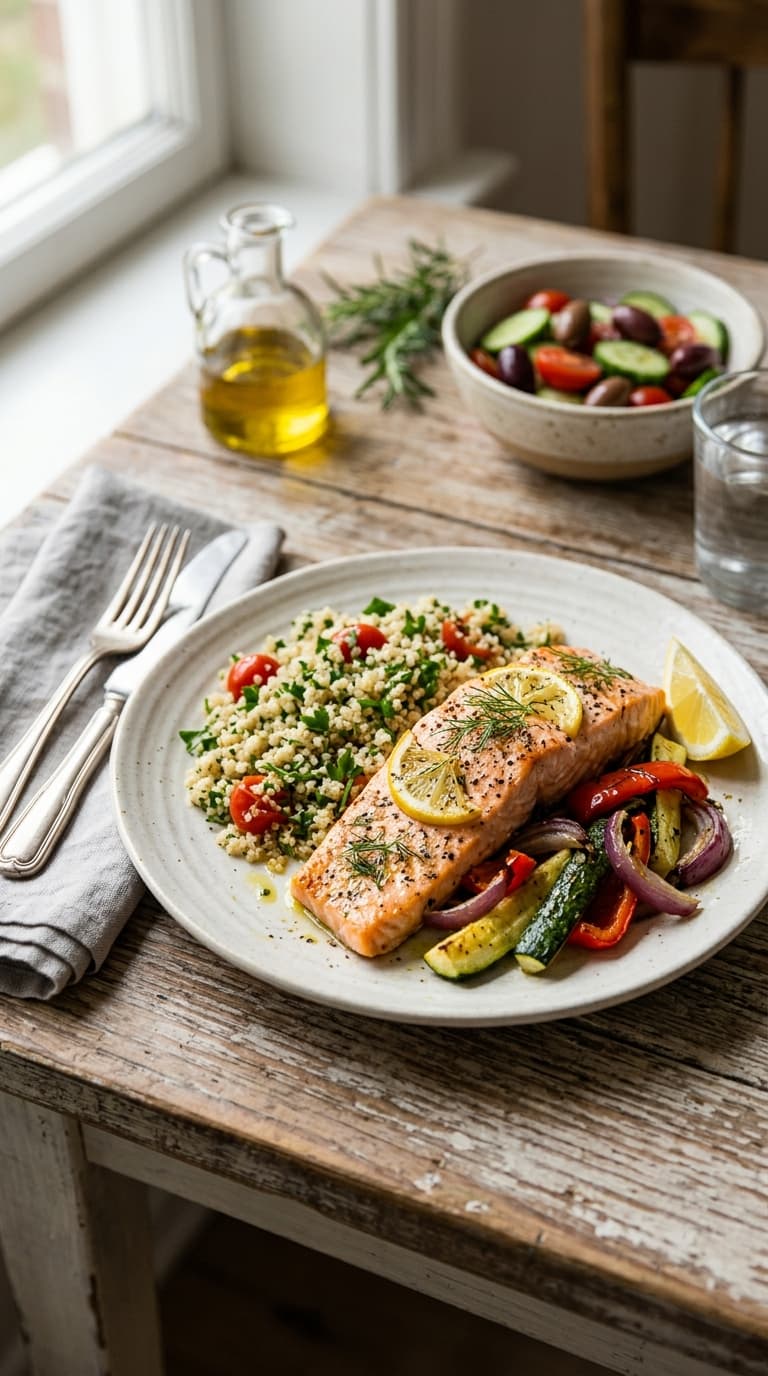
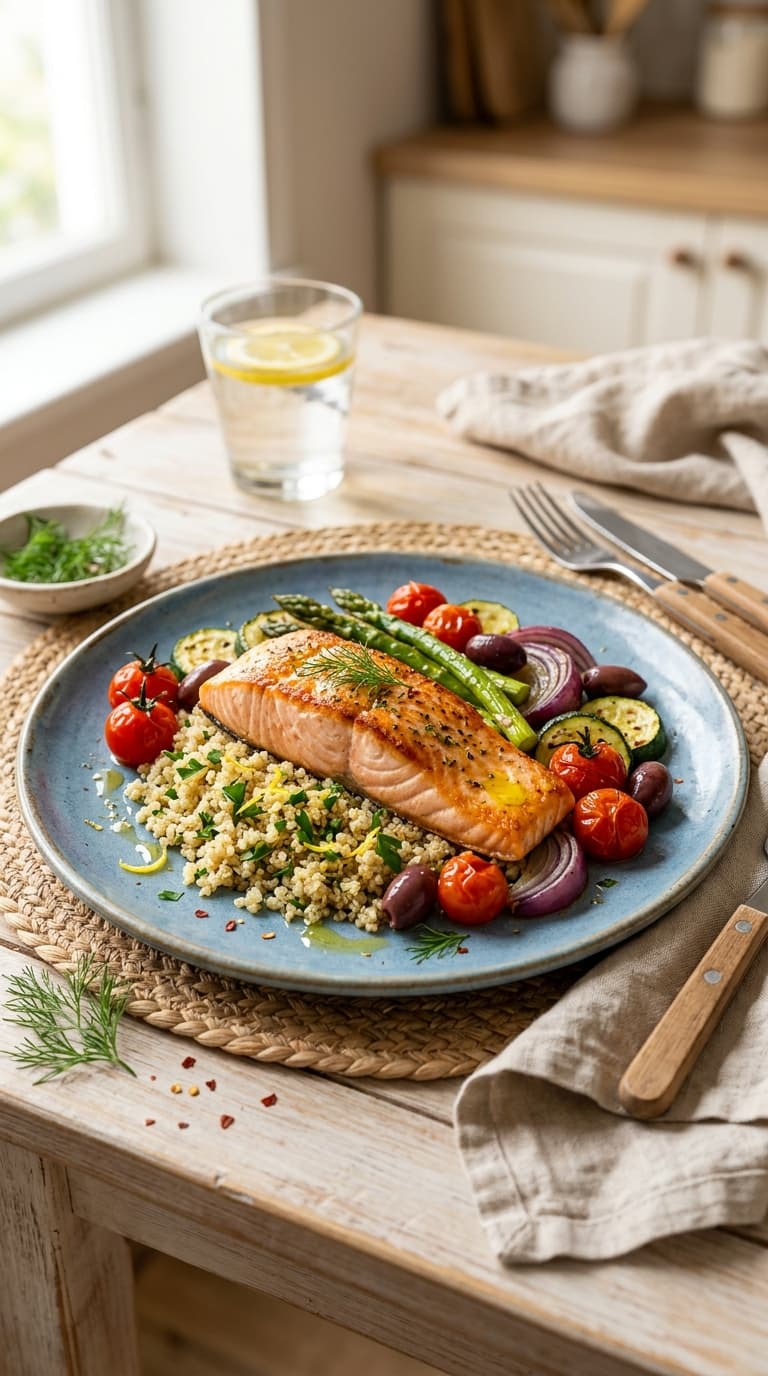
Baked salmon with roasted cherry tomatoes and a side of brown rice. Season the salmon with lemon juice, olive oil, garlic, and oregano. Roast at 400°F for 15–18 minutes. Brown rice on the side, and you’re done. This dinner gives you omega-3s, lycopene from the tomatoes, and complex carbs for steady energy.
Day 2: Plant Power Day
Breakfast
Whole grain toast with mashed avocado and a soft-boiled egg. A classic combination that keeps you full for hours. The egg adds protein and vitamin D, which seniors often need more of.
Lunch
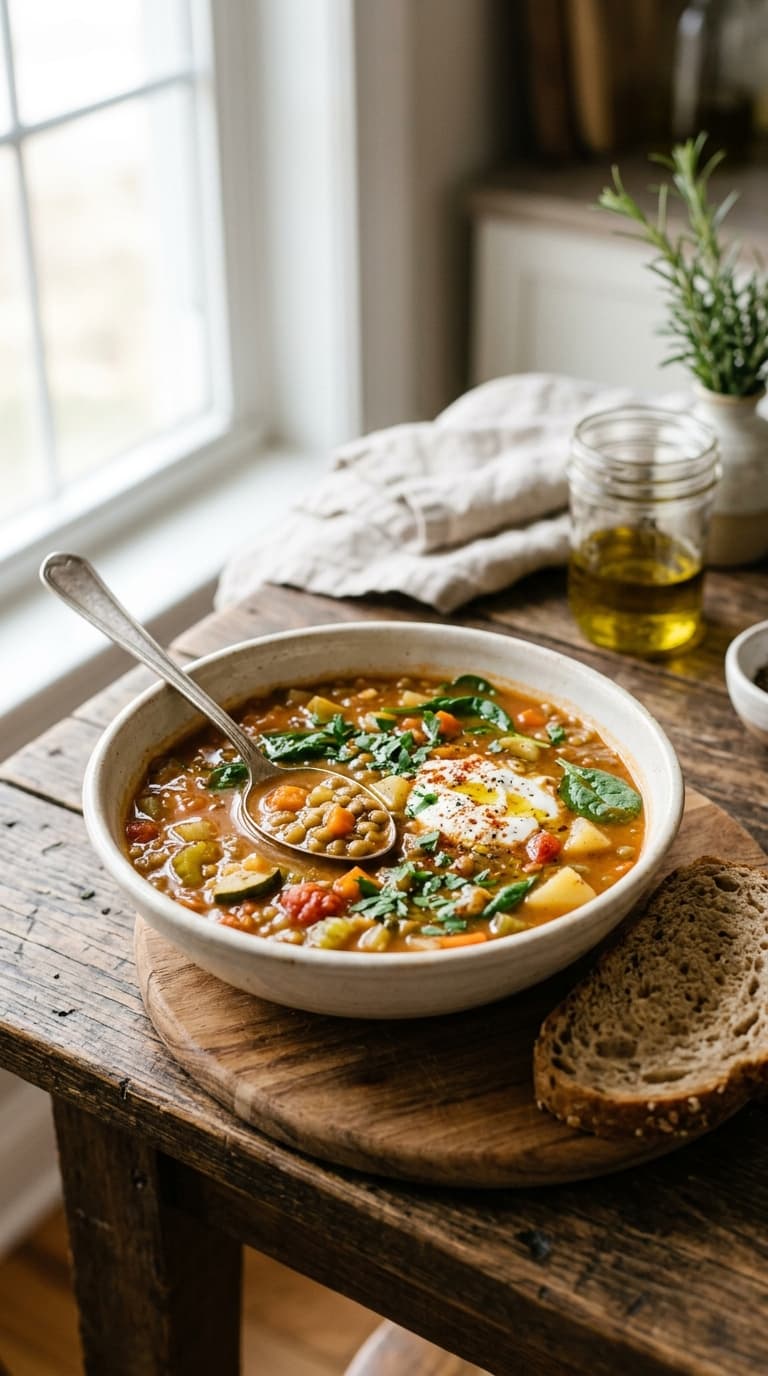
Lentil soup with crusty whole grain bread. Lentil soup is one of the most underrated meals out there — it’s warm, hearty, packed with plant protein and iron, and incredibly easy to make. Use canned lentils if you want to cut the time in half.
Dinner
Stuffed bell peppers with brown rice, chickpeas, diced tomatoes, and herbs. Cut the tops off four bell peppers, stuff them with a mix of cooked brown rice, canned chickpeas, tomatoes, olive oil, and cumin, then bake for 25 minutes. This is one of those meals that looks impressive but takes almost no effort. Want more plant-based bowl ideas? These 25 Mediterranean bowls you can prep in advance are worth bookmarking.
Day 3: Mediterranean Classics
Breakfast
Overnight oats with sliced almonds, cinnamon, and diced apple. Mix rolled oats with milk or a dairy alternative, pop it in the fridge overnight, and breakfast is waiting for you in the morning. No cooking, no stress.
Lunch
Greek salad with feta, olives, cucumber, tomato, and red onion, drizzled with olive oil and lemon. The Mediterranean staple. Don’t skip the feta — it adds flavor and a good hit of calcium.
Dinner
Baked cod with roasted zucchini and white beans. Cod is a mild, easy-to-eat fish that works beautifully with lemon and garlic. White beans on the side give you fiber and plant protein. This dinner comes together in under 30 minutes, which is exactly the kind of win we’re looking for.
Day 4: Comfort Food, Mediterranean Style
Breakfast
Scrambled eggs with spinach, tomatoes, and a sprinkle of feta. Who said eggs had to be boring? This version is basically a Mediterranean omelette without the fuss. Olive oil in the pan, a handful of spinach, some chopped tomatoes, and your eggs. Done in five minutes.
Lunch
Tuna and white bean salad on whole grain crackers. Open a can of tuna, drain it, mix with canned white beans, olive oil, lemon juice, and parsley. Serve on crackers or toast. This is one of those lunches that sounds too simple to be good — and then completely surprises you.
Dinner
Chicken and vegetable stew with chickpeas and crusty bread. Use a slow cooker if you have one, or a simple pot on the stove. Chicken thighs, canned tomatoes, chickpeas, carrots, celery, and a good handful of herbs. This one reheats beautifully too. If you’re into meals that get better the next day, you’ll love these Mediterranean dinner preps that reheat beautifully.
Day 5: Light and Fresh
Breakfast
Fresh fruit salad with a dollop of Greek yogurt and a drizzle of honey. Use whatever fruit is in season — citrus in winter, berries in summer. Simple, hydrating, and gentle on digestion first thing in the morning.
Lunch
Spinach and chickpea soup with olive oil and garlic. A lighter soup option that still packs protein and iron. Sauté garlic in olive oil, add canned chickpeas and vegetable broth, toss in spinach, and simmer for 10 minutes. That’s really it.
Dinner
Shrimp stir-sauté with garlic, lemon, olive oil, and whole wheat pasta. Shrimp cooks in under five minutes, which makes this dinner practically foolproof. Toss cooked whole wheat pasta with the shrimp, olive oil, garlic, lemon juice, and fresh parsley. Quick, elegant, and genuinely delicious.
Day 6: Prep Ahead Day
IMO, Day 6 is a great time to think about batch cooking so Day 7 (and the week ahead) feels effortless. Make a big pot of lentils, roast a tray of vegetables, hard-boil a few eggs. You’ll thank yourself later.
Breakfast
Whole grain pita with hummus, sliced cucumber, and olives. A savory breakfast option that works incredibly well for people who don’t love sweet mornings. The hummus gives you protein and fiber right off the bat.
Lunch
Roasted vegetable and farro bowl with lemon tahini dressing. Farro is a wonderful ancient grain that’s nutty, chewy, and very filling. Roast any vegetables you have — zucchini, eggplant, red onion, peppers — and pile them over cooked farro. A simple tahini-lemon dressing ties it all together.
Dinner
Baked sea bass with capers, olives, tomatoes, and olive oil. This is the kind of dinner you’d pay a lot for in a restaurant, but it costs almost nothing to make at home. Pop everything in a baking dish, drizzle with olive oil, season with salt and pepper, and bake for 20 minutes. Done.
Day 7: Slow Down and Savor
Breakfast
Chia seed pudding with mango and coconut. Mix chia seeds with milk, refrigerate overnight, and top with fresh or frozen mango and a sprinkle of unsweetened coconut in the morning. It looks fancy. It takes about three minutes of actual work. You can also prep a whole batch for the week ahead — these chia seed puddings for easy morning meal prep give you plenty of options.
Lunch
White bean and roasted red pepper dip with whole grain bread and a mixed green salad. Blend canned white beans with roasted red peppers, garlic, olive oil, and lemon juice for a creamy, protein-rich dip. Serve it with fresh bread and a simple green salad dressed with olive oil and vinegar.
Dinner
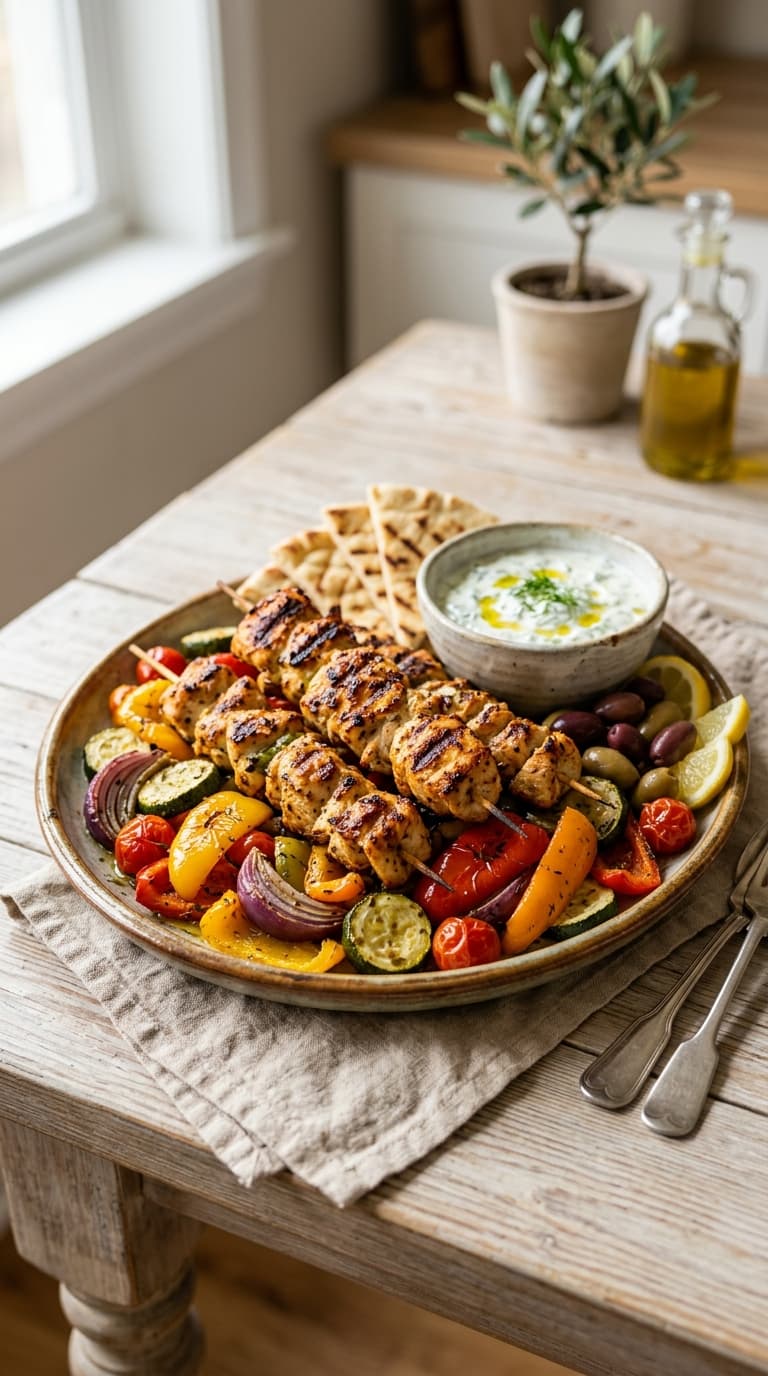
Lamb and vegetable kebabs with tzatziki and whole wheat pita. If you’re feeling a bit more ambitious on Day 7, this is a wonderful meal to end the week on. Marinate small pieces of lamb in olive oil, garlic, lemon, and herbs, thread them on skewers with vegetables, and grill or broil for about 12 minutes. Serve with homemade or store-bought tzatziki. It’s celebratory without being complicated.
Nutrition Tips Specifically for Seniors
Let’s talk about the details that actually matter for older adults, because this isn’t a one-size-fits-all situation.
Protein needs go up as you age. Muscle mass naturally declines over time, which means seniors generally need more protein than younger adults, not less. Aim for a protein source at every meal — fish, eggs, legumes, Greek yogurt, or poultry all count.
Sodium awareness matters. Many canned products contain a lot of sodium. Rinse canned beans and lentils before using, and look for low-sodium versions of canned tomatoes and broth when you can find them.
Hydration is often overlooked. The thirst mechanism becomes less reliable with age, so many seniors don’t drink enough water. Herbal teas, broth-based soups, and water-rich fruits and vegetables all help.
Chewing and swallowing comfort. If tender textures are a concern, the Mediterranean diet adapts beautifully. Soups, stews, mashed legumes, flaky fish, and soft-cooked vegetables are all naturally easy to eat without sacrificing nutrition.
Calorie needs may be lower, but nutrient needs often stay the same or increase. This means every bite should count — which is exactly what the Mediterranean diet delivers. For anyone also keeping an eye on calories without wanting to feel deprived, these low-calorie meal prep ideas that actually fill you up pair really well with this plan.
Easy Mediterranean Snack Ideas for Seniors
Because nobody should have to white-knuckle it between meals. Here are some quick snack options that fit the Mediterranean framework:
- A small handful of walnuts or almonds — heart-healthy, portable, no prep needed
- Sliced apple with almond butter — sweet, crunchy, satisfying
- Hummus with carrot sticks or cucumber slices — classic for a reason
- A few olives and a cube of feta — feels indulgent, actually very nutritious
- Greek yogurt with a drizzle of honey — doubles as dessert, honestly
You can batch-prep several of these on Sunday so snacks are just grab-and-go all week. These Mediterranean snacks you can batch prep on Sunday will give you even more ideas to rotate through.
Making This Plan Work Long-Term
The beauty of the Mediterranean diet is that it’s not a 7-day challenge you complete and then abandon. It’s designed to be a sustainable, enjoyable way of eating for the long haul. And for seniors especially, “sustainable” is the magic word.
Start small if you need to. You don’t have to flip your entire diet on Day 1. Start by swapping butter for olive oil, or adding a serving of fish once or twice a week. Small changes add up fast.
Batch cook once a week. A few hours on Sunday can set you up beautifully. A big pot of grains, some roasted vegetables, hard-boiled eggs, and a batch of hummus covers breakfast, lunch, and snacks for most of the week. If you love the idea of cooking once and eating all week, this 7-day Mediterranean meal prep plan with a free printable is an incredible resource to have on hand.
Don’t stress about perfection. The Mediterranean diet is a pattern, not a rulebook. If you have a burger on Friday, it’s fine. The overall direction matters more than any single meal.
Wrapping It Up
Seven days of Mediterranean eating is genuinely doable — even enjoyable — for seniors who want real nutrition without complicated recipes or expensive ingredients. This plan covers your protein, your healthy fats, your fiber, your antioxidants, and your flavor. It respects that you have a life to live and shouldn’t be spending all of it in the kitchen.
The Mediterranean diet has been around for centuries for a reason. It works. It’s delicious. And it meets you exactly where you are, whether you’re cooking for one, cooking for two, or just trying to feel better every day.
Start with Day 1, see how it feels, and build from there. Your future self — with the clearer head, better energy, and happier heart — will be genuinely grateful you did. :/