25 Meal Prep Bowls Under 400 Calories
25 Meal Prep Bowls Under 400 Calories
Calorie counting gets a bad rap, and honestly, I get it. Nobody wants to obsess over every bite or feel like they’re constantly depriving themselves. But here’s the thing—when you’re trying to maintain or lose weight without feeling miserable, having a arsenal of satisfying meals that happen to be lower in calories is a total game changer.
I spent way too long thinking that eating lighter meant suffering through sad salads and plain chicken breast. Turns out, you can make genuinely delicious bowls that keep you full and satisfied while staying under 400 calories. These aren’t diet meals that taste like cardboard—they’re actual food that happens to be nutritionally balanced.
The secret? Volume eating with nutrient-dense ingredients. We’re talking vegetables that fill you up, lean proteins that keep you satisfied, and smart combinations that trick your brain into thinking you’re eating way more than 400 calories. Let’s get into it.

The Truth About Low-Calorie Bowls
Look, I’m not going to pretend that 400 calories is some magic number that works for everyone. Your needs depend on your activity level, goals, and about a million other factors. But having meals in this range gives you flexibility to add snacks, adjust portions, or just have a framework for balanced eating.
The mistake most people make with low-calorie meals is cutting out everything that makes food enjoyable. Fat gets demonized, carbs become the enemy, and you end up eating steamed vegetables with a side of sadness. That approach sucks and it’s not sustainable.
These bowls include healthy fats, complex carbs, and plenty of protein. According to research on satiety and meal composition, meals that combine protein, fiber, and some fat keep you fuller longer than low-calorie meals that skimp on these nutrients. The goal is to eat food that satisfies you, not to feel hungry an hour later.
Volume Eating: Your Secret Weapon
The volume eating approach changed everything for me. Instead of eating tiny portions of calorie-dense foods, you load up on foods that have high volume but lower calories. Vegetables, lean proteins, and foods with high water content become your best friends.
A massive bowl of zucchini noodles with marinara and grilled chicken might have the same calories as a small bowl of pasta, but your brain sees the big portion and feels satisfied. It’s basically tricking yourself into feeling full without actually eating more calories.
The key vegetables for volume eating are zucchini, cauliflower, broccoli, spinach, mushrooms, and peppers. They’re low in calories but high in fiber, which means they take up space in your stomach and keep you feeling full. Plus they add flavor, texture, and nutrients that make meals actually enjoyable.
Essential Tools for Portion Control
Before we get into the bowls, let me share the tools that make portion control way easier. You don’t need to become obsessive about measuring, but having the right equipment helps you build intuition about portions.
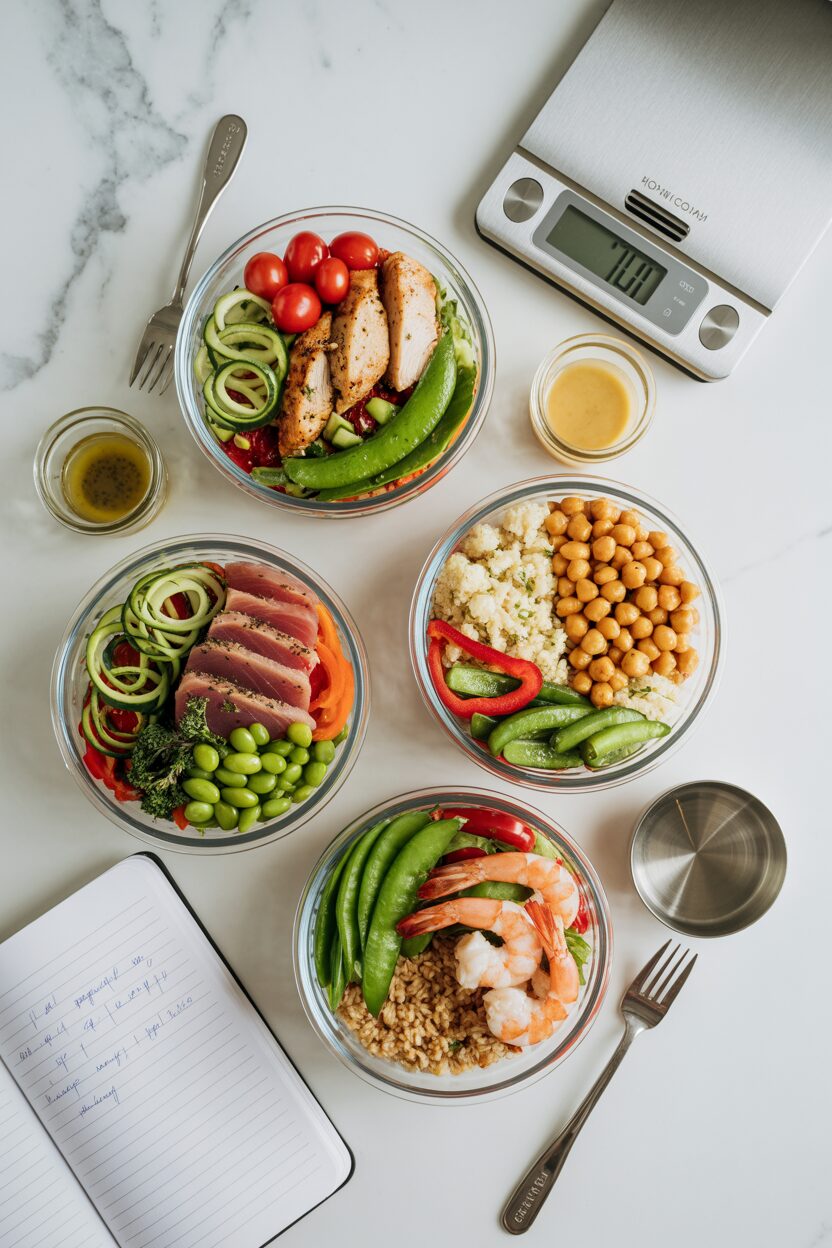
First, get a digital food scale. I resisted this for way too long because it felt too diet-culture, but it’s actually liberating. This kitchen scale takes the guesswork out of portions and helps you understand what serving sizes actually look like.
Portioned meal prep containers are clutch for keeping calories consistent throughout the week. I use these 2-cup containers because they’re the perfect size for these bowls—not so big that you’re tempted to overfill them, but plenty of room for a satisfying meal.
A spiralizer opens up a whole world of vegetable noodles. This handheld spiralizer is way easier to use and clean than the big countertop versions, and zucchini noodles become a regular rotation in these bowls.
For measuring liquids like dressing and sauces (where calories add up fast), grab this set of mini measuring cups. The small sizes make it easy to portion out dressings without overdoing it.
Finally, invest in a good nonstick skillet so you can cook proteins with minimal oil. This ceramic nonstick pan lets you cook chicken, fish, or eggs with just a light spray instead of tablespoons of oil.
High-Protein Breakfast Bowls
1. Greek Yogurt Power Bowl (280 calories)
Start with plain Greek yogurt as your base—it’s protein-packed and keeps you full for hours. Top with berries, a tablespoon of granola for crunch, and a drizzle of honey. The combination of protein from yogurt and fiber from berries makes this surprisingly filling.
I meal prep these in jars and keep the granola separate so it doesn’t get soggy. The berries can be fresh or frozen—frozen are actually cheaper and just as nutritious. This bowl feels indulgent but clocks in well under 400 calories.
The protein content here is impressive—about 20 grams per bowl, which is more than most breakfast options. It keeps your blood sugar stable and prevents that mid-morning crash.
2. Veggie Egg White Scramble Bowl (245 calories)
Scramble egg whites with tons of vegetables—spinach, mushrooms, tomatoes, peppers—and serve over a small portion of quinoa. Add some salsa and a tiny bit of cheese for flavor without blowing the calorie budget.
Egg whites are basically pure protein with minimal calories. Some people think they’re boring, but when you load them up with vegetables and seasonings, they’re actually delicious. The quinoa adds substance and complex carbs to keep you energized.
I prep the vegetables on Sunday and scramble fresh eggs each morning—it takes maybe five minutes. Way better than a drive-through breakfast sandwich that has twice the calories.
3. Overnight Oats Berry Bowl (320 calories)
Mix oats with unsweetened almond milk, chia seeds, and a touch of maple syrup. Let it sit overnight, then top with fresh berries in the morning. The chia seeds expand and create this pudding-like texture that’s surprisingly satisfying.
Oats are one of those foods that fill you up without a ton of calories. They’re high in soluble fiber, which slows digestion and keeps you full. The berries add natural sweetness and antioxidants without much caloric impact.
This bowl is great for people who aren’t morning people. You literally grab it from the fridge and go—no cooking, no thinking, just eating.
4. Smoked Salmon and Avocado Bowl (365 calories)
Layer smoked salmon over cauliflower rice with cucumber, a small amount of avocado, and everything bagel seasoning. It feels like a fancy brunch but it’s ready in five minutes.
The salmon provides omega-3s and protein, the avocado gives you healthy fats that keep you satisfied, and the cauliflower rice adds volume without many calories. This bowl proves that low-calorie doesn’t mean low-quality.
I buy pre-riced cauliflower to save time—it’s worth the extra dollar or two. Just microwave it for a couple minutes and you’ve got a blank canvas for flavors.
5. Protein Pancake Bowl (340 calories)
Make protein pancakes (protein powder, egg whites, banana), cut them into pieces, and top with yogurt and berries. It’s like eating dessert for breakfast but it’s actually balanced and filling.
The protein powder makes these pancakes way more satisfying than regular ones. You’re not hungry an hour later because you’ve got 30+ grams of protein keeping you full. I use this unflavored protein powder so I can control the sweetness and flavor.
These reheat well if you want to meal prep them. Just make a batch on Sunday and warm them up throughout the week.
Speaking of protein-packed breakfasts that keep you satisfied, high-protein breakfast ideas and low-calorie morning meals offer even more variety without sacrificing flavor.
Light Lunch Bowls That Actually Fill You Up
6. Asian Chicken Lettuce Wrap Bowl (285 calories)
Cook ground chicken with ginger, garlic, and soy sauce, serve over shredded lettuce with water chestnuts, carrots, and green onions. Drizzle with a tiny bit of hoisin sauce. It’s crunchy, flavorful, and surprisingly filling despite being mostly vegetables.
The lettuce provides serious volume—you can eat a massive pile for basically no calories. The chicken gives you protein, and the Asian flavors make it feel like takeout without the calorie bomb.
I use lean ground chicken breast, which has fewer calories than dark meat or ground beef. The texture is fine as long as you don’t overcook it—dry chicken is never the answer.
7. Mediterranean Shrimp Bowl (320 calories)
Sauté shrimp with lemon and garlic, serve over a bed of arugula with cucumbers, tomatoes, olives, and a small amount of feta. The shrimp cooks in literally five minutes and it’s loaded with protein.
Shrimp is one of the best proteins for low-calorie eating—tons of protein, minimal fat, cooks fast. The Mediterranean vegetables add flavor and volume without many calories. The feta gives you just enough richness to feel satisfied.
I buy frozen shrimp and keep them in my freezer for quick meals. They thaw in cold water in about 15 minutes, or you can cook them straight from frozen if you’re in a hurry.
8. Tuna Poke-Style Bowl (350 calories)
Cube raw tuna (sushi-grade), marinate in soy sauce and sesame oil, serve over cauliflower rice with edamame, cucumber, and avocado. It’s fresh, light, and feels restaurant-quality.
Raw tuna is surprisingly affordable if you find a good source. It’s lean, protein-rich, and has a meaty texture that makes it satisfying. The cauliflower rice keeps the calorie count down while still giving you that bowl experience.
This bowl is great for hot weather when you want something refreshing. No cooking required, just assembly.
9. Turkey and Veggie Zoodle Bowl (295 calories)
Spiralize zucchini into noodles, top with ground turkey cooked with Italian seasonings and marinara sauce. Add some fresh basil and a sprinkle of parmesan. It’s basically spaghetti but with a fraction of the calories.
Zucchini noodles are polarizing—some people love them, others think they’re trying too hard to be pasta. I’m in the love camp. They’re crunchy, fresh, and they actually hold up to sauce pretty well if you don’t overcook them.
The key is not to cook the zoodles too long. Sauté them for literally 2-3 minutes, just until they soften slightly. Overcooked zucchini noodles turn into mush and nobody wants that.
10. Cajun Chicken and Cauliflower Rice Bowl (315 calories)
Season chicken with Cajun spices, grill it, slice and serve over cauliflower rice with bell peppers and onions. The spices add so much flavor that you don’t miss the calories.
Cajun seasoning is your friend in low-calorie cooking. It’s all flavor with zero calories, and it makes simple ingredients taste complex and interesting. This bowl has a little kick that keeps things exciting.
I make my own Cajun blend—paprika, garlic powder, onion powder, cayenne, oregano, and thyme. It’s cheaper than buying pre-mixed and you can adjust the heat level.
For more lunch options that balance protein and vegetables without feeling restrictive, light meal prep lunches and filling salads under 400 calories round out your midday rotation.
Satisfying Dinner Bowls
11. Teriyaki Salmon Bowl (380 calories)
Brush salmon with teriyaki sauce, bake it, serve over a small portion of brown rice with steamed broccoli and edamame. The salmon is rich enough that you feel satisfied even though the portion is reasonable.
Salmon has healthy fats that slow digestion and keep you full. According to nutritional research on omega-3 fatty acids, these fats also support heart health and reduce inflammation. Win-win.
I use just a tablespoon of teriyaki sauce per serving to keep sugar and sodium in check. The natural flavor of the salmon is good enough that it doesn’t need to be drowning in sauce.
12. Fajita Chicken Bowl (340 calories)
Sauté chicken breast with bell peppers and onions in fajita seasoning, serve over cauliflower rice with salsa, Greek yogurt (instead of sour cream), and a small amount of cheese. All the fajita flavors without the tortilla calories.
The Greek yogurt trick is clutch—it’s tangy like sour cream but has way more protein and fewer calories. I didn’t think it would be a satisfying swap, but honestly, I prefer it now.
Load up on the peppers and onions. They add volume, sweetness, and nutrients without impacting the calorie count much. Plus the caramelized vegetables make everything taste better.
13. Coconut Curry Shrimp Bowl (365 calories)
Make a quick curry with light coconut milk, curry paste, and tons of vegetables. Add shrimp and serve over a small portion of jasmine rice or cauliflower rice. It’s creamy, spicy, and feels way more indulgent than 365 calories.
Light coconut milk gives you that rich, creamy texture without all the calories of full-fat coconut milk. You still get the flavor but save about 200 calories per cup. That’s significant when you’re working with a 400-calorie budget.
I load this bowl up with vegetables—bell peppers, snap peas, carrots, baby corn. The more veggies, the more filling it becomes without adding many calories.
14. Lemon Herb Cod Bowl (310 calories)
Bake cod with lemon, dill, and garlic, serve over roasted Brussels sprouts and sweet potato cubes. Cod is mild and lean, making it perfect for low-calorie meals.
Brussels sprouts are underrated. When you roast them properly, they get crispy and almost nutty-flavored. They’re high in fiber and filling despite being low in calories. The sweet potato adds a touch of natural sweetness and complex carbs.
This bowl is simple but elegant. You could serve it to dinner guests and nobody would know it’s a “diet” meal. It just tastes like good food.
15. Korean Beef Bowl (390 calories)
Use extra-lean ground beef with gochujang, soy sauce, and a touch of brown sugar. Serve over cauliflower rice with kimchi, cucumber, and green onions. The flavors are bold enough that the smaller portion doesn’t feel restrictive.
The kimchi is key here—it’s fermented, probiotic-rich, and adds tons of flavor for basically zero calories. Plus it’s crunchy and provides a nice contrast to the ground beef.
I use 93% lean ground beef to keep the fat content down. Some people think lean beef is dry, but if you don’t overcook it and keep it well-seasoned, it’s totally fine.
16. Italian Sausage and Pepper Bowl (375 calories)
Use chicken or turkey Italian sausage (way fewer calories than pork), sauté with bell peppers and onions, serve over zucchini noodles with marinara. It’s like eating a sausage sub but without the bread calories.
Turkey sausage gets a bad rap but the good brands are actually flavorful. Look for ones with Italian seasonings already mixed in—fennel, garlic, paprika. They make the whole bowl taste complex.
The zucchini noodles soak up the marinara sauce and the flavors from the sausage. It’s one of those bowls where you genuinely don’t miss the pasta.
17. BBQ Chicken and Slaw Bowl (355 calories)
Shred chicken breast, toss with a small amount of BBQ sauce, serve over a bed of broccoli slaw with a vinegar-based coleslaw dressing. The crunch from the slaw makes this incredibly satisfying.
Broccoli slaw is crunchier and heartier than regular cabbage slaw. It holds up better and has more fiber. The vinegar-based dressing has way fewer calories than mayo-based dressings and still tastes tangy and delicious.
I use rotisserie chicken to save time. Just shred it and toss with your favorite BBQ sauce—look for brands with less sugar to keep calories in check.
18. Greek-Style Turkey Bowl (320 calories)
Season ground turkey with oregano, garlic, and lemon, serve over mixed greens with cucumber, tomatoes, red onion, and a small amount of tzatziki. It’s fresh, Mediterranean, and filling.
Turkey is one of the leanest proteins available. Combined with all the fresh vegetables, this bowl is high-volume but low-calorie. The tzatziki adds creaminess without the calories of regular sauces.
I make a quick tzatziki with Greek yogurt, cucumber, dill, and garlic. It takes five minutes and keeps in the fridge for about a week. Way better than store-bought.
If you’re exploring more international flavors while keeping calories reasonable, Mediterranean diet bowls and Asian-inspired light meals offer tons of variety.
Vegetarian Low-Calorie Bowls
19. Roasted Chickpea Buddha Bowl (380 calories)
Roast chickpeas with cumin and paprika until crispy, serve over mixed greens with roasted vegetables, quinoa, and tahini dressing. It’s completely plant-based but still high in protein and fiber.
Chickpeas are amazing for low-calorie eating. They’re filling, protein-rich, and cheap. Roasting them makes them crunchy and almost snack-like. I could honestly just eat a bowl of roasted chickpeas and be happy.
The tahini dressing is rich and creamy but you only need a little bit to add flavor. Mix it with lemon juice and water to thin it out—you’ll use less but still get that nutty, savory flavor throughout the bowl.
20. Eggplant and Lentil Bowl (345 calories)
Roast eggplant with garlic and herbs, serve over cooked lentils with tomatoes, spinach, and a balsamic drizzle. Lentils are protein-packed and incredibly filling for the calorie count.
Eggplant is one of those vegetables that becomes almost meaty when you roast it properly. It soaks up flavors and has a satisfying texture. Combined with lentils, you get a bowl that’s hearty enough to feel like dinner.
I use canned lentils to save time—just drain, rinse, and warm them up. Nobody can tell the difference and it saves you 30 minutes of cooking time.
21. Cauliflower Fried Rice Bowl (280 calories)
Make fried rice with riced cauliflower, scrambled eggs, frozen mixed vegetables, and soy sauce. Add some edamame for extra protein. It tastes like takeout fried rice but with a fraction of the calories.
The trick to good cauliflower fried rice is cooking it on high heat and not overcrowding the pan. You want it to get slightly crispy, not steamed and mushy. Use this large nonstick wok so everything has room to cook properly.
This bowl proves that you can have familiar comfort food flavors while still eating light. IMO, it’s better than regular fried rice because it doesn’t leave you feeling heavy and sluggish.
22. Black Bean and Sweet Potato Bowl (370 calories)
Roast cubed sweet potatoes, combine with black beans, bell peppers, and corn, serve over spinach with lime juice and cilantro. It’s colorful, flavorful, and the combination of beans and sweet potatoes provides complete protein.
Sweet potatoes have natural sweetness that balances the savory black beans. They’re also loaded with fiber and vitamin A. The combination keeps you full way longer than you’d expect from a meatless bowl.
I meal prep this one all the time. Everything reheats well and the flavors actually improve after a day in the fridge. Make a big batch on Sunday and you’re set for multiple meals.
23. Mushroom and Barley Bowl (310 calories)
Sauté a variety of mushrooms with garlic and thyme, serve over cooked barley with roasted Brussels sprouts and a light balsamic glaze. Mushrooms have this umami, meaty flavor that makes vegetarian bowls satisfying.
Barley is underused and underrated. It’s chewy, nutty, and incredibly filling. It has more fiber than rice or quinoa, which means it keeps you satisfied longer. Plus it’s cheap, which is always a bonus.
Use a mix of mushrooms if you can—cremini, shiitake, oyster. Different varieties add different textures and flavors. They cook down significantly, so don’t be afraid to use a lot.
24. Zucchini and White Bean Bowl (295 calories)
Sauté zucchini with garlic and Italian herbs, add white beans and cherry tomatoes, serve over arugula with a squeeze of lemon. It’s light, fresh, and ready in about 15 minutes.
White beans are creamy and mild, making them perfect for absorbing other flavors. They’re high in protein and fiber but low in calories—basically ideal for these bowls. I always keep canned white beans in my pantry.
The arugula adds a peppery bite that wakes up the whole bowl. It’s more interesting than plain lettuce and has more nutrients too.
25. Spicy Tofu and Veggie Bowl (360 calories)
Press and cube tofu, toss with sriracha and soy sauce, bake until crispy, serve over mixed vegetables with brown rice. Even if you think you don’t like tofu, this version might change your mind.
The key is pressing the tofu really well. I use this tofu press and let it sit for at least 30 minutes. The drier the tofu, the crispier it gets when you bake it. Wet tofu just steams and stays soft.
Load up on vegetables—broccoli, bell peppers, snap peas, carrots. The more vegetables, the more filling the bowl becomes without adding many calories. Plus you’re getting tons of vitamins and minerals.
Related Recipes You’ll Love
Looking for more low-calorie meal ideas? Here are some recipes that complement this collection:
More Bowl Options: Quick Buddha bowls and protein-packed grain bowls offer additional combinations under 500 calories.
Lighter Dinner Ideas: Try grilled fish recipes or lean chicken dinners for more protein-forward options.
Volume Eating Strategies: High-volume low-calorie meals and vegetable noodle recipes maximize fullness without extra calories.
Meal Prep Tips: Calorie-counted meal prep guide and portion control strategies help you stay consistent throughout the week.
Final Thoughts
These 25 bowls prove that eating lighter doesn’t mean suffering through boring, restrictive meals. You can have flavor, satisfaction, and variety while staying around 400 calories per meal. The key is focusing on nutrient-dense ingredients that fill you up without excessive calories.
I’m not suggesting you eat exactly 400 calories for every meal—your needs are different than mine. But having a collection of balanced, portion-controlled bowls gives you flexibility to adjust based on your goals and hunger levels. Some days you might add extra protein or an avocado. Other days, these portions are perfect as-is.
The most important thing is finding an approach that you can actually sustain. FYI, these bowls work because they don’t feel like diet food. They’re real meals with actual flavors that happen to fit into a lower calorie range. Start with a few that sound appealing, see how they make you feel, and adjust from there.
Your relationship with food should feel balanced and enjoyable, not restrictive and miserable. These bowls are just one tool to help you eat well without overthinking every bite.