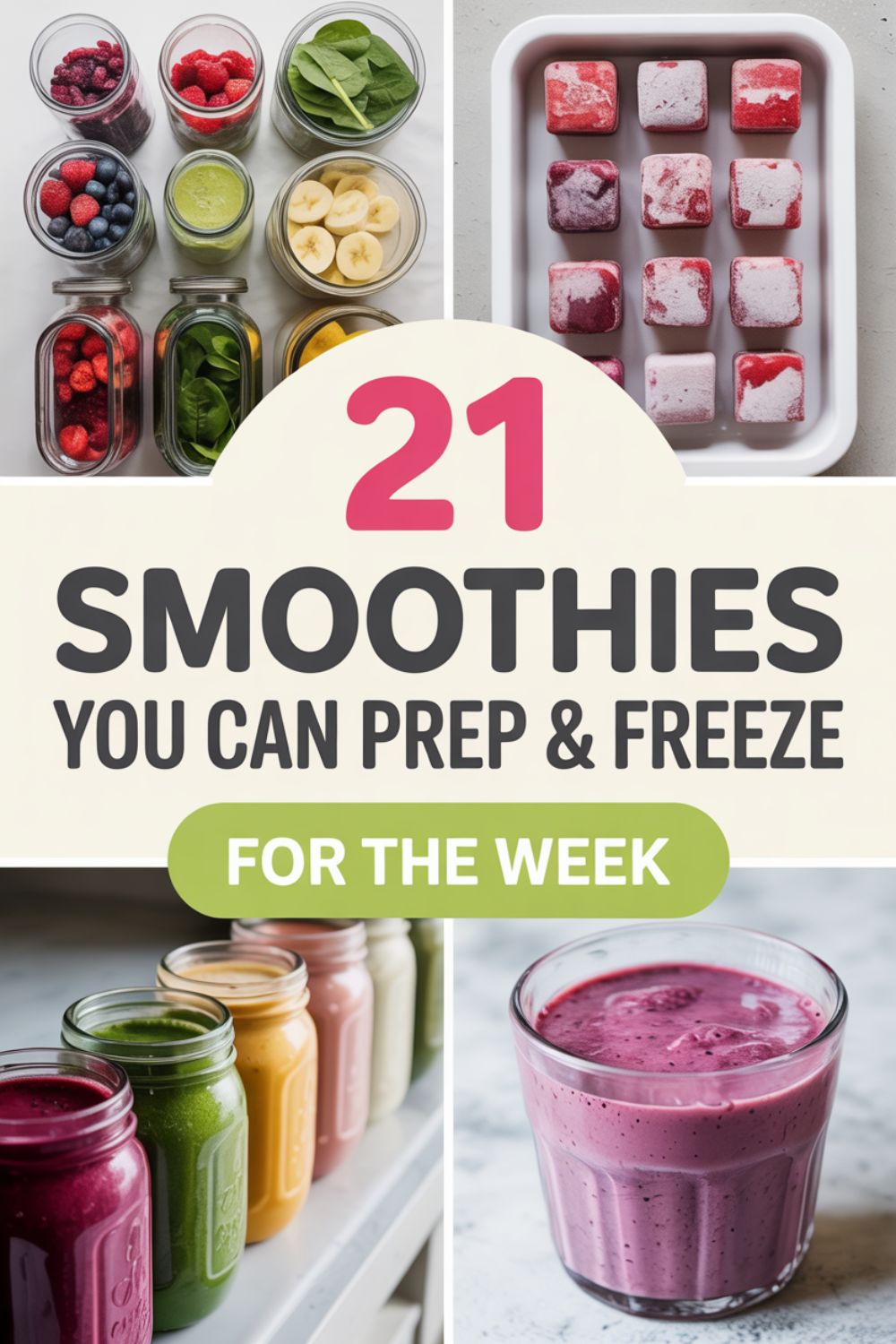
21 Smoothies You Can Prep and Freeze for the Week
Look, I’m gonna be real with you—mornings are chaos. Between hitting snooze seventeen times and trying to remember if you brushed your teeth, the last thing you want to do is play fruit ninja with a cutting board. But here’s the thing: you also don’t want to start your day with whatever sad breakfast bar is hiding in your pantry.
That’s exactly why freezer smoothie prep has basically saved my mornings. I’m talking about having a week’s worth of smoothies ready to go, sitting in your freezer like little frozen soldiers of nutrition, just waiting for you to toss them in a blender. No measuring, no mess, no “oops I forgot to buy bananas” panic at 6 AM.
I’ve tested more smoothie combinations than I care to admit, and I’m breaking down 21 killer options that actually freeze well, taste amazing, and won’t turn into weird icy sludge. Whether you’re trying to sneak more greens into your life or just want something that doesn’t taste like punishment, I’ve got you covered.
Why Freezer Smoothie Prep Actually Works
Before we get into the recipes, let’s talk science for a second. When you freeze fruits and vegetables properly, you’re basically hitting pause on nutrient degradation. Research from UC Davis shows that frozen produce can actually retain more vitamins than fresh stuff that’s been sitting in your fridge for days.
The real magic happens when you portion everything out ahead of time. I’m talking about grabbing a freezer bag, dumping it in your blender with some liquid, and having breakfast ready in literally 60 seconds. Compare that to the usual morning routine of forgetting where you put the chia seeds and wondering if that spinach is still good.
Plus, freezing smoothies in packs—instead of pre-blending them—keeps the texture way better. Nobody wants to drink what basically amounts to flavored ice water because the whole thing separated in the freezer.
Pro Tip: Always freeze fruit in a single layer on a baking sheet first before bagging it. This prevents everything from turning into one giant frozen fruit boulder that you’ll need a jackhammer to separate.
The Prep Method That Changed Everything
Here’s how I do it, and trust me, I’ve tried every method under the sun. Set aside about an hour on Sunday—yeah, I know, but stick with me. Wash and chop all your fruits and veggies. I use these reusable silicone freezer bags because they’re basically indestructible and you can see what’s inside without playing freezer roulette.
Label everything with a Sharpie. Future you will thank present you when you’re not trying to guess if that green smoothie bag contains mint or spinach at 7 AM. Include the liquid amount on the label too—nothing worse than making a smoothie that’s either soup or cement.
Stack them flat in the freezer. They’ll freeze faster and take up way less space than if you just chuck them in there like a chaotic produce graveyard. I can fit about 14 smoothie packs in the space my old ice cream collection used to occupy.
For those mornings when meal prep feels like the absolute last thing you want to think about, having these high-protein meal prep bowls alongside your smoothies gives you even more grab-and-go options.
21 Smoothie Combinations Worth Freezing
Green Powerhouse Smoothies
1. Classic Green Machine
This is the smoothie that converted me from a green-smoothie skeptic to a believer. Pack in 2 cups spinach, 1 banana, 1 cup mango chunks, and a tablespoon of ground flaxseed. Add 1.5 cups unsweetened almond milk when blending. The mango completely masks any “lawn clippings” flavor, I promise.
2. Minty Fresh Green
If you’re into that “I just left the spa” vibe, this one’s for you. Combine 1.5 cups spinach, 1 cup pineapple, half a cucumber (chopped), and a handful of fresh mint leaves. Use coconut water as your liquid—about 1.5 cups. It’s ridiculously refreshing.
3. Kale Yeah
Look, kale gets a bad rap, but hear me out. Use 1 cup kale (stems removed), 1 cup frozen peaches, 1 banana, and a tablespoon of almond butter. Blend with 1.5 cups oat milk. The peaches and almond butter make it taste like dessert.
Quick Win: Remove kale stems before freezing—they’re bitter and tough. Your blender will thank you, and so will your taste buds.
Berry Blast Options
4. Triple Berry Antioxidant
This one’s basically a vitamin C bomb. Mix 1/2 cup each of strawberries, blueberries, and raspberries, plus 1/2 banana. Studies show that berries are packed with antioxidants that support overall health. Add 1.5 cups of your favorite milk.
5. Strawberry Banana Classic
Sometimes you just want the basics done right. One cup strawberries, one whole banana, and a handful of oats. Add a scoop of vanilla protein powder if you’re feeling it. Get Full Recipe.
6. Blackberry Lemon Zing
The lemon in this is a game-changer. Pack 1.5 cups blackberries, juice of half a lemon, 1 tablespoon honey (don’t freeze honey, add when blending), and a handful of spinach. Blend with 1.5 cups water or coconut water.
7. Blueberry Muffin Smoothie
Tastes exactly like a blueberry muffin but won’t make your jeans tight. Combine 1.5 cups blueberries, 1/3 cup oats, 1 teaspoon vanilla extract, a dash of cinnamon, and 1 banana. I use this vanilla protein powder to amp up the muffin vibe.
Speaking of berry-packed options, these colorful meal prep bowls use similar ingredient principles for lunch and dinner.
Tropical Getaway Collection
8. Piña Colada (Virgin, Obviously)
Transport yourself to a beach without the overpriced resort fees. Mix 1 cup pineapple chunks, 1/2 cup coconut milk (the canned kind), 1/2 banana, and a tablespoon of shredded coconut. Blend with 1 cup coconut water.
9. Mango Lassi Inspired
This Indian-inspired smoothie is insanely good. Combine 1.5 cups mango chunks, 1/2 cup plain Greek yogurt (don’t freeze the yogurt, add when blending), a pinch of cardamom, and a touch of honey. Add 1 cup milk when blending.
10. Tropical Sunrise
Equal parts mango, pineapple, and papaya—about 3/4 cup each. Add a squeeze of lime juice and blend with orange juice. It’s like drinking sunshine, which is exactly what February mornings need.
Chocolate & Dessert-Inspired
11. Chocolate Peanut Butter Cup
This is what I make when I want dessert for breakfast and no one can stop me. Two tablespoons cocoa powder, 2 tablespoons natural peanut butter, 1 banana, and a handful of ice. Add 1.5 cups milk and a scoop of chocolate protein powder. Get Full Recipe.
12. Chocolate Cherry Cordial
Frozen cherries are criminally underrated in smoothies. Use 1.5 cups pitted cherries, 2 tablespoons cocoa powder, 1/2 banana, and a dash of almond extract. It tastes exactly like those fancy chocolates, I swear.
13. Cookies and Cream
Okay, this one’s a little indulgent but still way better than actual cookies. Blend 1 banana, 2 tablespoons cocoa powder, a handful of oats, and 2 crushed chocolate sandwich cookies (yes, for real). Add 1.5 cups milk. Don’t judge me.
Pro Tip: Freeze banana slices on parchment paper before bagging them. They’ll blend smoother and won’t clump together like they’re in some kind of banana solidarity movement.
Protein-Packed Warriors
14. Peanut Butter Protein Power
When you need to actually stay full until lunch. Pack 2 tablespoons peanut butter, 1 banana, 1/4 cup oats, 1 scoop vanilla protein powder, and a tablespoon of chia seeds. This one’s a beast—in the best way. For more high-protein inspiration, check out these 30g protein meal prep bowls.
15. Greek Yogurt Berry Blast
Use 1 cup mixed berries, don’t freeze the Greek yogurt (add 3/4 cup when blending), and include a scoop of vanilla protein powder. Add honey to taste and blend with 1 cup almond milk. The Greek yogurt makes it ridiculously creamy.
16. Almond Joy Smoothie
Tastes like the candy bar, feels like health food. Combine 2 tablespoons cocoa powder, 2 tablespoons almond butter, 1/4 cup shredded coconut, 1 banana, and a scoop of chocolate protein powder. It’s basically a miracle.
Veggie-Forward Options
17. Carrot Cake Smoothie
Yes, carrots in a smoothie. Trust the process. Shred 1 medium carrot, add 1 banana, 1/4 cup walnuts, 1 teaspoon cinnamon, a pinch of nutmeg, and 2 medjool dates (pitted). I use this mini food processor for shredding the carrots because I’m lazy. Blend with 1.5 cups almond milk. Get Full Recipe.
18. Beet Berry Powerhouse
Beets make everything look Instagram-worthy. Use 1 small cooked beet (or 1/4 cup beet powder), 1 cup mixed berries, 1/2 banana, and a handful of spinach. The color alone will wake you up.
19. Sweet Potato Pie
This sounds weird until you try it. Use 1/2 cup cooked sweet potato (yes, cook it first), 1 banana, 1 teaspoon cinnamon, a dash of vanilla, and 2 medjool dates. It legitimately tastes like pie. Pair this with some aesthetic meal prep ideas for a full week of Instagram-worthy food.
Energizing Morning Starters
20. Coffee Protein Kick
For when water isn’t cutting it but you still want nutrients. Freeze 1 cup cold brew coffee in ice cube trays, then blend with 1 banana, 2 tablespoons chocolate protein powder, and a tablespoon of cocoa powder. Add 1 cup almond milk. It’s like a healthy frappe.
21. Matcha Green Tea Energizer
Last but definitely not least. Mix 1 teaspoon matcha powder (add when blending, don’t freeze), 1 banana, 1/2 cup mango, a handful of spinach, and a tablespoon of honey. Blend with 1.5 cups coconut milk. The caffeine hits different when it’s wrapped in vitamins.
Smoothie Prep Essentials That Actually Matter
Look, I’ve wasted money on kitchen gadgets that promised to change my life and ended up collecting dust. These are the tools that I actually use every single week for smoothie prep, plus some digital resources that made the whole process way less overwhelming.
Physical Must-Haves:
High-Speed Blender – Not all blenders can handle frozen fruit. I learned this the hard way when my old one basically gave up and died mid-smoothie. You need something with at least 1000 watts.
Reusable Silicone Freezer Bags – Game changer for the environment and your wallet. They stack perfectly flat and you can see what’s inside. Mine have survived over a year of weekly use.
Portion Control Containers – These 1-cup containers make measuring ingredients stupidly easy. Color-coded so you don’t accidentally dump a cup of chia seeds instead of berries.
Digital Resources:
Meal Prep Printable Templates – I use these to plan out my smoothie combos for the month. Sounds extra, but it saves me from buying the same ingredients seventeen times.
Nutrition Calculator Spreadsheet – For anyone tracking macros or just wanting to know what’s actually in their breakfast. Pre-loaded with common smoothie ingredients.
Weekly Smoothie Planner PDF – Helps you rotate through different recipes so you don’t get bored drinking the same thing every day. Because variety is actually important, despite what my high school self thought.
The Storage Game Plan
Alright, so you’ve made your smoothie packs. Now what? Storage matters more than you’d think. I learned this when I found a mystery smoothie bag from three months ago that had freezer burn so bad it looked like it belonged in an arctic expedition.
First rule: use your oldest packs first. I know, revolutionary. Mark them with dates and rotate them. Most smoothie packs stay good for about 3 months in the freezer, but honestly, if you’re meal prepping right, they’ll be gone way before that.
Keep the smoothie packs in a designated section of your freezer. Don’t just chuck them wherever—trust me, finding your breakfast buried under last year’s frozen pizza is not a vibe. I use these stackable freezer bins to keep everything organized and easy to grab.
For liquids, I keep a running list on my fridge of what liquid works best with each smoothie. Some need coconut water, some need milk, some work with basically anything. Having that reference saves you from the “let’s wing it” approach that sometimes results in questionable texture.
If you’re trying to streamline your entire meal prep routine beyond just smoothies, these clean girl meal prep ideas follow the same batch-cooking philosophy.
Blending Tips Nobody Tells You
Here’s where most people mess up: they dump everything in the blender and pray. Let me save you from chunky smoothie tragedy. Always add your liquid first. This creates a vortex that pulls everything down toward the blades instead of creating that annoying air pocket where nothing blends.
For frozen packs, let them sit on the counter for about 5-10 minutes before blending. I know you’re in a hurry, but this small wait time means the difference between a smooth drink and one that’s basically crunchy. If you’re really impatient, run the bag under warm water for 30 seconds.
Start on low speed and gradually increase. This prevents your blender from making sounds like it’s harboring a small angry robot. Once everything starts moving, crank it to high for about 45 seconds. The result should be smooth enough to drink but thick enough that it doesn’t feel like flavored water.
Having trouble with chunks? Add a splash more liquid and blend for another 20 seconds. Some fruits are just stubborn—I’m looking at you, frozen strawberries—and need extra convincing.
Pro Tip: If your smoothie is too thick, add liquid in small amounts—like a tablespoon at a time. Too thin? Toss in a handful of ice or a few more frozen berries. It’s way easier to fix thickness than flavor.
For more ideas on batch prepping healthy meals that save time, check out these meal prep bowls you can make in under 30 minutes.
Customizing for Dietary Needs
Not everyone can throw whatever into a blender and call it a day. If you’re dealing with dietary restrictions, smoothies are actually perfect for customization—way easier than trying to modify a casserole recipe.
Going dairy-free? Swap regular milk for almond, oat, coconut, or cashew milk. They all freeze fine and blend smoothly. Oat milk is my favorite for creaminess without the weird aftertaste some alternatives have.
Watching sugar intake? Skip the bananas and use half an avocado instead for creaminess. Add a few drops of stevia or monk fruit sweetener when blending. The fiber from vegetables and berries helps prevent blood sugar spikes too—something Northwestern Medicine recommends for better blood sugar management.
Need more protein? Besides powder, try adding hemp seeds, chia seeds, or even silken tofu. Yeah, tofu. It’s flavorless and adds serious protein and creaminess. I use about 1/4 cup per smoothie.
Allergic to nuts? Seeds are your friend. Sunflower seed butter works as a great replacement for almond or peanut butter. It’s got a similar texture and adds healthy fats without the allergen issues.
These dietary customization principles work great for other meal prep too, like these meal prep bowls under 400 calories that offer similar flexibility.
When Things Go Wrong (And How to Fix Them)
Let’s talk about the fails because they happen. Your smoothie came out bitter? You probably went too heavy on the greens or used kale stems. Next time, add a medjool date or a drizzle of honey when blending. Natural sweetness fixes most bitter mistakes.
Smoothie too watery? This happens when you add too much liquid or use ingredients with high water content. Fix it by adding frozen cauliflower rice—sounds weird, tastes like nothing, adds thickness. Or blend in some oats.
It tastes like grass? More fruit, friend. Or add vanilla extract, cinnamon, or cocoa powder. These flavors are strong enough to overpower any “healthy” taste you’re not vibing with.
The texture is gritty? Your blender probably isn’t powerful enough for what you’re throwing at it, or you’re trying to blend chia seeds on too low a setting. Let chia seeds soak in your liquid for 5 minutes before adding to the blender, or use ground flax instead.
FYI, meal prep mistakes happen to everyone. I’ve made enough smoothie disasters to fill a book. The key is adjusting on the fly and taking notes so you don’t repeat the same mistake seventeen times like I did with that kale stem situation.
Making It Work for Your Schedule
Real talk: finding time to meal prep when you’re already drowning in responsibilities feels impossible. But here’s what actually works—you don’t have to prep 21 smoothies at once. Start with 5. Just five smoothie packs for the work week.
I do my smoothie prep while watching TV on Sunday nights. It takes about 45 minutes total, including cleanup. Put on something mindless, line up your ingredients, and work through it assembly-line style. All the greens in bags first, then fruits, then add-ins. Label everything as you go.
Can’t find a full hour? Break it up. Wash and chop fruit on Saturday. Portion it into bags on Sunday. You don’t get extra credit for doing it all at once. Make it work for your life, not Instagram’s version of meal prep.
Some people prefer prepping on different days—totally fine. I know someone who preps smoothies on Wednesday for Thursday through Monday. Whatever day you’re least likely to bail on the plan, that’s your prep day.
When your morning routine needs more variety than just smoothies, having these lazy girl meal prep bowls ready to go adds solid breakfast options without extra effort.
The Money Situation
I’m not going to pretend that buying fresh produce for smoothies is cheap. It’s not. But freezer prep actually saves money compared to buying smoothies from shops or using those subscription services.
Buy frozen fruit when it’s on sale. It’s already prepped, often cheaper than fresh, and the nutritional value is the same—sometimes better because it’s frozen at peak ripeness. I stock up when my grocery store runs BOGO deals on frozen berries.
Seasonal fruit is your wallet’s best friend. Berries in summer, stone fruits in late summer, apples in fall. Buy in bulk when prices drop, chop them up, and freeze them yourself. I use these silicone baking mats to freeze fruit in single layers without everything sticking together.
Don’t waste the “ugly” produce. That banana with brown spots? Perfect for smoothies. The spinach that’s starting to look sad? Freeze it. Smoothies are where imperfect produce goes to become delicious.
Calculate the cost per smoothie—mine average about $2.50 each. Compare that to the $8-12 you’d spend at a smoothie shop. That’s easily $30-50 saved per week. Over a month, you’re looking at $120-200 back in your pocket.
Nutrition Facts You Should Know
Let’s get into the good stuff—what all these smoothies are actually doing for your body. According to Healthline, leafy greens in smoothies provide generous amounts of fiber, folate, calcium, and vitamins A, C, and K.
The fiber content is probably the biggest win. Most Americans only get about 16 grams of fiber daily when we need 25-38 grams. Just one well-made smoothie can give you 7-10 grams right off the bat. That’s like a quarter of your daily needs before you’ve even had actual food.
Berries bring serious antioxidant power. We’re talking compounds that protect your cells from damage and potentially reduce risk of chronic diseases. The darker the berry, generally the more antioxidants it packs.
Protein powder isn’t just for gym bros. Adding 20-30 grams of protein to your morning smoothie keeps you full longer and helps stabilize blood sugar. I used to crash hard by 10 AM until I started prioritizing protein in my breakfast smoothies.
One thing to watch: sugar content. Even natural sugars add up. Most of my smoothies use just one banana plus berries to keep sugar reasonable. If you’re tracking, aim for under 25 grams of sugar per smoothie.
Looking to balance your full nutrition across the week? These healthy meal prep bowls for the entire week complement smoothie breakfasts perfectly.
Beyond Breakfast: Other Ways to Use Smoothie Packs
Who says smoothies are only for breakfast? I’ve gotten creative with these freezer packs in ways that surprised even me. Afternoon slump hitting hard? Blend up a coffee protein smoothie instead of reaching for your third cup of regular coffee.
Post-workout fuel is another solid use. The protein-heavy smoothies work perfectly within 30 minutes of exercise. Your muscles need protein and carbs to recover, and smoothies deliver both without requiring you to actually cook anything.
Some of these smoothie packs make incredible bases for smoothie bowls. Blend with less liquid to get a thicker consistency, pour into a bowl, and top with granola, fresh fruit, and coconut flakes. Suddenly you’ve got brunch that looks like you tried.
The fruit-heavy smoothies can even become healthy popsicles. Pour the blended smoothie into popsicle molds and freeze. Your kids will think they’re getting a treat while you’re sneaking in vitamins like a nutrition ninja.
When evening cravings hit, the chocolate smoothies work as dessert replacements. IMO, they’re way more satisfying than trying to portion control ice cream at 9 PM.
Frequently Asked Questions
Can I prep smoothies for longer than a week?
Absolutely. Properly stored smoothie packs last up to 3 months in the freezer. Just make sure you’re using quality freezer bags or containers and removing as much air as possible. Label everything with dates and use the oldest packs first to prevent freezer burn.
Should I freeze the liquid too or add it when blending?
Always add liquid when you’re ready to blend, not before freezing. Freezing liquid with your ingredients creates a giant ice block that’s harder to blend and often results in a watery, separated smoothie once thawed. Keep your preferred liquids in the fridge and add them fresh each morning.
What if my smoothie separates after blending?
This is totally normal, especially with ingredients high in fiber like chia seeds or flaxseed. Just give it a good shake or stir before drinking. If separation bothers you, add a tablespoon of nut butter or Greek yogurt when blending—the fat helps everything stay emulsified longer.
Can I use regular plastic bags instead of silicone ones?
You can, but I don’t recommend it long-term. Regular plastic bags are more prone to freezer burn and aren’t as durable. If budget is tight, start with what you have, but invest in reusable bags when possible—they pay for themselves after a few months of use.
How do I know if my frozen smoothie pack has gone bad?
Look for excessive ice crystals (major freezer burn), discoloration, or any off smells when thawing. If fruits look grayish or you see ice formation that wasn’t there initially, the pack is probably past its prime. When in doubt, toss it out—food safety isn’t worth the risk.
Final Thoughts
Here’s the thing about smoothie prep—it’s not about being perfect or having some pristine Instagram-worthy freezer setup. It’s about making your mornings suck less while actually getting nutrients into your body. If you only prep three smoothies instead of twenty-one, that’s still three mornings you’re winning.
Start with the combinations that sound good to you. Maybe that’s all berry smoothies, maybe it’s the chocolate options because vegetables before 9 AM sounds like punishment. There’s no wrong answer here. The best smoothie is the one you’ll actually drink.
Give yourself permission to experiment and mess up. That carrot cake smoothie I mentioned? Took me four tries to get the ratios right. The first attempt tasted like I’d blended a salad with cinnamon. But now it’s one of my favorites and proves that weird ingredient combos sometimes work out.
The goal isn’t to become some meal prep influencer with matching containers and perfect labels. The goal is having breakfast ready when you need it, feeling good about what you’re putting in your body, and maybe—just maybe—not running out the door with your stomach growling because you hit snooze too many times.
So grab some freezer bags this weekend and give it a shot. Your future self will thank you when Monday morning rolls around and breakfast is literally just “dump and blend.” And honestly, anything that makes Monday mornings easier is worth trying.