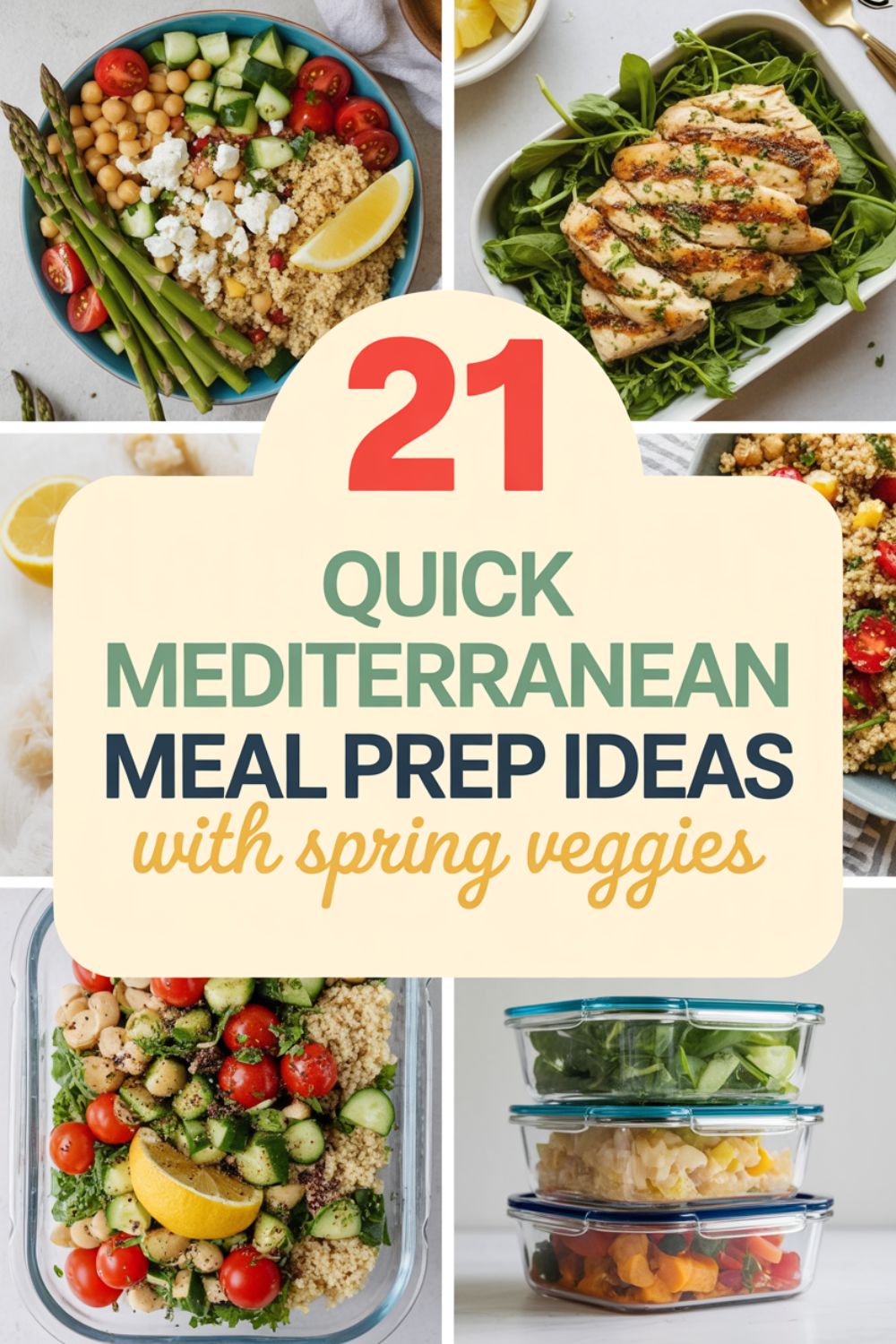
21 Quick Mediterranean Meal Prep Ideas with Spring Veggies
Spring vegetables are hitting farmers’ markets right now, and honestly, there’s no better way to use them than in a good Mediterranean meal prep routine. I’m talking asparagus, peas, artichokes, and those tender baby greens that make everything taste like sunshine decided to hang out in your fridge.
You know that feeling when Sunday rolls around and you’re staring at your empty containers thinking “I should probably meal prep” but the thought of cooking five days of food sounds exhausting? Yeah, same. That’s exactly why I started leaning into Mediterranean-style preps—they’re packed with flavor, they actually keep well, and you don’t need to be a professional chef to pull them off.
The Mediterranean approach to eating isn’t just trendy food blogger nonsense, either. Research from Mayo Clinic shows this way of eating supports heart health, reduces inflammation, and keeps your energy steady throughout the day. Plus, when you build meals around seasonal spring produce, you’re getting peak nutrients without breaking the bank.
Why Spring Veggies Work So Well for Mediterranean Meal Prep
Spring vegetables have this unique quality where they’re sturdy enough to hold up in the fridge but still taste fresh and crisp by Thursday. Asparagus keeps its snap, snap peas stay crunchy, and artichoke hearts don’t turn into mush like some winter squashes do.
The Mediterranean diet emphasizes seasonal produce, which makes perfect sense when you think about it. These veggies are at their nutritional peak in spring, loaded with vitamins A, C, and K, plus folate and fiber that actually fill you up.
I started using glass meal prep containers with divided compartments last year and it completely changed how my prepped meals hold up. No more soggy everything by Wednesday.
Pro Tip
Prep your veggies Sunday night, season your proteins Monday morning. Seriously, this one trick keeps everything tasting fresh and saves you from that “reheated for the fifth time” vibe.
The Base Components You’ll Use Over and Over
Before we get into specific meal ideas, let’s talk about the building blocks. Mediterranean meal prep relies on a handful of components that you can mix and match throughout the week.
Grains and Bases
Quinoa, farro, bulgur, and couscous are your friends here. I cook a big batch of quinoa in my rice cooker every Sunday and it becomes the foundation for at least three different meals. Farro has this nutty, chewy texture that pairs incredibly well with roasted spring vegetables.
Brown rice works too, obviously, but I’ve found that Mediterranean grains add more personality to your bowls. Plus they’re packed with fiber and protein, which means you’re not starving by 3 PM.
Proteins That Actually Reheat Well
Chicken thighs, chickpeas, white beans, salmon, and hard-boiled eggs. These are non-negotiable in my rotation. Chicken breast can get dry and sad, but thighs stay juicy even after reheating. I season mine with za’atar, lemon, and olive oil—takes maybe two minutes of active prep time.
Chickpeas roasted with cumin and paprika are ridiculously addictive. Toss them with avocado oil spray and roast at 425°F for about 25 minutes. They get crispy on the outside and creamy inside.
For more protein-focused options that still keep that Mediterranean vibe, check out these high-protein meal prep recipes.
Spring Vegetables That Hold Up
Asparagus, snap peas, artichoke hearts, radishes, baby spinach, arugula, cherry tomatoes, and English peas. These all keep their texture and flavor for 4-5 days when stored properly.
Here’s something I learned the hard way: don’t pre-dress your greens. Keep your dressings in small silicone containers and add them right before eating. Game changer.
21 Mediterranean Meal Prep Ideas with Spring Veggies
1. Lemon Herb Chicken with Roasted Asparagus and Quinoa
This one’s my go-to when I need something that feels restaurant-quality but comes together in under 45 minutes. Marinate chicken thighs in lemon juice, garlic, oregano, and olive oil. Roast everything on a sheet pan at 400°F—the asparagus goes on for the last 15 minutes.
The quinoa soaks up all those lemony pan juices when you toss it together. Get Full Recipe.
2. Mediterranean Chickpea Bowls with Spring Greens
Crispy roasted chickpeas, cucumber, cherry tomatoes, red onion, feta, and a pile of baby arugula. Drizzle with tahini dressing right before eating. This bowl is completely plant-based if you skip the feta, and it’s one of those meals that somehow tastes better on day three.
I make a double batch of the tahini dressing and use it on everything. Get Full Recipe.
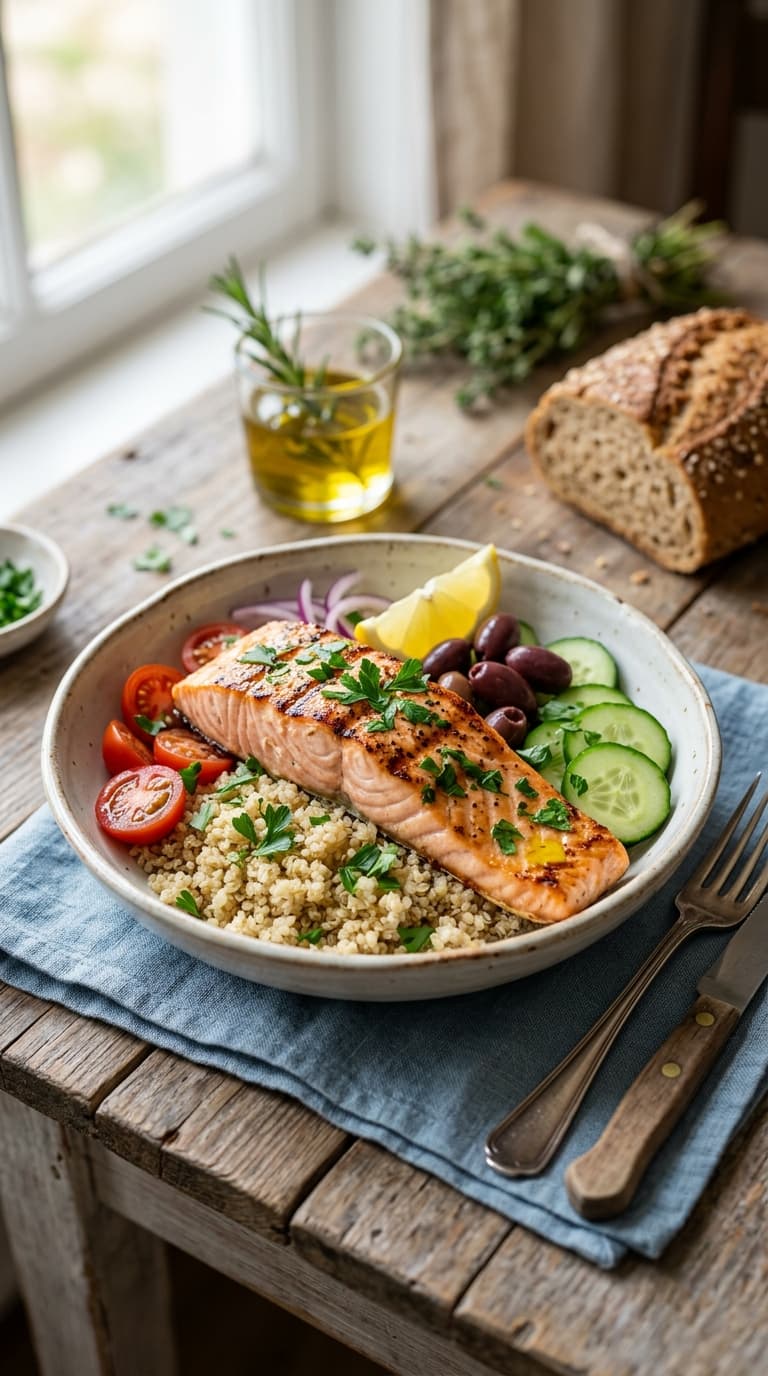
3. Greek-Style Salmon with Snap Peas and Farro
Salmon fillets seasoned with dried oregano, garlic powder, and a squeeze of lemon. Pair with blanched snap peas and nutty farro. The key is slightly undercooking the salmon on Sunday—it finishes cooking when you reheat it, so it stays moist instead of turning into cardboard.
4. Artichoke and White Bean Salad Jars
Layer these in mason jars for grab-and-go lunches: white beans, marinated artichoke hearts, cherry tomatoes, cucumber, red onion, fresh dill, and a lemon-olive oil dressing at the bottom. Shake before eating. The beans soak up all that tangy dressing flavor as the week goes on.
If you’re into the whole jar meal prep situation, you’ll probably love these aesthetic meal prep ideas that make your fridge look like an Instagram feed.
5. Za’atar Roasted Veggie Bowls
Cauliflower, asparagus, and cherry tomatoes tossed in za’atar spice blend and roasted until caramelized. Serve over bulgur with hummus and a handful of fresh herbs. Za’atar is one of those spice blends that makes you seem like you know what you’re doing in the kitchen, even if you’re winging it.
6. Greek Turkey Meatballs with Tzatziki and Veggies
Ground turkey mixed with spinach, feta, oregano, and garlic. Form into meatballs and bake. These freeze beautifully, FYI. Pair with cucumber salad, tomatoes, and a generous dollop of tzatziki that you keep separate until eating time.
I use a small cookie scoop to portion the meatballs so they’re all the same size and cook evenly. No more giant meatballs that are raw in the middle.
Quick Win
Make your tzatziki on Monday instead of Sunday. The flavors meld better overnight, and you’re not fighting with watery cucumber liquid all week.
7. Lemon Orzo with Peas and Shrimp
This feels fancy but it’s honestly just orzo cooked in vegetable broth, tossed with sautéed shrimp, fresh English peas, lemon zest, and parmesan. The peas stay bright green and pop in your mouth even on day four. Get Full Recipe.
8. Mediterranean Egg Muffins with Spinach and Feta
Whisk eggs with sautéed spinach, sun-dried tomatoes, feta, and oregano. Pour into a silicone muffin pan and bake. These work for breakfast, lunch, or snacks. I grab two on my way out the door most mornings.
They reheat in the microwave in about 45 seconds, which is less time than waiting for coffee to brew.
9. Grilled Halloumi with Roasted Spring Vegetables
Halloumi is the MVP of meal prep because it doesn’t get weird when reheated. Grill thick slices and serve with roasted asparagus, radishes, and cherry tomatoes. The cheese gets these beautiful grill marks that somehow survive the fridge journey.
10. Tabbouleh Bowls with Grilled Chicken
Bulgur mixed with tons of fresh parsley, mint, tomatoes, cucumber, and lemon juice. Top with sliced grilled chicken. This is one of those rare meals where the flavors actually improve as everything marinates together in the fridge.
Real tabbouleh is mostly herbs with some bulgur, not the other way around. Don’t be shy with the parsley.
11. Greek-Style Stuffed Peppers
Bell peppers stuffed with a mixture of quinoa, ground lamb or turkey, tomatoes, spinach, and feta. Bake until the peppers are tender. These freeze exceptionally well, so I usually make a double batch.
12. Mediterranean Breakfast Bowls
Quinoa as a base (yes, for breakfast), topped with a jammy soft-boiled egg, roasted cherry tomatoes, avocado, and everything bagel seasoning. It sounds weird but it works. The savory breakfast route keeps you full way longer than any muffin ever could.
Speaking of breakfast prep, if you’re looking for more morning options that don’t require thinking, these breakfast meal prep recipes will change your life.
13. Lemon Herb Falafel Bowls
Baked falafel (way less mess than frying), served over mixed greens with cucumber, tomato, pickled onions, and tahini sauce. I buy frozen falafel from Trader Joe’s when I’m feeling lazy and nobody can tell the difference. Get Full Recipe.
14. Artichoke and Olive Pasta Salad
Whole wheat pasta tossed with marinated artichokes, kalamata olives, sun-dried tomatoes, fresh basil, and a red wine vinaigrette. This is one of those dishes that tastes better cold, which makes it perfect for meal prep.
Use good quality olive oil here—it’s one of the main flavors, so the cheap stuff will taste, well, cheap.
15. Greek-Style Grain Bowls with Lamb
Ground lamb seasoned with cumin, cinnamon, and oregano, served over farro with roasted zucchini, tomatoes, cucumber, and a dollop of Greek yogurt. The warm spices make this feel special even though it’s basically just seasoned meat and grain.
16. Spring Vegetable Frittata Slices
Eggs baked with asparagus, peas, goat cheese, and fresh dill. Cut into wedges and store. Eat cold or reheated. These work for literally any meal, and they’re one of those recipes where you can throw in whatever vegetables need using up.
17. Mediterranean Tuna Salad Bowls
Not your sad desk lunch tuna salad. This version has white beans, cherry tomatoes, cucumber, red onion, capers, and a lemon-olive oil dressing. Serve over mixed greens or stuff into whole wheat pita pockets.
I keep high-quality canned tuna stocked in my pantry for exactly this reason. The stuff packed in olive oil tastes way better than water-packed.
Pro Tip
If you’re meal prepping for fat loss without the boring chicken-and-broccoli routine, these fat loss meal prep bowls prove you can eat well and still hit your goals.
18. Roasted Red Pepper and Chickpea Bowls
Roasted red peppers, crispy chickpeas, cucumber, red onion, and crumbled feta over quinoa. Drizzle with a quick lemon-tahini dressing. The roasted peppers add this sweet, smoky flavor that makes the whole bowl taste way more complex than it actually is.
19. Greek-Style Chicken Souvlaki Boxes
Marinated chicken cut into cubes and grilled (or baked if you’re not feeling the grill life), served with cucumber-tomato salad, tzatziki, and whole wheat pita cut into triangles. This is essentially deconstructed souvlaki, and it’s absurdly good.
20. Spring Vegetable and Feta Couscous
Couscous tossed with roasted asparagus, peas, cherry tomatoes, fresh mint, lemon zest, and crumbled feta. Couscous cooks in about five minutes, which makes it perfect for those Sundays when meal prep feels like a chore. Get Full Recipe.
21. Mediterranean Breakfast Egg Wrap Preps
Scrambled eggs with spinach, sun-dried tomatoes, and feta wrapped in whole wheat tortillas. Wrap individually in foil and store. Reheat in the oven or toaster oven (not the microwave—they get soggy). These are clutch for mornings when you need to eat in the car.
For even more portable meal prep options that won’t fall apart in your bag, check out these meal prep bowls that travel well.
How to Actually Make This Work in Real Life
Look, meal prep sounds great in theory until Sunday afternoon hits and you realize you have to cook for three hours straight. Here’s how I’ve made it sustainable.
Batch Your Cooking Methods
Roast all your vegetables at once on two sheet pans. While they’re in the oven, cook your grains on the stovetop and prep your proteins. Everything happens simultaneously instead of one painful task after another.
I use heavy-duty sheet pans that don’t warp in the oven. Cheap sheet pans bend and everything slides to the middle, which is annoying when you’re trying to get even roasting.
Don’t Overcomplicate the Flavors
Mediterranean food is about good ingredients treated simply. Lemon, olive oil, garlic, oregano, and salt. That’s basically it. You don’t need seventeen spices and a complicated marinade.
Quality matters here, though. Harvard Health notes that extra virgin olive oil is a cornerstone of the Mediterranean diet, so invest in a decent bottle.
Prep Components, Not Complete Meals
Instead of assembling five identical bowls on Sunday, cook your proteins, grains, and vegetables separately. Then mix and match throughout the week based on what you’re actually craving. Some days you want a bowl, other days you want a wrap, and this method keeps things flexible.
Kitchen Tools That Make Mediterranean Meal Prep Actually Easy
After way too many meal prep fails, these are the tools and resources that consistently make the process less painful. No fluff, just stuff that genuinely helps.
Glass Meal Prep Containers with Compartments
Stop using plastic containers that stain and smell weird after two uses. Glass containers with dividers keep your grains separate from your dressing and actually go from fridge to microwave without drama. I have about twelve of these and I use them all every single week.
Heavy-Duty Sheet Pans (Set of 2)
You need at least two commercial-grade sheet pans that won’t warp. Cheap pans bend in high heat and everything slides into a pile. These handle 450°F no problem and clean up easily. Pro move: line them with parchment for zero-scrubbing cleanup.
Mini Food Processor
Making hummus, pesto, or chopping herbs becomes a ten-second job with a small food processor. The tiny ones are perfect for single-batch sauces and dressings without dirtying a giant machine.
Mediterranean Meal Prep Master Guide (Digital)
This comprehensive guide breaks down shopping lists, prep schedules, and mix-and-match formulas so you’re not guessing what goes with what. Includes printable grocery lists organized by store section.
Spring Produce Meal Planner Template
A fillable PDF template that helps you plan which spring veggies to prep each week based on what’s in season. Takes the mental load off deciding what to make. Just fill in your proteins and grains, and it generates your prep list.
Mediterranean Flavor Combinations Cheat Sheet
This one-page reference shows you which herbs, spices, and ingredients traditionally pair together in Mediterranean cooking. Tape it inside your spice cabinet and never second-guess your seasoning choices again.
Storage Tips That Actually Keep Food Fresh
The best meal prep in the world means nothing if everything turns gross by Tuesday. Here’s what actually works.
Keep Wet and Dry Separate
Dressings, sauces, and anything liquid goes in tiny containers with tight-fitting lids. Add them right before eating. This one change eliminated about 80% of my sad-soggy-salad problems.
Use the Freshness Order Rule
Eat your most delicate ingredients early in the week. Leafy greens and herbs go first, Monday and Tuesday. Sturdier vegetables like roasted asparagus and tomatoes hold until Thursday or Friday. Plan your week accordingly instead of hoping everything stays perfect.
Invest in Proper Storage
Air is the enemy. Airtight glass containers keep food fresher way longer than those flimsy plastic takeout containers. Plus they don’t hold smells or stains, which matters when you’re using them constantly.
If you’re trying to keep meals under a certain calorie count while still eating satisfying portions, these meal prep bowls under 400 calories show you exactly how to balance your macros.
Making It Work When You Hate Eating the Same Thing
Real talk: eating identical meals five days straight is boring. That’s why the component method is superior. You prep the building blocks but assemble different combinations each day.
Monday might be a grain bowl with chicken and veggies. Tuesday you wrap the same ingredients in a whole wheat tortilla. Wednesday you toss everything over mixed greens as a salad. Same components, completely different eating experience.
I also keep a rotation of different hot sauces and condiments that completely change the flavor profile. Harissa one day, tzatziki the next, then switch to a lemon-tahini dressing. Your taste buds think they’re getting variety even though you’re eating the same base ingredients.
Speaking of variety, if you need meal prep that actually looks good enough to excite you about eating it, these colorful meal prep bowls prove that food can be both healthy and gorgeous.
Budget-Friendly Swaps Without Sacrificing Flavor
Mediterranean meal prep can get pricey if you’re buying fancy imported ingredients for everything. Here’s how to keep costs reasonable.
Protein Priorities
Chicken thighs cost less than breasts and taste better in meal prep. Canned chickpeas and white beans are stupid cheap and packed with protein. Ground turkey works in place of lamb in most recipes. Save the expensive seafood for one or two meals, not your entire week.
Seasonal is Cheaper
Spring vegetables are abundant right now, which means they’re affordable. Asparagus in March costs half what it does in November. Shop what’s in season and your grocery bill drops automatically.
Skip Specialty Stores for Basics
You don’t need to buy quinoa from Whole Foods. Regular grocery stores carry perfectly good grains, olive oil, and spices. Save your specialty store budget for things that actually matter, like good feta or quality olives.
For more wallet-friendly options that don’t taste like budget food, check out these cheap meal prep recipes that’ll keep your bank account happy.
Frequently Asked Questions
How long do Mediterranean meal preps actually stay fresh in the fridge?
Most cooked Mediterranean components stay good for 4-5 days when stored properly in airtight containers. Cooked grains, roasted vegetables, and proteins like chicken or chickpeas hold up well through the work week. The key is keeping wet ingredients separate—don’t dress salads or add sauces until you’re ready to eat. Leafy greens should be eaten earlier in the week (Monday-Wednesday), while heartier vegetables like roasted asparagus and tomatoes last through Friday.
Can I freeze Mediterranean meal preps?
Some components freeze beautifully, others not so much. Cooked grains, proteins like chicken or turkey meatballs, and cooked chickpeas all freeze well for up to 3 months. However, fresh vegetables, leafy greens, and anything with cucumber or tomatoes get mushy when frozen. Your best bet is freezing proteins and grains separately, then pairing them with freshly prepped vegetables when you’re ready to eat. Stuffed peppers and frittatas also freeze exceptionally well.
Do I need to reheat all Mediterranean meal preps or can I eat them cold?
One of the best things about Mediterranean meal prep is that most of it tastes great at room temperature or cold. Grain bowls with chickpeas, salads with white beans, and tabbouleh-style dishes are all designed to be eaten cold. Proteins like chicken or salmon can go either way—some people prefer them cold in a bowl with greens, others like reheating them. The Mediterranean diet traditionally features lots of room-temperature dishes, so eating cold meal preps is totally authentic.
What’s the best way to keep meal prep interesting when eating Mediterranean food all week?
Prep components instead of complete meals. Cook your proteins, grains, and vegetables separately, then mix and match combinations throughout the week. Monday you might make a bowl, Tuesday a wrap, Wednesday a salad—same ingredients, totally different eating experience. Also, keep multiple sauces and dressings on hand (tzatziki, tahini, lemon-herb, harissa) to completely change the flavor profile. Different sauces make your taste buds think they’re getting variety even when the base ingredients stay the same.
Is Mediterranean meal prep good for weight loss?
Absolutely, when portioned appropriately. Mediterranean-style eating emphasizes whole foods, vegetables, lean proteins, and healthy fats—all things that keep you full and satisfied without excessive calories. The high fiber content from vegetables and whole grains helps with satiety, and the emphasis on olive oil over butter provides healthy fats that support metabolism. Just watch portion sizes on high-calorie ingredients like olive oil, nuts, and cheese. A typical Mediterranean meal prep bowl with proper portions lands around 400-500 calories and keeps you full for hours.
The Reality Check You Need
Meal prep isn’t going to solve all your problems. Some weeks you’ll nail it and feel like a functional adult. Other weeks you’ll forget to pack your lunch on Tuesday and end up buying overpriced salads anyway.
The goal isn’t perfection—it’s having healthy options ready more often than not. Even if you only prep three days instead of five, that’s three days you’re not making questionable food decisions at 2 PM when you’re starving and cranky.
Start small. Prep just your proteins and grains one week. Add vegetables the next week. Build the habit gradually instead of trying to become a meal prep influencer overnight.
Mediterranean-style eating works because it’s flexible, flavorful, and doesn’t require you to give up entire food groups or eat like a rabbit. Spring vegetables make it even better because everything tastes fresh and vibrant instead of like you’re choking down health food.
The biggest compliment I’ve gotten on my meal prep game came from a coworker who said “your lunch actually looks good.” That’s the bar, honestly. Food that looks and tastes good enough that you’re not counting down the minutes until you can eat something else.
These 21 ideas give you more than enough variety to keep things interesting for weeks, maybe months if you rotate them properly. Pick three or four that sound appealing, prep them this Sunday, and see how it goes. Worst case scenario, you have lunch for a few days. Best case, you realize meal prep doesn’t have to be miserable.