7 Days Mediterranean Diet For Inflammation: Anti-Inflammatory Meal Plan
7 Days Mediterranean Diet For Inflammation: Anti-Inflammatory Meal Plan
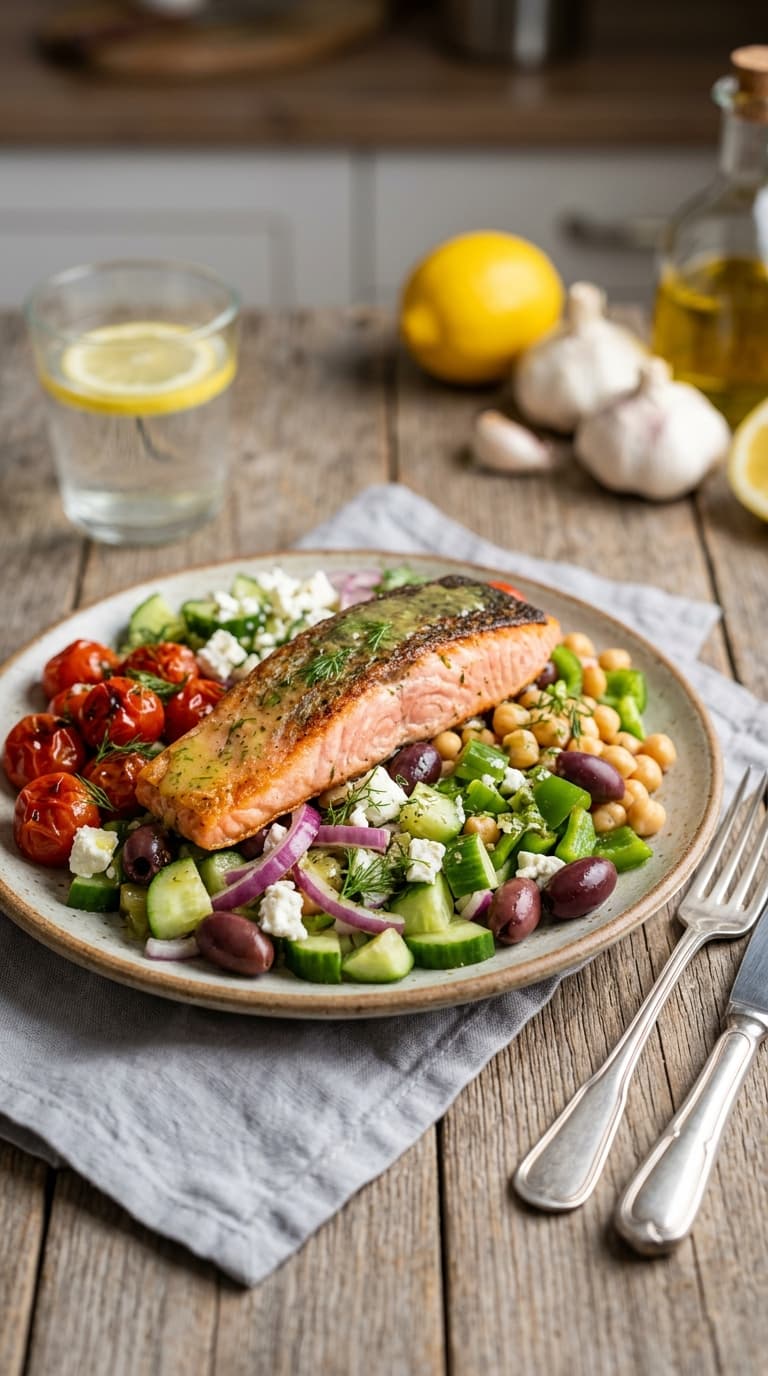
If your body feels like it’s constantly fighting a low-grade war against itself — joint stiffness, bloating, brain fog, fatigue — you’re not imagining things. Chronic inflammation is sneaky like that. And while there’s no magic pill (sorry), there is a way of eating that scientists and nutritionists keep coming back to: the Mediterranean diet. I’ve been through the rabbit hole of anti-inflammatory eating myself, and honestly, this is the one that actually sticks. It’s real food, it tastes incredible, and your body genuinely responds. Let’s get into it.
Why the Mediterranean Diet Fights Inflammation So Well
Here’s the thing about inflammation — your body needs some of it. It’s how you heal. The problem is when it becomes chronic, simmering in the background and wrecking your energy, gut health, joints, and mood. The Mediterranean diet tackles this by flooding your system with foods that actively calm that response.
We’re talking omega-3 fatty acids from fish, polyphenols from olive oil and berries, fiber from legumes and whole grains, and a serious lineup of antioxidants from colorful vegetables. IMO, no other diet does this as elegantly — or as deliciously. 🙂
Studies consistently show that people who follow this eating pattern have lower levels of C-reactive protein (CRP), which is one of the key markers of inflammation. That’s not placebo. That’s your biology changing.
What You’ll Be Eating (And What You’re Ditching)
Before we get to the 7-day plan, let’s get clear on the ground rules. The Mediterranean diet isn’t about calorie counting or suffering through bland food.
You’ll eat plenty of:
- Extra virgin olive oil (your new best friend)
- Fatty fish like salmon, sardines, and mackerel
- Leafy greens, tomatoes, bell peppers, zucchini
- Legumes — chickpeas, lentils, white beans
- Whole grains — farro, bulgur, quinoa, brown rice
- Nuts and seeds — walnuts, almonds, flaxseeds
- Fresh herbs — turmeric, garlic, oregano, rosemary
- Berries, citrus fruits, pomegranate
You’ll cut back on (or cut out):
- Processed foods and refined sugar
- Red meat (occasional is fine, daily is not)
- Vegetable oils high in omega-6s
- Packaged snacks and fast food
Simple enough, right? Good. Now let’s actually build your week.
The 7-Day Anti-Inflammatory Mediterranean Meal Plan
If you’ve ever tried to build a week of healthy meals from scratch and ended up eating cereal by Wednesday — same. That’s exactly why a structured plan matters. Check out these quick Mediterranean meal prep ideas for busy weeks if you want even more inspiration alongside this plan.
Day 1 — Monday: Start Strong
Breakfast: Greek yogurt with walnuts, blueberries, and a drizzle of honey
Lunch: Big Mediterranean salad — romaine, cucumber, cherry tomatoes, olives, red onion, feta, lemon-olive oil dressing
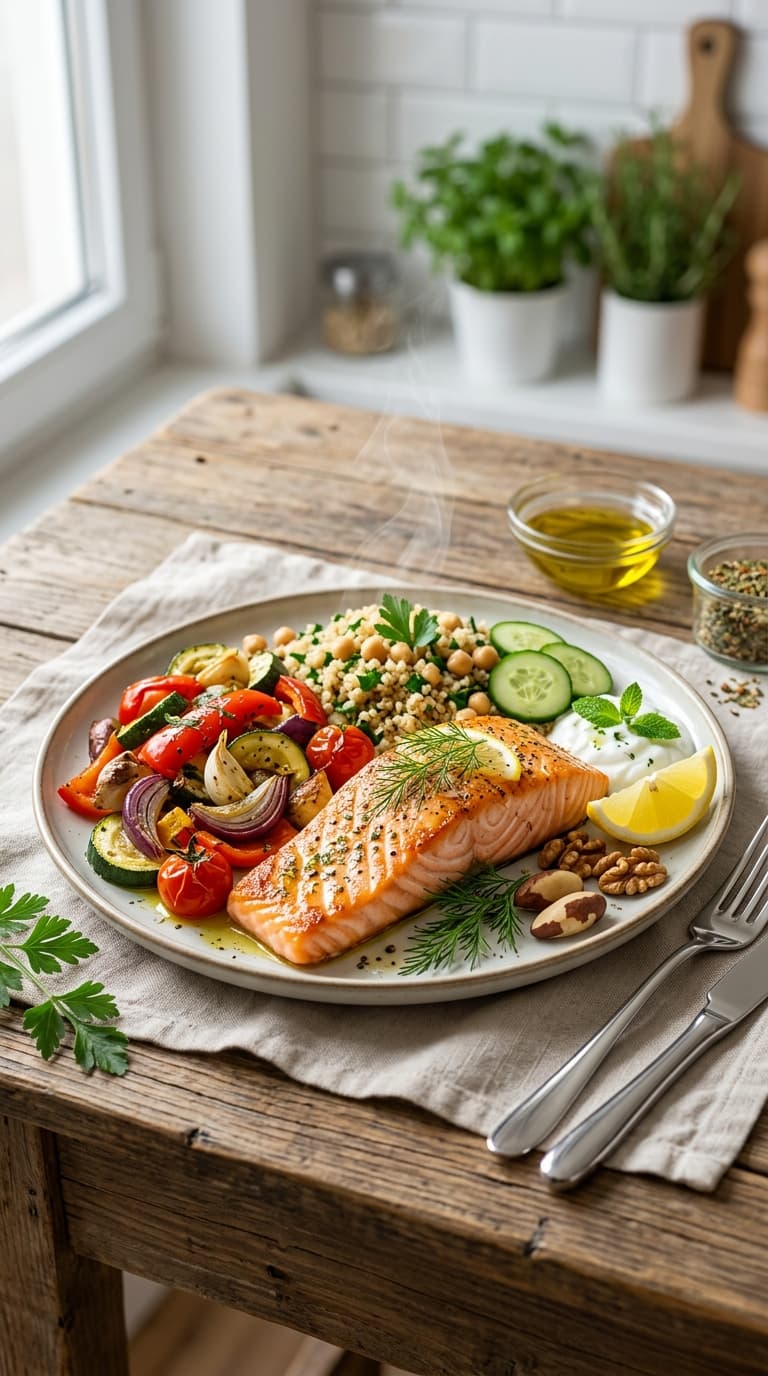
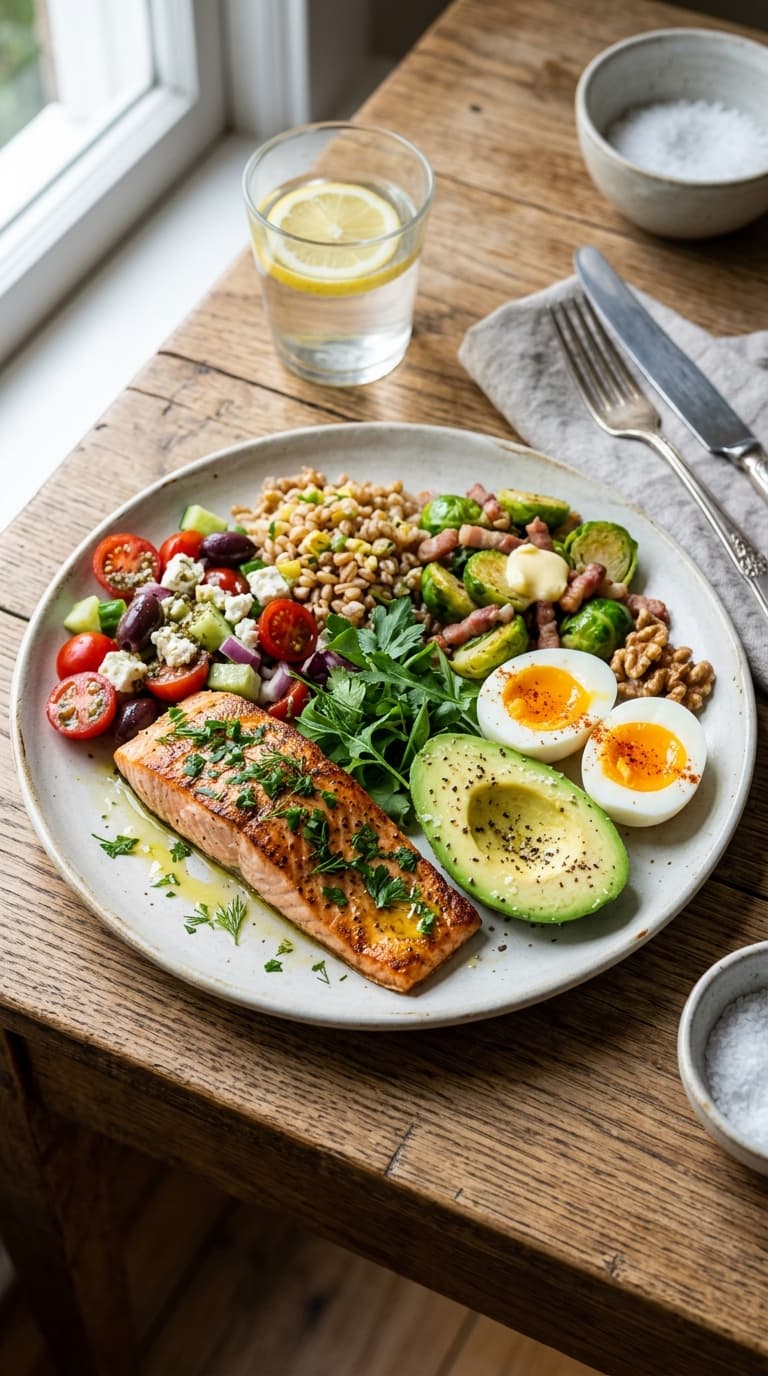
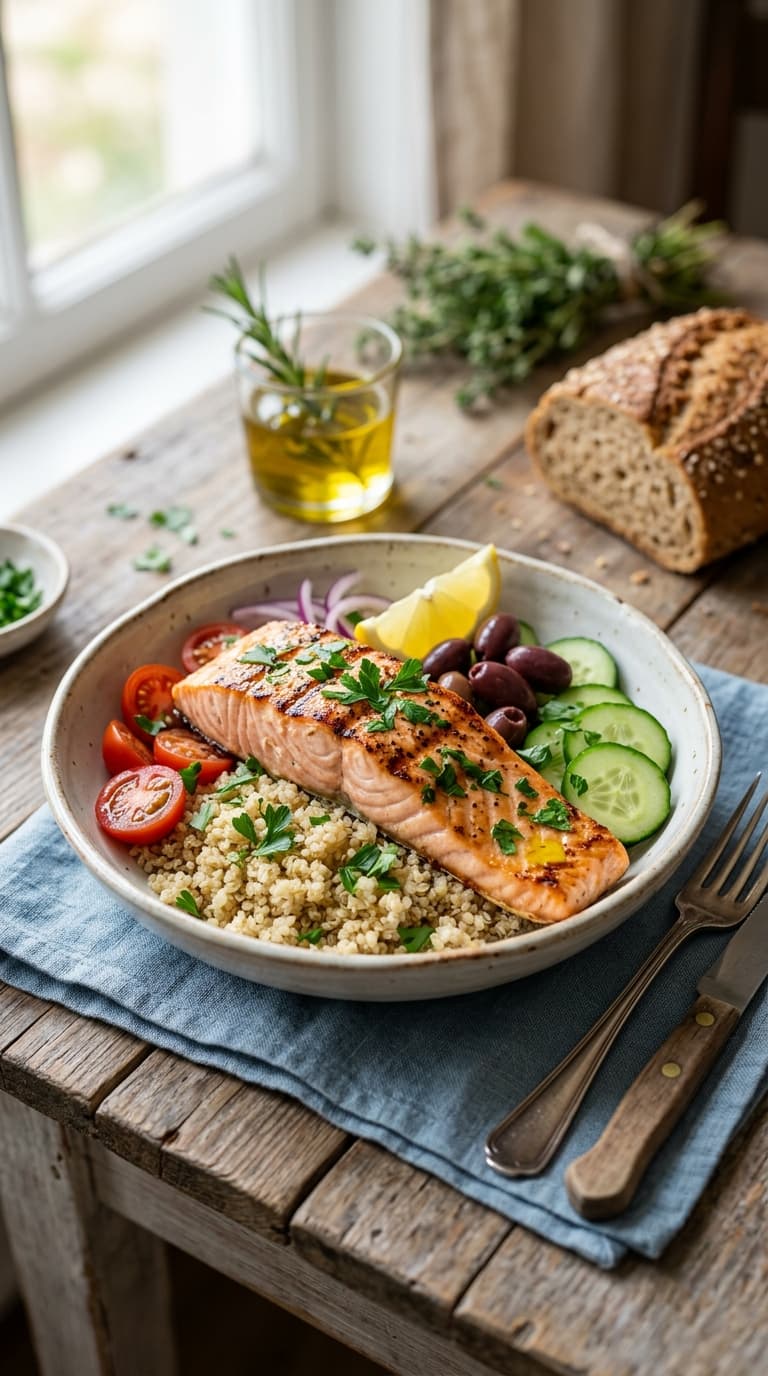
Dinner: Baked salmon with roasted asparagus and a side of quinoa
Snack: A small handful of almonds + an orange
Salmon is your Monday MVP. It’s loaded with EPA and DHA, two omega-3s that directly suppress inflammatory pathways. Pair it with asparagus — one of the most underrated anti-inflammatory vegetables out there — and you’re already off to a serious start.
Day 2 — Tuesday: Plant Power Day
Breakfast: Overnight oats with chia seeds, almond milk, sliced banana, and cinnamon
Lunch: Lentil soup with whole grain pita and a cucumber-tomato salad
Dinner: Stuffed bell peppers with brown rice, chickpeas, and herbs
Snack: Hummus with carrot and celery sticks
Ever wondered why chickpeas show up in basically every Mediterranean recipe? Because they’re a fiber and protein powerhouse that also happens to lower inflammatory markers. Tuesday keeps things plant-heavy and your gut absolutely loves it.
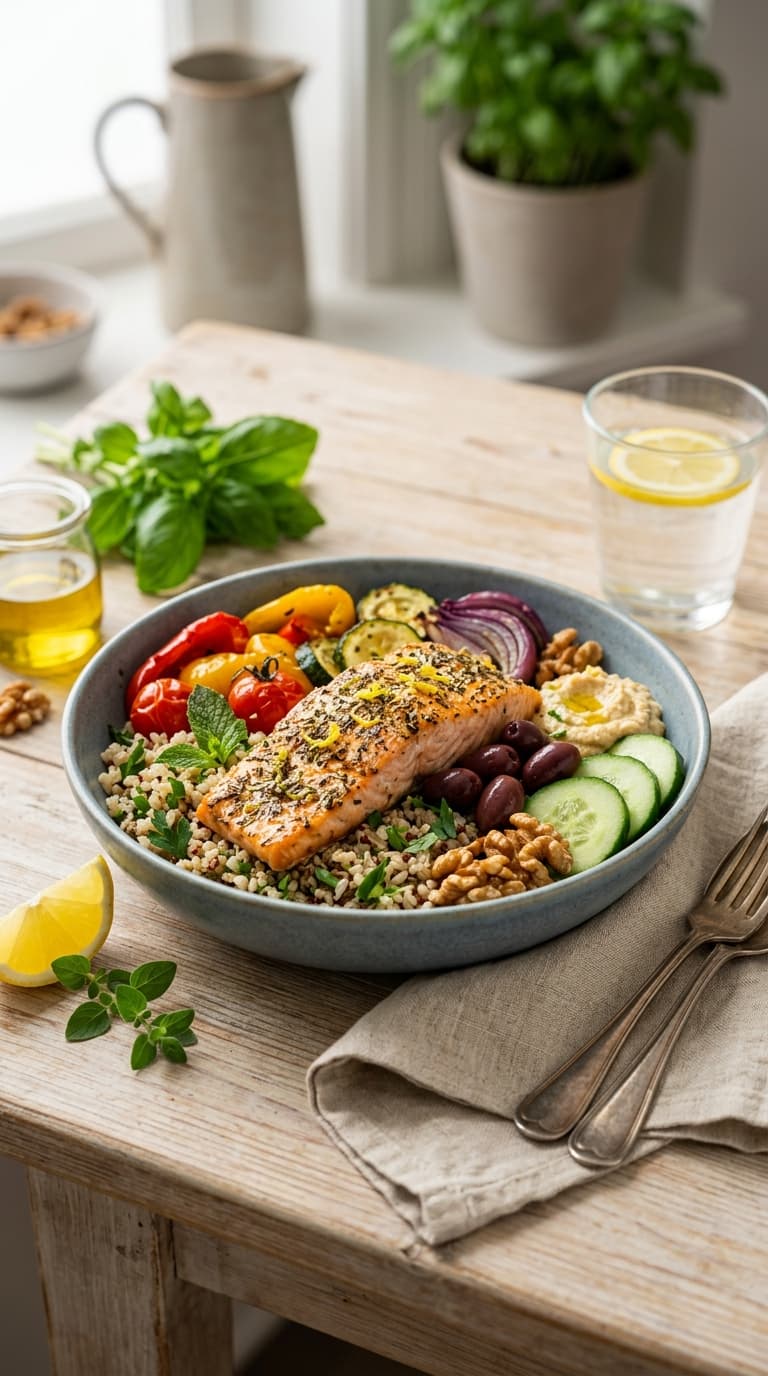
If you’re a fan of prepping ahead, these Mediterranean bowls you can prep in advance pair beautifully with this kind of plant-forward day.
Day 3 — Wednesday: Midweek Mediterranean Reset
Breakfast: Two-egg veggie scramble with spinach, tomatoes, and olive oil, served with whole grain toast
Lunch: Tuna and white bean salad over arugula with lemon dressing
Dinner: Grilled chicken thighs with roasted cauliflower, olives, and herbed farro
Snack: A small bowl of mixed berries
Tuna is one of those foods that earns its spot every week. Canned in olive oil is perfectly fine — don’t let anyone food-snob you out of an easy, affordable, anti-inflammatory lunch. The white beans add prebiotic fiber, which feeds the good gut bacteria that keep inflammation low.
Day 4 — Thursday: Heart and Gut Happy
Breakfast: Smoothie with spinach, frozen mango, flaxseeds, almond butter, and oat milk
Lunch: Grilled veggie wrap in a whole wheat tortilla — zucchini, roasted peppers, hummus, and greens
Dinner: Shrimp stir-fry with garlic, olive oil, cherry tomatoes, and whole grain pasta
Snack: Walnuts and a few squares of dark chocolate (70%+ — yes, this counts)
FYI — dark chocolate with a high cocoa percentage is genuinely anti-inflammatory thanks to its flavonoid content. I know, I know. Hard life. Thursday also brings shrimp into the mix, which is a lean protein that still delivers anti-inflammatory benefits without the heaviness of red meat.
Day 5 — Friday: Fresh and Flavorful
Breakfast: Avocado toast on sourdough with everything bagel seasoning and a poached egg
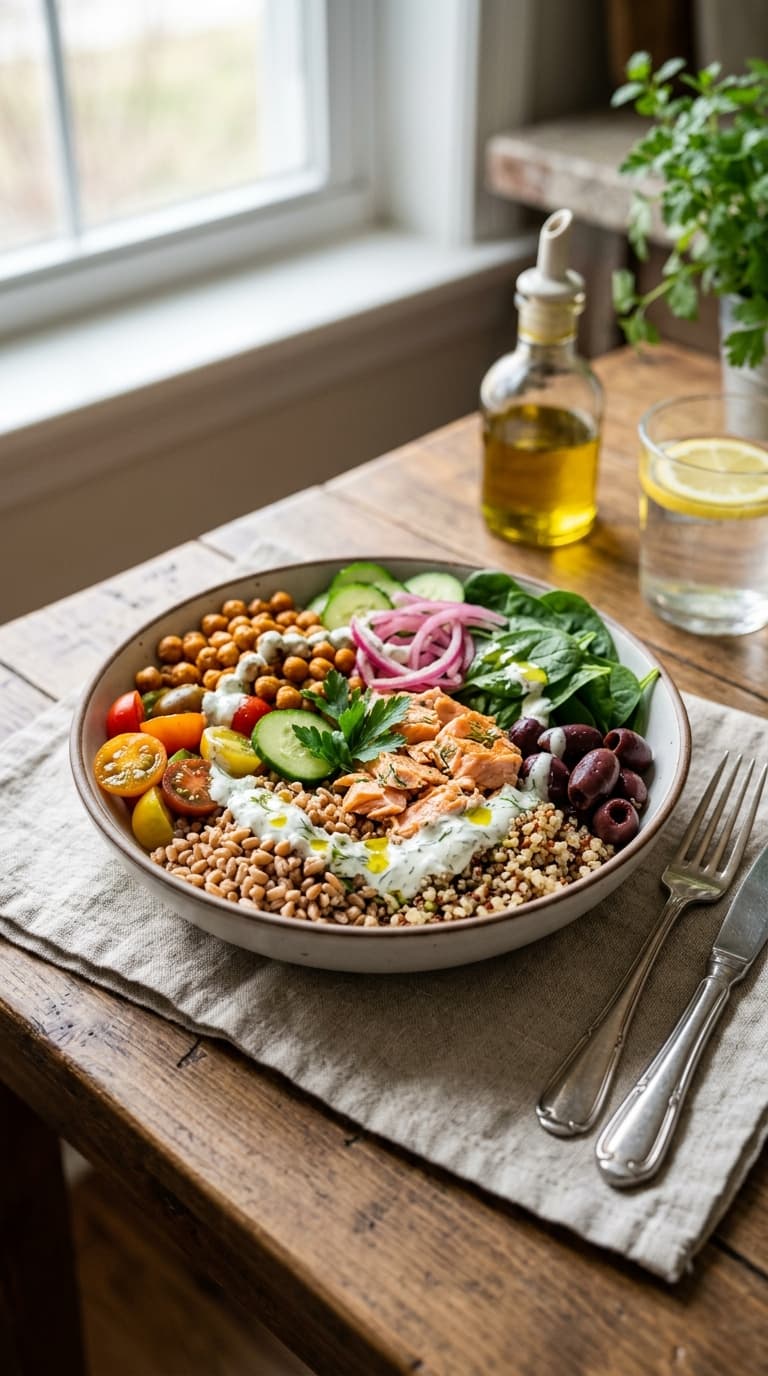
Lunch: Greek-style grain bowl — farro, cucumber, cherry tomatoes, olives, red onion, grilled chicken, tzatziki
Dinner: Baked cod with a tomato-caper sauce, roasted broccolini, and herbed brown rice
Lunch Snack: Celery with almond butter
Friday’s grain bowl deserves its own moment. Farro is a nutty ancient grain that’s rich in magnesium and fiber — both of which help regulate inflammatory responses. It also reheats beautifully, which is a bonus if you’re doing any Mediterranean lunch prep for work.
Day 6 — Saturday: Relax Into It
Breakfast: Shakshuka — eggs poached in a spiced tomato and pepper sauce, served with crusty whole grain bread
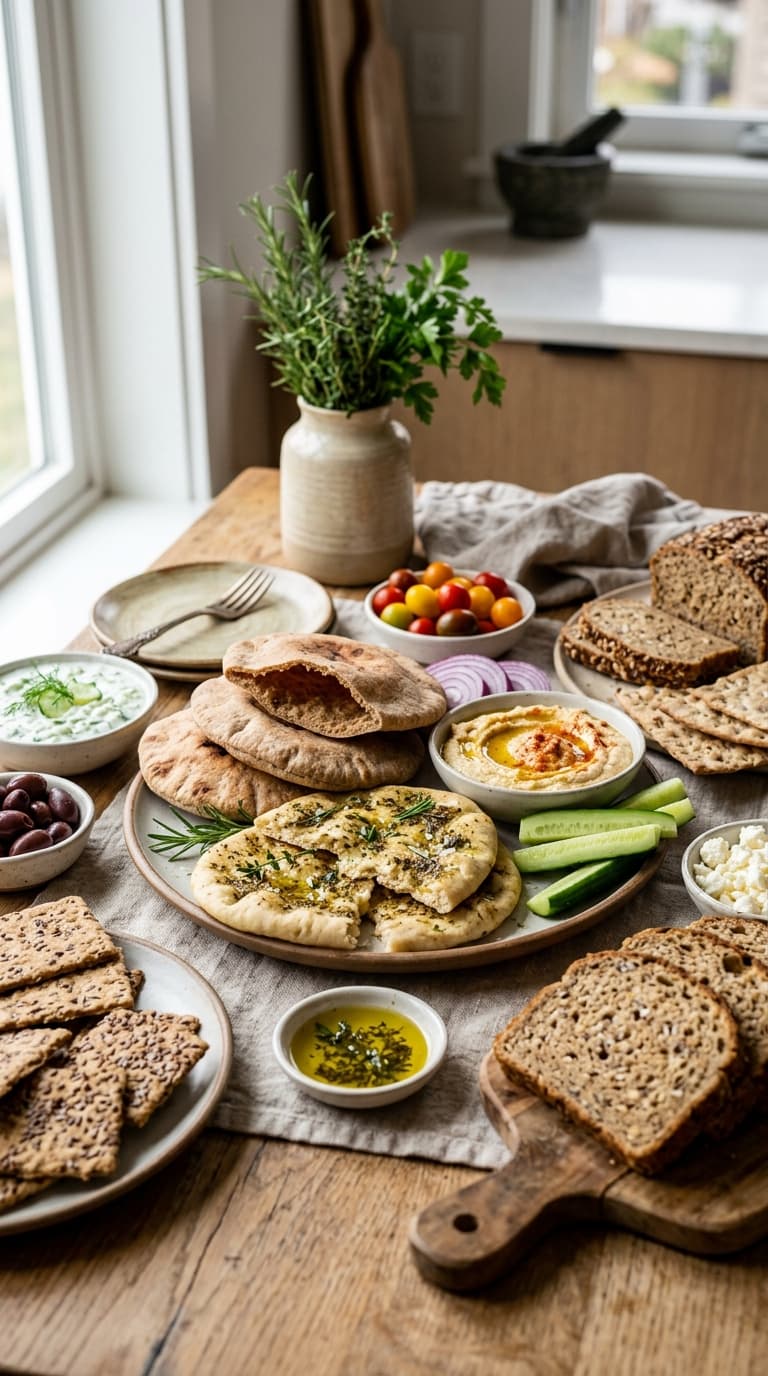
Lunch: Big mezze spread — hummus, tabbouleh, stuffed grape leaves, pita, and a plate of cut veggies
Dinner: Slow-roasted lamb with lemon, garlic, and herbs over a bed of lentils and wilted greens
Snack: Fresh fruit plate with a small portion of goat cheese
Saturday is when you get to actually enjoy cooking. The mezze lunch is my personal favorite — it looks fancy, requires minimal effort, and feels festive. :/ Shakshuka for breakfast is a warm, rich, anti-inflammatory bomb thanks to the lycopene in cooked tomatoes.
Lamb is one of the few red meats that works well here — it’s higher in conjugated linoleic acid (CLA) and fits occasional red meat consumption that the Mediterranean lifestyle allows for.
Day 7 — Sunday: Prep and Nourish
Breakfast: Chia seed pudding made with coconut milk, topped with kiwi and pomegranate seeds
Lunch: Chickpea and vegetable soup with whole grain crusty bread
Dinner: Baked salmon again (yes, again — it’s that good) with roasted sweet potato wedges and a green salad
Snack: A handful of mixed nuts and dried apricots
Sunday is both your rest day and your reset day. Make a big batch of that chickpea soup — it stores well for up to four days and makes the start of your next week so much easier. If you want to build an entire week like this from a plan that’s already mapped out, the 7-day Mediterranean meal prep plan with a free printable is worth bookmarking.
Key Anti-Inflammatory Ingredients to Keep Stocked
Let’s talk pantry strategy. You’ll notice certain ingredients showing up again and again throughout this plan — that’s intentional. Consistency is what actually moves the needle on inflammation.
Here’s what to always have on hand:
- Extra virgin olive oil — buy a good quality one; it makes a difference
- Canned salmon, tuna, and sardines — affordable, shelf-stable, and nutritionally excellent
- Dried and canned legumes — lentils, chickpeas, white beans
- Whole grains — farro, quinoa, bulgur, brown rice
- Frozen berries — just as nutritious as fresh and way cheaper
- Nuts and seeds — walnuts, almonds, chia seeds, flaxseeds
- Herbs and spices — turmeric, garlic, oregano, rosemary, cumin
- Dark leafy greens — spinach, arugula, kale
A solid grocery list is honestly half the battle. If you want help building yours from scratch, this guide on how to build the perfect Mediterranean grocery list covers everything you need.
Meal Prepping This Plan Without Losing Your Mind
Real talk: the reason most people fall off anti-inflammatory eating isn’t willpower — it’s logistics. When Wednesday hits and you’re exhausted, you’re not going to cook a salmon fillet from scratch. You’re going to order a pizza. Been there.
Here’s a simple Sunday prep routine:
- Cook a big batch of grains (farro, quinoa, or brown rice)
- Roast two sheet pans of vegetables
- Prep two protein sources (bake salmon + hard boil eggs)
- Make a big pot of soup or lentils
- Wash and chop raw veggies for snacks and salads
This takes about 90 minutes tops and sets you up for almost the entire week. If you love the idea of prepping vibrant, colorful bowls that make healthy eating feel exciting, these balanced bowls with protein, carbs, and veggies are a great companion resource.
What to Expect When You Eat This Way for a Week
Honestly? Don’t expect miracles in seven days — that would be unrealistic and I’m not going to hype you like that. But here’s what many people do notice within the first week:
- Reduced bloating — the fiber and probiotics from yogurt and fermented foods help regulate your gut quickly
- More stable energy — no more 3pm crashes when you’re not spiking blood sugar all day
- Less joint stiffness in the mornings — especially if you’ve been consistent with omega-3s
- Clearer skin — inflammatory foods like refined sugar and seed oils mess with your skin; removing them helps
- Better sleep — magnesium-rich foods (leafy greens, nuts, legumes) support deeper sleep cycles
The bigger changes — lower CRP levels, improved cardiovascular markers, weight normalization — happen over weeks and months. But one week is enough to feel the difference and want to keep going.
Tips to Stay Consistent After Day 7
The 7-day plan is your starting point, not your finish line. Consistency beats perfection every single time. A few things that actually help:
- Rotate your proteins — salmon one week, sardines the next, tuna after that. Variety keeps things interesting.
- Keep snacks simple — nuts, fruit, hummus, and dark chocolate are all you need
- Eat seasonally — Mediterranean eating naturally follows the seasons; spring veggies in spring, root vegetables in fall
- Don’t demonize one bad meal — eating a burger on Friday doesn’t erase six days of good choices
- Batch cook on weekends — even 60–90 minutes of prep changes everything
If you’re just getting started with structured meal prepping in general, these beginner-friendly meal prep bowls anyone can make are a great place to build your confidence before layering in the Mediterranean specifics.
The Bottom Line
Here’s what it comes down to: the Mediterranean diet for inflammation isn’t a trend, a quick fix, or a restrictive program. It’s a genuinely sustainable way of eating that your body recognizes and responds to at a cellular level. Seven days won’t fix everything — but seven days done consistently, week after week, absolutely will shift things.
You’ve got a full plan, a pantry list, a prep strategy, and the “why” behind all of it. The only thing left is to actually start. Go grab some salmon, a good bottle of olive oil, and make Monday’s salad something worth looking forward to. Your future self — the one with less inflammation and more energy — will thank you.