Mediterranean Diet For Weight Maintenance (After You Hit Your Goal)
Mediterranean Diet For Weight Maintenance (After You Hit Your Goal)
You did it. You hit your goal weight. You celebrated, maybe bought those jeans, and felt amazing — and then the panic set in. Now what? Keeping the weight off is honestly the part nobody talks about enough. The good news? The Mediterranean diet wasn’t built for crash-course weight loss. It was built for life. And that’s exactly why it’s your best friend when you’re trying to stay at your goal weight without losing your mind — or your social life.
Why the Mediterranean Diet Actually Works Long-Term
Most diets are like that one friend who’s super intense for a month and then ghosts you. The Mediterranean diet is different. It’s not a rulebook — it’s more of a lifestyle framework that people in Greece, Italy, and Spain have been following for centuries without obsessing over calories or macros.
The core idea is simple: eat mostly whole foods, lean proteins, healthy fats, and plenty of vegetables. No food group is demonized. No meal is “off-limits.” That alone makes it one of the most sustainable approaches to long-term weight maintenance out there.
Research consistently backs this up. Studies show that people who follow a Mediterranean-style eating pattern are significantly better at maintaining weight loss compared to those on low-fat or calorie-restricted diets. The reason? Satiety. You feel full. You feel satisfied. You don’t spend your evenings staring at the fridge like it owes you money.
What “Maintenance Mode” Actually Looks Like
Here’s the shift most people miss — maintenance isn’t the same as loss. When you were losing weight, you were in a calorie deficit. Now you need to eat at maintenance calories, which means eating more than you were. And weirdly, a lot of people struggle with that mentally.
The Mediterranean diet makes this transition smoother because the foods naturally regulate your hunger hormones. Olive oil, fatty fish, legumes, and fiber-rich vegetables keep you full longer, which means you’re less likely to accidentally eat past your maintenance level.
Think of it as recalibrating rather than stopping. You’re not “done” — you’re just entering a different phase.
The Key Foods to Keep On Your Plate
Olive Oil — Your Non-Negotiable
If there’s one thing you take from this article, let it be this: extra virgin olive oil is your best investment in this lifestyle. It’s rich in monounsaturated fats and polyphenols that support heart health, reduce inflammation, and keep your metabolism ticking smoothly.
Use it on salads, drizzle it over roasted veggies, or use it as your primary cooking fat. IMO, it also makes everything taste better, which is a win we should all appreciate.
Fish and Lean Proteins
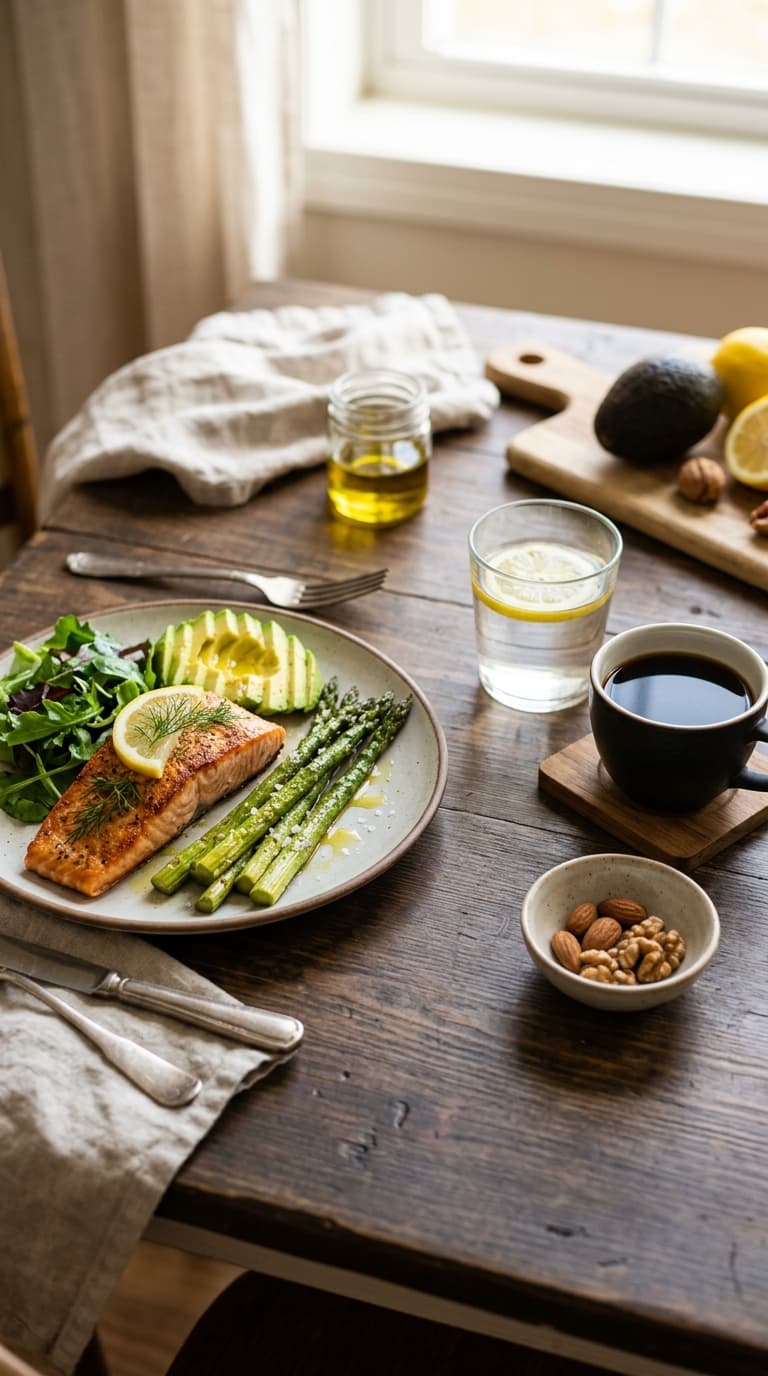
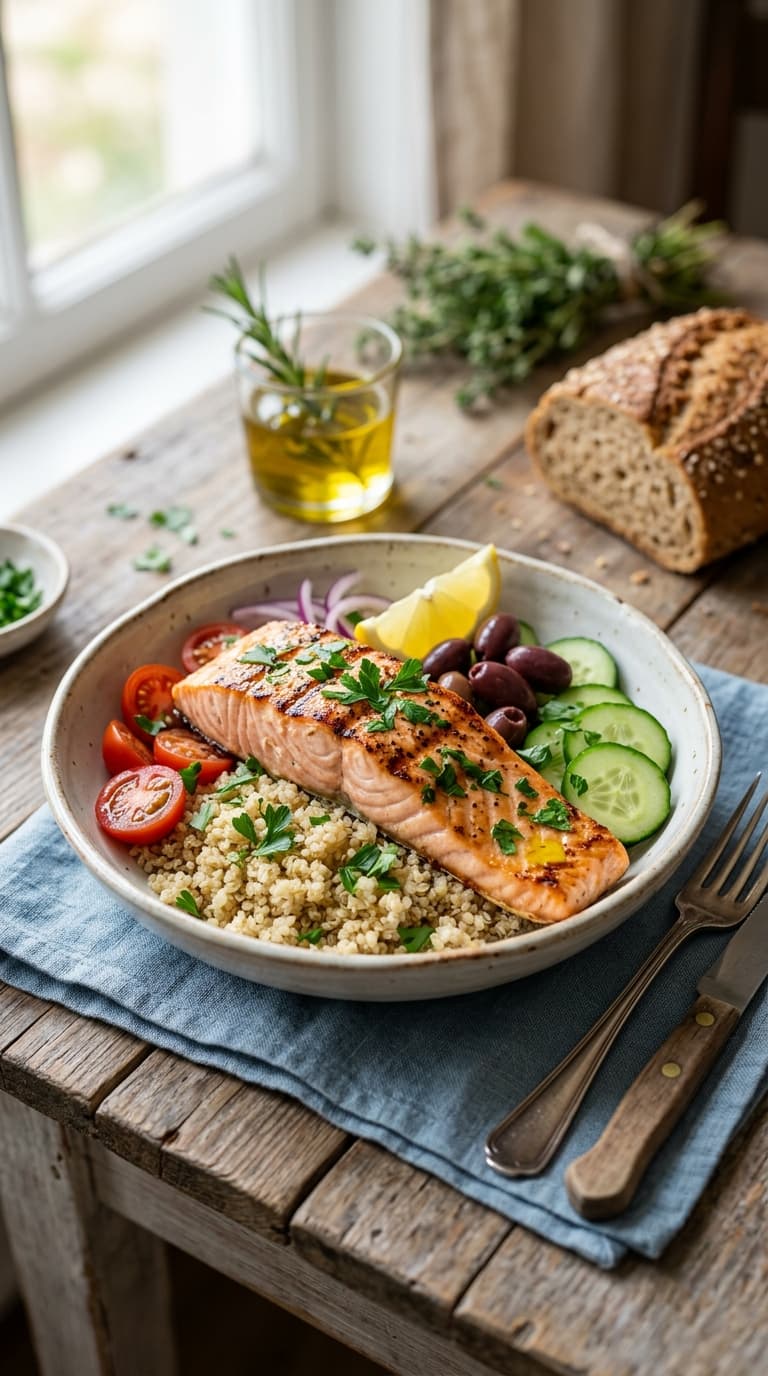
The Mediterranean approach leans heavily on fish — especially fatty fish like salmon, sardines, and mackerel. These give you omega-3s, which support everything from brain health to managing inflammation.
- Aim for 2–3 servings of fish per week
- Include plant-based proteins like lentils, chickpeas, and beans regularly
- Eggs and poultry are fine in moderate amounts
- Red meat? Sure, occasionally — but don’t make it a daily thing
Pairing your proteins with veggies and whole grains is the move here. If you’re batch prepping for the week, these quick Mediterranean meal prep ideas for busy weeks are genuinely a game-changer.
Whole Grains, Not Refined
Swap white bread and white rice for whole grain versions. Quinoa, farro, bulgur, and whole wheat pita are all Mediterranean staples that keep your blood sugar stable and your energy levels steady throughout the day.
Stable blood sugar = fewer cravings = fewer accidental snack attacks at 10pm. You see how this works.
Vegetables — The More, The Better
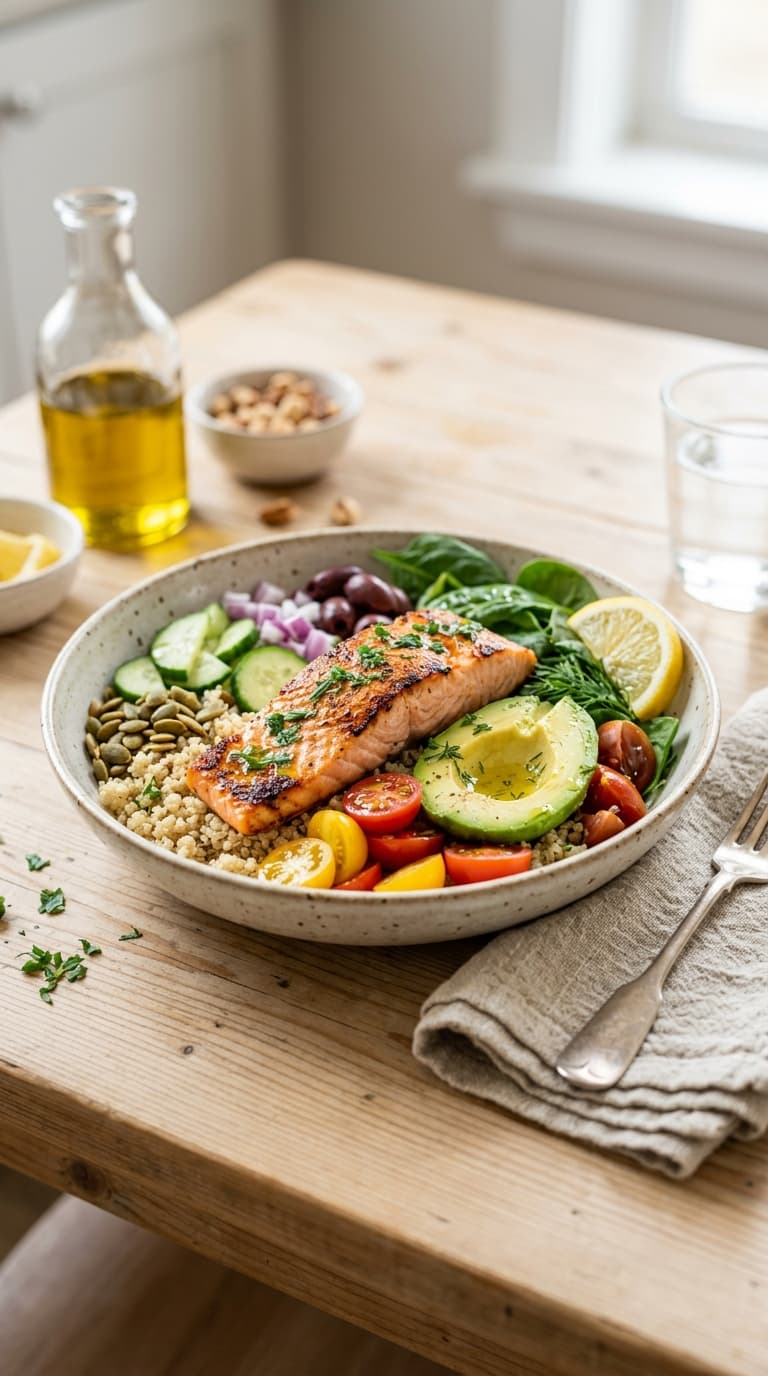
Half your plate should be vegetables at most meals. Not because someone told you to, but because Mediterranean vegetables are genuinely delicious when prepared well. Roasted eggplant, grilled zucchini, stuffed bell peppers, tabbouleh — this is not sad diet food.
Load up on:
- Leafy greens (spinach, arugula, kale)
- Cruciferous vegetables (broccoli, cauliflower)
- Nightshades (tomatoes, eggplant, peppers)
- Root vegetables (sweet potato, carrots)
Legumes — The Underrated Heroes
Chickpeas, lentils, black beans, cannellini beans — these are central to the Mediterranean diet and massively underrated in Western eating. They’re cheap, filling, high in fiber and protein, and incredibly versatile.
If you’re looking for balanced meal prep bowls with protein, carbs, and veggies, legumes are your foundation. They store well, reheat well, and they genuinely keep you full for hours.
How to Structure Your Meals for Maintenance
Don’t Skip the Fat
One of the biggest mistakes people make coming off a weight loss phase is still fearing fat. On the Mediterranean diet, fat is your friend — specifically unsaturated fat from sources like olive oil, avocado, nuts, and seeds.
Fat slows digestion, helps absorb fat-soluble vitamins, and keeps you satisfied. Cutting it too aggressively will leave you hungry, cranky, and raiding the pantry by 3pm.
Build Your Plates Around Satiety
The goal in maintenance is building meals that keep you full without going over your calorie needs. The Mediterranean approach naturally does this through fiber, protein, and healthy fat combinations.
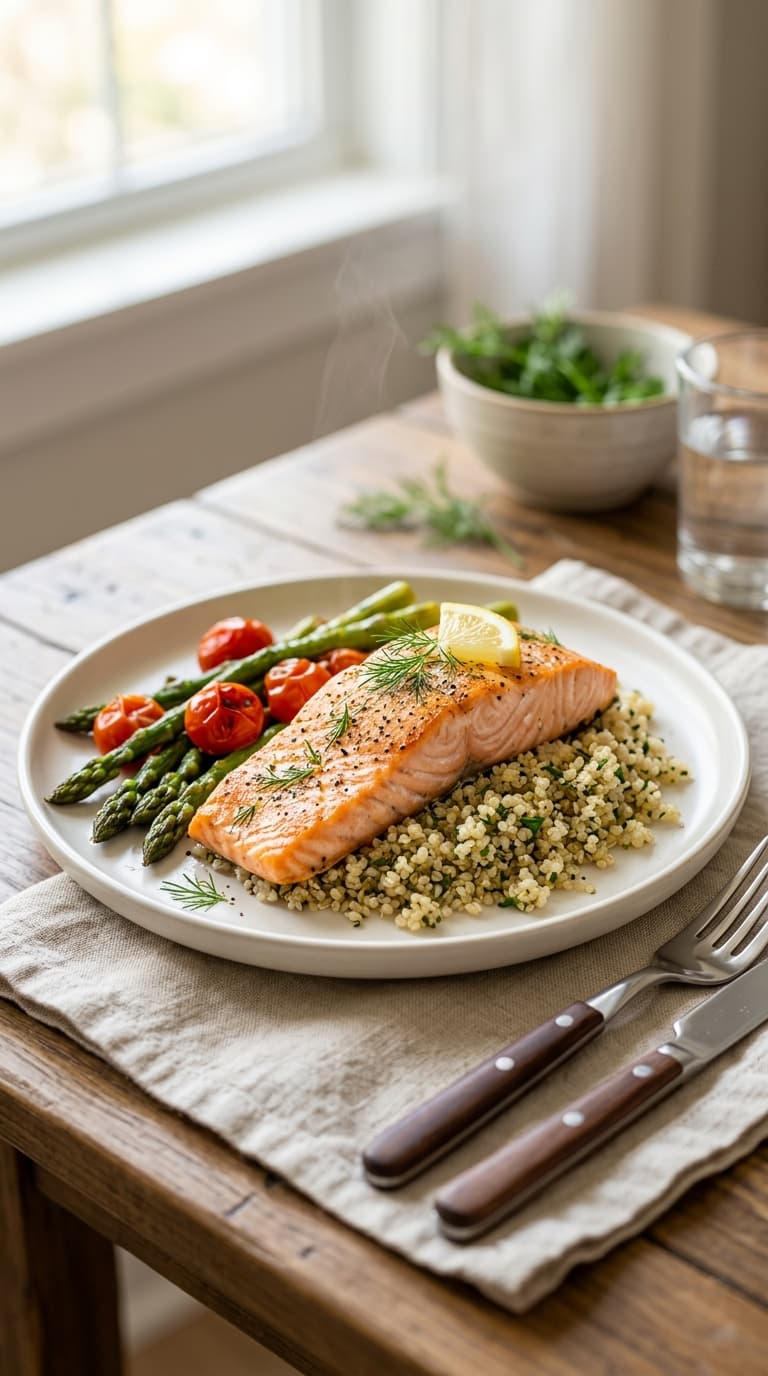
A solid maintenance plate looks like:
- 50% vegetables (roasted, raw, or cooked)
- 25% whole grains or legumes
- 25% lean protein (fish, chicken, eggs, or plant-based)
- A generous drizzle of olive oil
That’s it. No complicated formulas. No weighing every gram of food like it’s a chemistry experiment.
Prep Ahead So You Don’t Make Desperate Decisions
Real talk — most diet slip-ups happen not because of lack of willpower, but because you’re hungry and there’s nothing ready to eat. Meal prepping your Mediterranean staples on Sunday removes that problem entirely.
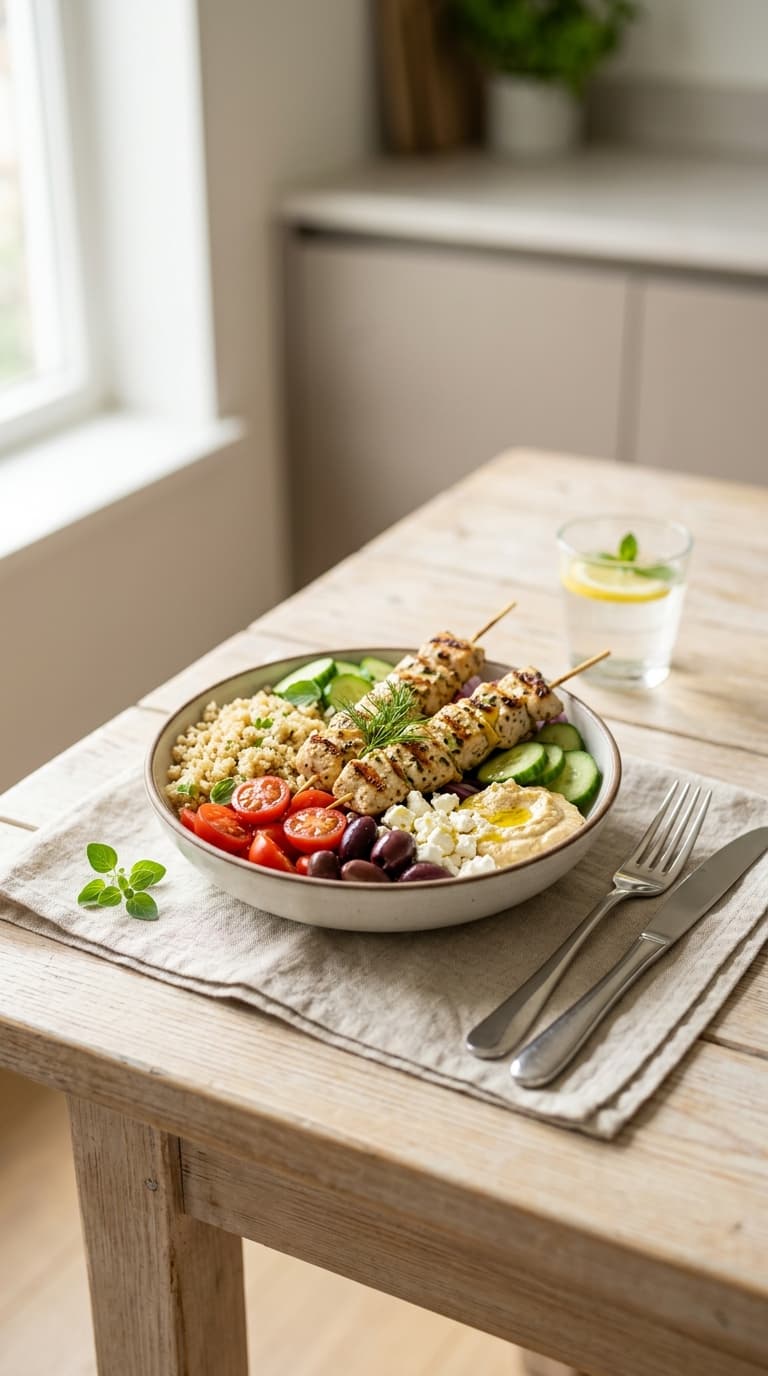
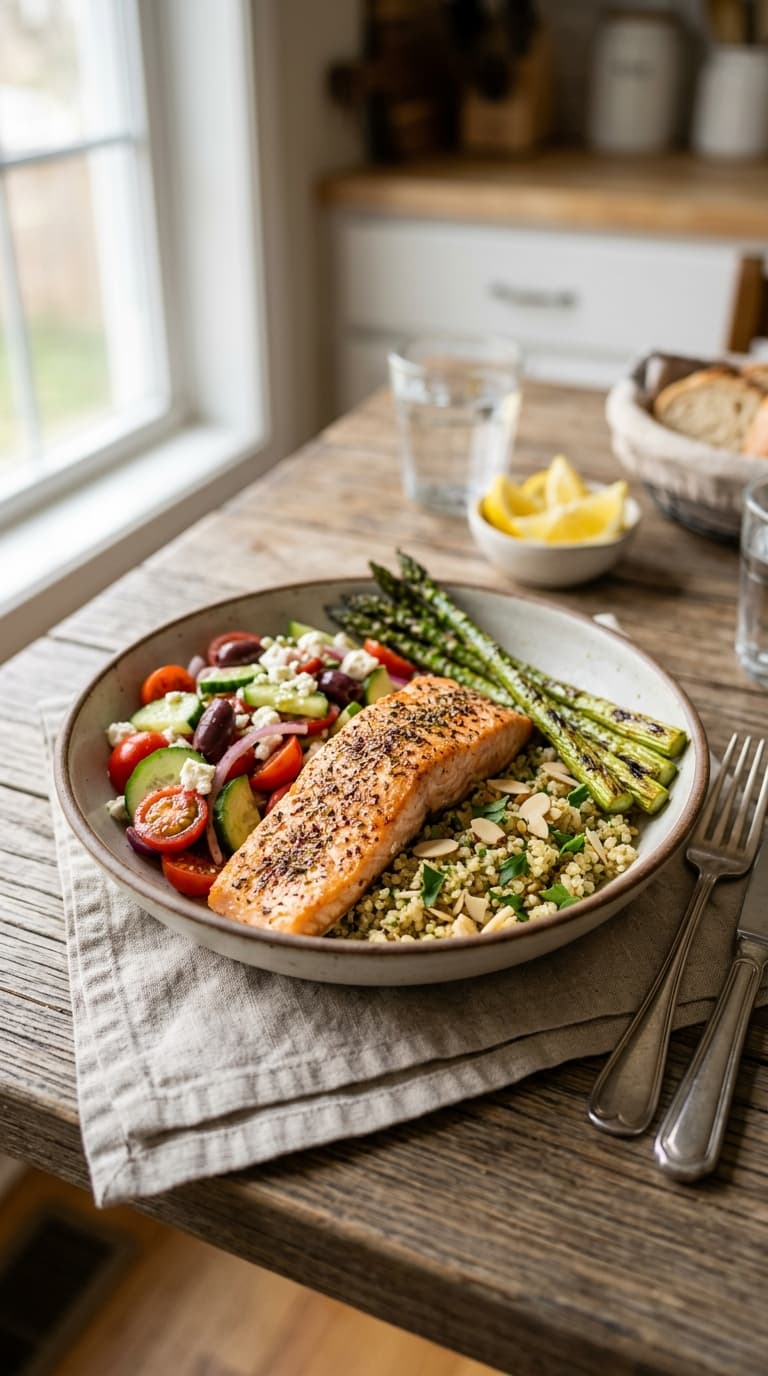
Batch cook some grains, roast a tray of vegetables, prep a big container of hummus or tzatziki, and portion out your proteins. You can even put together Mediterranean bowls you can prep in advance so your weekday lunches are basically on autopilot.
Eating Out Without Losing Your Mind
Here’s where the Mediterranean diet really shines for maintenance — it’s incredibly restaurant-friendly. You don’t have to interrogate the waiter about every ingredient or bring your own food in a Tupperware container (please don’t be that person).
At most restaurants, you can stick to Mediterranean principles easily:
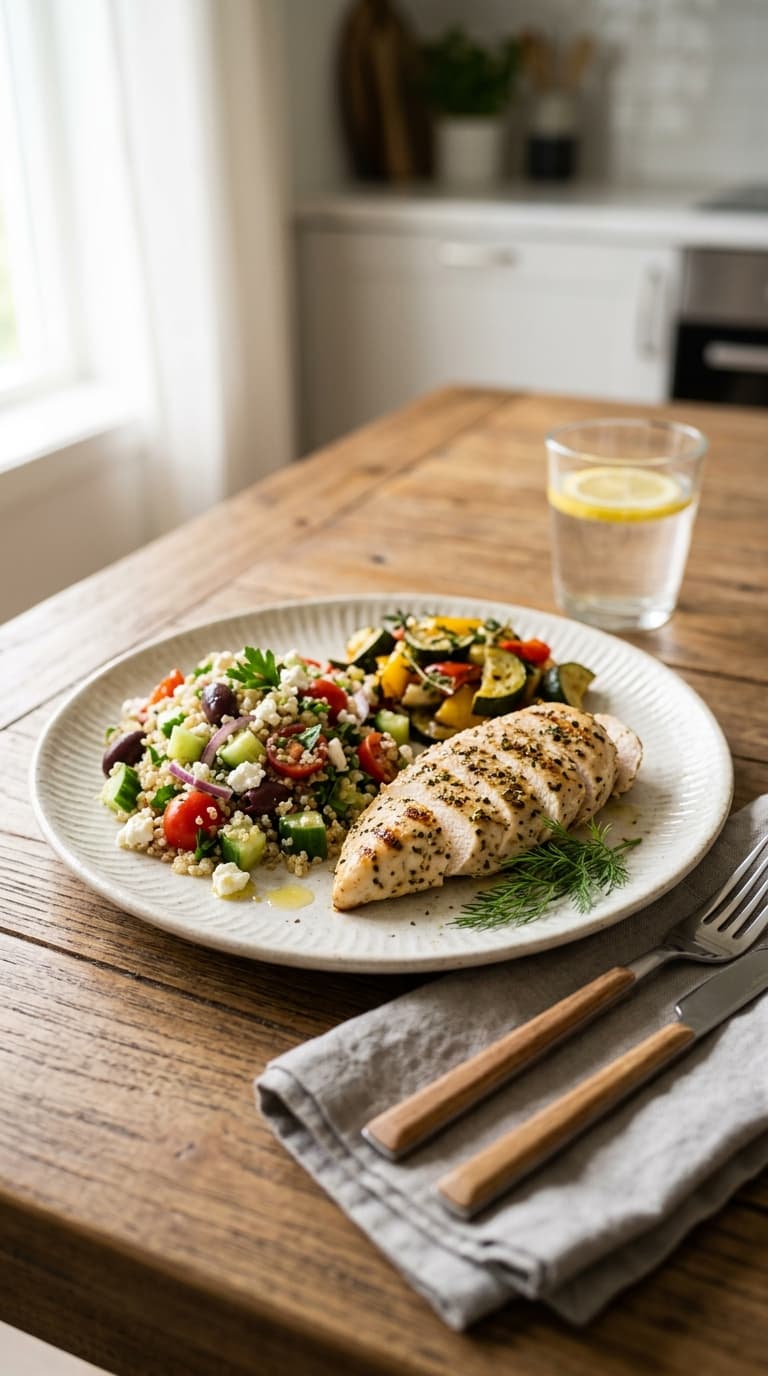
- Choose grilled fish or chicken over fried options
- Ask for olive oil and lemon instead of heavy dressings
- Load up on any vegetable sides available
- Pick whole grain bread over white when possible
- Enjoy a glass of red wine if you want — yes, really 🙂
The flexibility here is what makes long-term maintenance actually achievable. You can enjoy a dinner out, have dessert occasionally, and not feel like you’ve “ruined” anything.
Managing Portions Without Counting Calories
One of the best things about maintenance on the Mediterranean diet is that you don’t have to obsessively count calories once you get the hang of it. The foods themselves regulate your appetite pretty well if you’re eating the right balance.
That said, portions still matter. A “drizzle” of olive oil is not half the bottle. A serving of pasta is not a mountain. Getting familiar with general portion sizes early on helps you build an intuitive sense of what’s right for your body.
Practical Portion Tips
- Use a medium-sized plate, not a giant serving platter
- Fill half with veg before adding anything else
- Eat slowly — it takes about 20 minutes for your brain to register fullness
- Stop at 80% full (the Japanese call this hara hachi bu — it works)
The Role of Snacking in Maintenance
Mediterranean snacking is genuinely enjoyable, which is something you don’t hear often in diet culture. FYI, this isn’t a list of rice cakes and sadness. We’re talking:
- A small handful of mixed nuts
- Hummus with cucumber and carrot sticks
- A few olives and some feta
- Greek yogurt with a drizzle of honey
- Fresh fruit with almond butter
If you want to prep your snacks ahead so they’re grab-and-go, these Mediterranean snacks you can batch prep on Sunday are worth bookmarking.
These snacks hit the sweet spot between satisfying and balanced — they won’t spike your blood sugar, and they won’t leave you hungry again in 20 minutes.
Handling Weekends, Holidays, and Life
Maintenance doesn’t mean perfection. One of the most important things you can internalize is that a few off-plan meals don’t undo weeks of consistent effort. The Mediterranean diet is designed to flex around real life.
Holidays, birthdays, travel — enjoy them. The key is getting back to your regular patterns immediately after, not punishing yourself or “making up for it” by restricting. That restriction-binge cycle is what derails long-term maintenance more than any single meal ever could.
Think of the 80/20 principle: if you eat well most of the time, the occasional indulgence is not just fine — it’s probably good for your mental health.
Building a Weekly Rhythm That Sticks
The people who maintain their weight long-term aren’t the ones with the strictest rules — they’re the ones with the most consistent habits. Building a weekly rhythm around Mediterranean eating makes the whole thing feel automatic rather than effortful.
A simple weekly rhythm might look like:
- Sunday: Batch prep grains, roast vegetables, prep proteins
- Monday–Friday: Eat from your prepped meals with minimal cooking needed
- One or two evenings: Cook a fresh Mediterranean dinner (it’s genuinely enjoyable)
- Weekends: Eat flexibly but keep Mediterranean principles as your default
If you need a structured starting point, this 7-day Mediterranean meal prep plan lays it all out for you clearly.
Staying Consistent Without Getting Bored
Boredom is the enemy of any long-term eating plan. The Mediterranean diet has a natural advantage here because the variety is genuinely enormous — different cuisines across Greece, Italy, Spain, Turkey, Morocco, and Lebanon all fall under this umbrella.
Rotate your proteins. Try new grains. Experiment with different spice blends — za’atar, harissa, ras el hanout, dukkah. Make your meals visually appealing. There’s real evidence that eating colorful, attractive meals actually increases satisfaction.
Speaking of colorful, these rainbow meal prep bowls are proof that healthy eating can also be genuinely beautiful to look at. Your meals don’t have to be beige and boring :/
Monitoring Without Obsessing
In maintenance, you want some form of check-in without turning it into an anxiety-inducing ritual. Weigh yourself once a week, at the same time, under the same conditions. This gives you trend data without the day-to-day noise from water retention, hormones, and other normal fluctuations.
Set yourself a maintenance window — most people find a 2–3 kg (4–6 lb) range comfortable. If you drift above it, tighten up your portions and focus on your core Mediterranean habits for a couple of weeks. It’s usually enough to course-correct without anything drastic.
The goal is awareness, not obsession. There’s a big difference.
A Note on Movement
The Mediterranean lifestyle isn’t just about food. Physical activity — particularly daily walking — is a core part of how people in Mediterranean cultures maintain their health. You don’t need a gym membership or a complex training plan.
Walking after meals, taking the stairs, cycling, swimming — these all fit naturally into a Mediterranean lifestyle and support weight maintenance by keeping your metabolism active and your muscle mass healthy.
Wrapping It Up
You worked hard to get to your goal weight. Now it’s about making sure that effort actually sticks — and the Mediterranean diet gives you one of the most enjoyable, flexible, and research-backed frameworks to do exactly that.
The key takeaways are simple: eat whole foods, lean proteins, healthy fats, and plenty of vegetables. Prep your meals so you’re never making desperate food decisions. Build flexibility into your week. Enjoy your food. Actually enjoy it.
Maintenance isn’t about white-knuckling your way through life. It’s about building a relationship with food that’s sustainable, satisfying, and genuinely good for you. The Mediterranean diet does all of that — it just also happens to be delicious, which honestly feels like cheating.
Now go drizzle some olive oil on something and live your best life. You earned it.