14-Day DASH Diet Meal Plan With Grocery List
14-Day DASH Diet Meal Plan With Grocery List
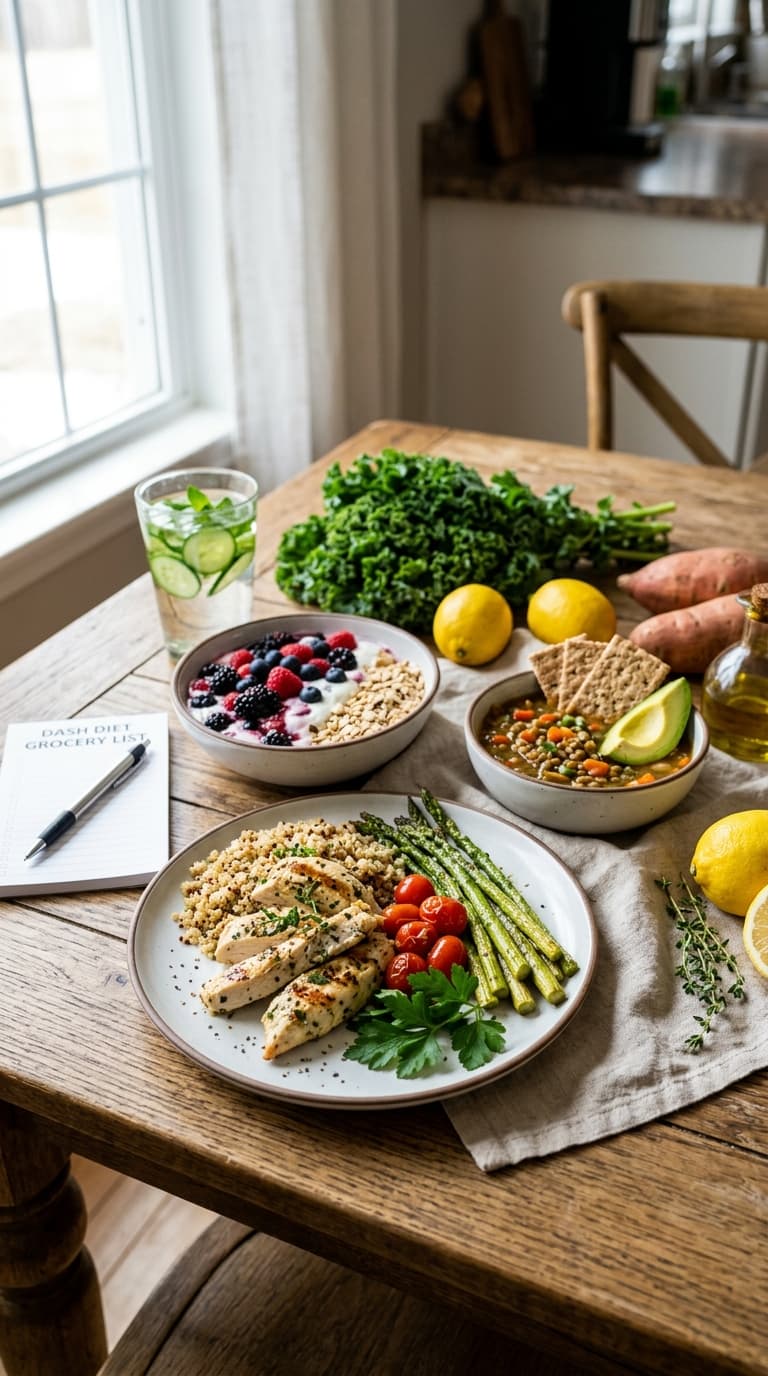
So you’ve heard about the DASH diet and you’re thinking, “okay, but what do I actually eat?” Same. When I first looked into it, I found a lot of vague advice and zero practical help. That’s exactly why I put this together — a real, usable 14-day meal plan with a grocery list you can actually take to the store.
DASH stands for Dietary Approaches to Stop Hypertension, and yes, it was originally designed to lower blood pressure. But here’s the thing — it also happens to be one of the most balanced, sustainable ways to eat for overall health. No extreme restriction, no cutting out entire food groups. Just whole foods, smart portions, and a lot of flavor. Let’s get into it.
What Is the DASH Diet, Really?
Before we map out two weeks of meals, let’s get clear on what DASH actually asks of you. It’s not a trendy fad. It’s been ranked as one of the best overall diets for years by nutrition experts, and honestly, it deserves the hype.
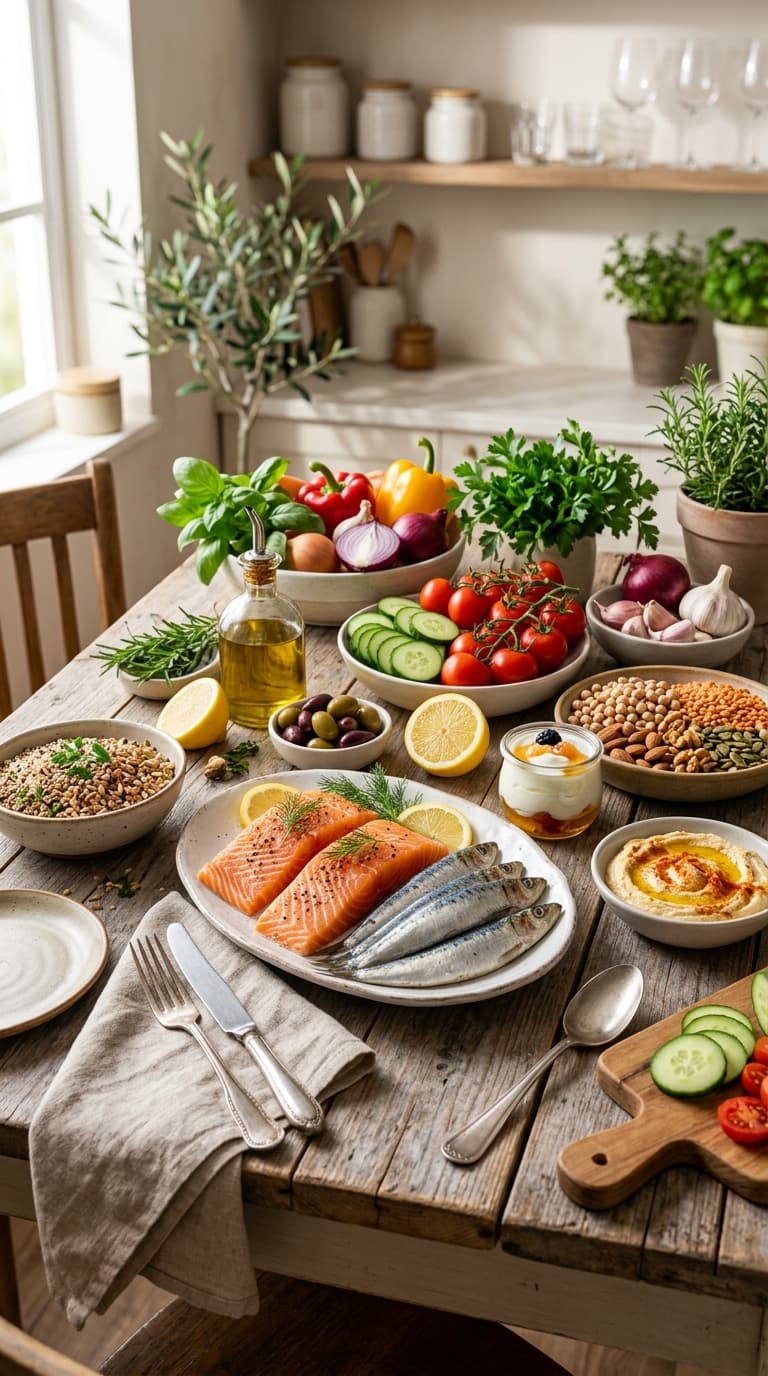
The core idea is simple: eat more fruits, vegetables, whole grains, lean proteins, and low-fat dairy while cutting back on sodium, added sugars, saturated fats, and processed foods. The sodium target is typically 2,300mg per day (with an optional lower goal of 1,500mg for some people).
Here’s what the DASH diet generally emphasizes per day:
- Grains: 6–8 servings (focus on whole grains)
- Vegetables: 4–5 servings
- Fruits: 4–5 servings
- Low-fat dairy: 2–3 servings
- Lean meats/poultry/fish: 6 or fewer oz
- Nuts, seeds, legumes: 4–5 servings per week
- Fats and oils: 2–3 servings
- Sweets: 5 or fewer per week
Simple enough, right? Now let’s make it delicious.
Why a 14-Day Plan Works Better Than a 7-Day One
Here’s a hot take: 7-day plans set you up to repeat the same meals on loop forever. And then you quit. A 14-day plan gives you enough variety to actually enjoy the process while still keeping the prep manageable.
Two weeks also gives your body enough time to start responding — lower bloat, more stable energy, and sometimes a noticeable shift in blood pressure readings. FYI, this isn’t a medical treatment plan, so please check in with your doctor if you’re managing a health condition.
The goal here is to build a rhythm — not perfection. Miss a meal? Swap something out. That’s totally fine.
Week 1 Meal Plan
Days 1–3
Day 1
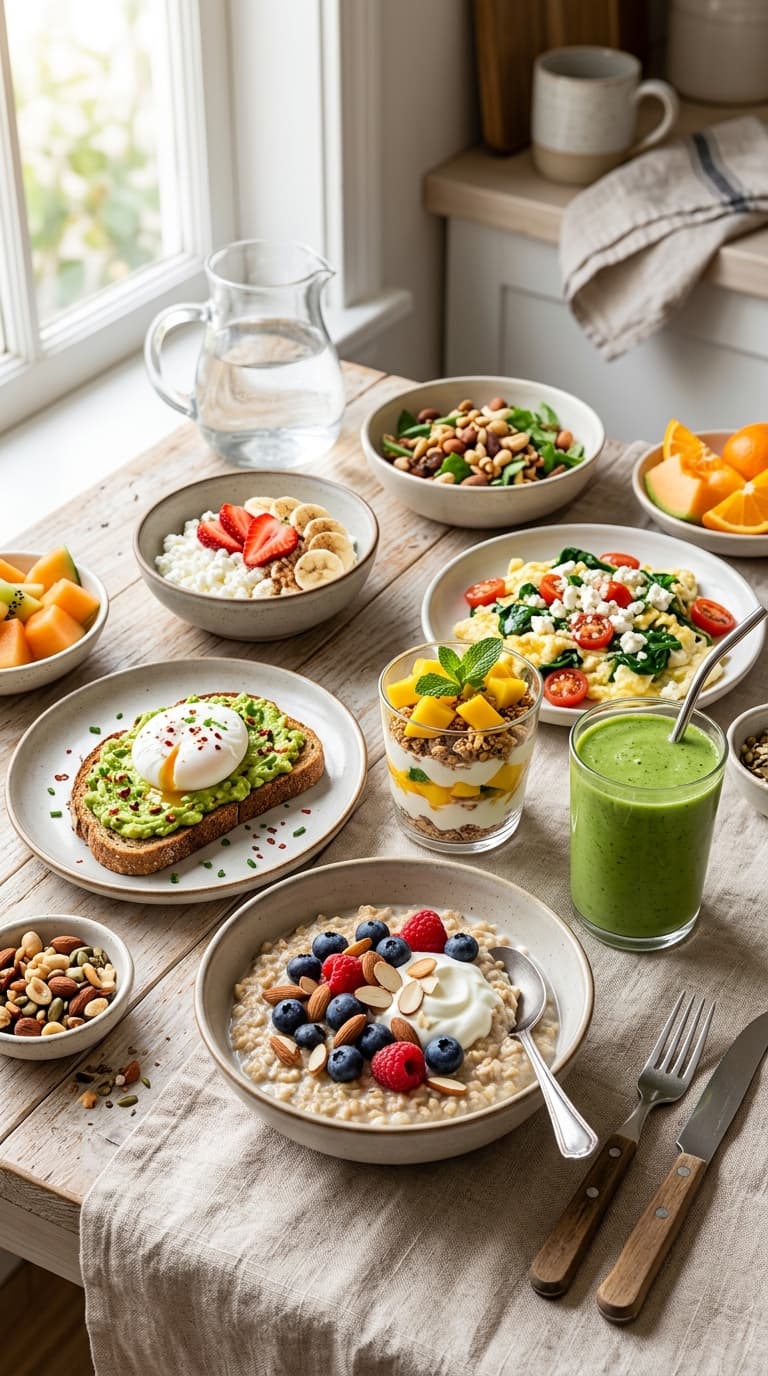
- Breakfast: Oatmeal with sliced banana and a drizzle of honey
- Lunch: Grilled chicken wrap with romaine, tomatoes, and hummus in a whole wheat tortilla
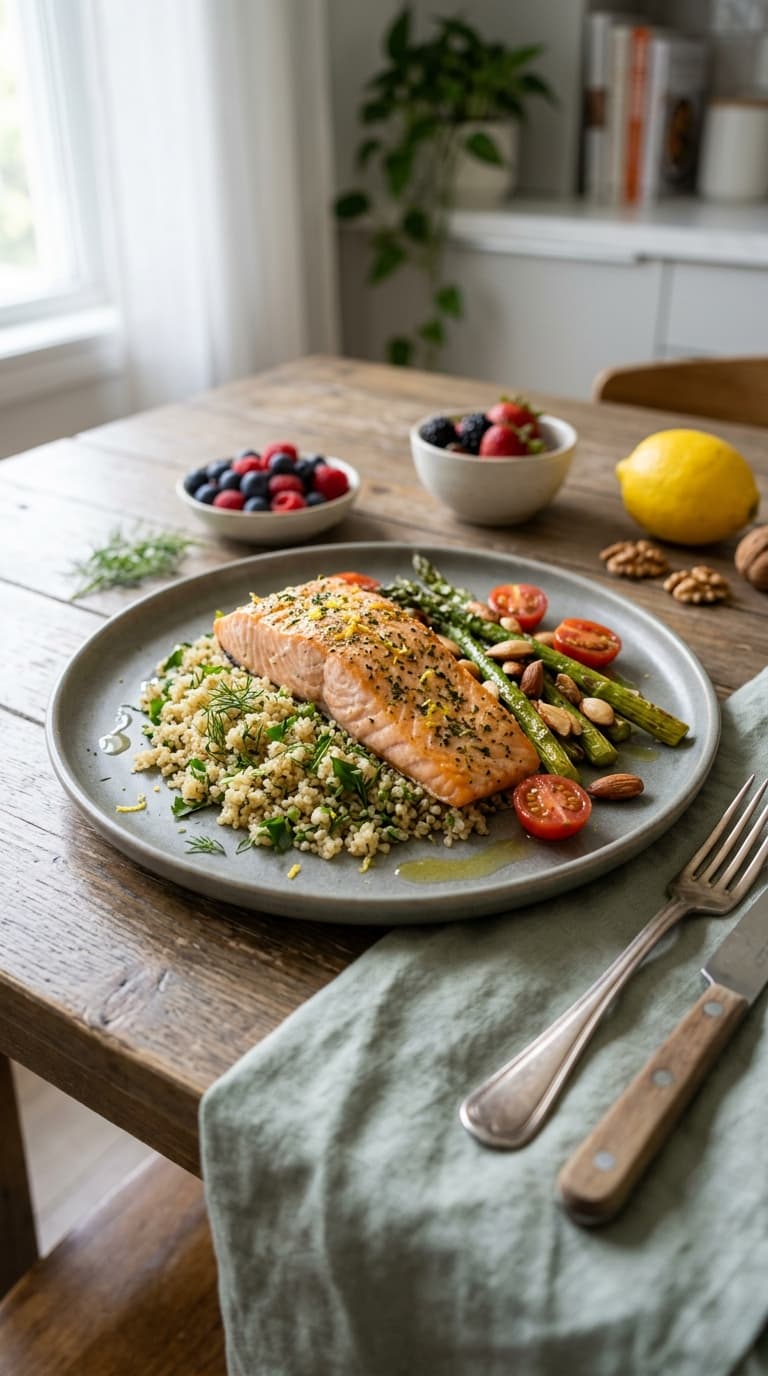
- Dinner: Baked salmon with roasted broccoli and brown rice
- Snack: A small handful of unsalted almonds
Day 2
- Breakfast: Greek yogurt (low-fat) with fresh blueberries and a sprinkle of flaxseeds
- Lunch: Lentil soup with a side of whole grain bread
- Dinner: Stir-fried tofu with bell peppers, snap peas, and quinoa
- Snack: Sliced apple with natural peanut butter
Day 3
- Breakfast: Whole grain toast with avocado and a poached egg
- Lunch: Mixed greens salad with chickpeas, cucumber, red onion, olive oil, and lemon
- Dinner: Turkey and vegetable stew with a side of farro
- Snack: Carrot sticks with low-fat cottage cheese
Days 4–7
Day 4
- Breakfast: Smoothie with spinach, frozen mango, banana, low-fat milk, and chia seeds
- Lunch: Whole wheat pasta salad with cherry tomatoes, olives, and tuna
- Dinner: Baked chicken breast with sweet potato and steamed green beans
- Snack: A pear and a small handful of walnuts
Day 5
- Breakfast: Overnight oats with raspberries, almond butter, and a pinch of cinnamon
- Lunch: Black bean and corn burrito bowl with brown rice, salsa, and Greek yogurt (instead of sour cream)
- Dinner: Shrimp stir-fry with garlic, zucchini, and whole wheat noodles
- Snack: Celery with hummus
Day 6
- Breakfast: Scrambled eggs with sautéed spinach and whole grain toast
- Lunch: Leftover shrimp stir-fry (meal prep wins :))
- Dinner: Grilled salmon with roasted asparagus and wild rice
- Snack: Low-fat string cheese and a small orange
Day 7
- Breakfast: Banana oat pancakes (just oats, banana, and egg — blended and pan-cooked)
- Lunch: Turkey and avocado sandwich on whole grain bread with a side salad
- Dinner: Slow cooker chicken and white bean soup
- Snack: Mixed berries and a few pumpkin seeds
Week 2 Meal Plan
Days 8–10
Day 8
- Breakfast: Whole grain cereal with low-fat milk and sliced strawberries
- Lunch: Grilled veggie and hummus wrap in a whole wheat tortilla
- Dinner: Baked cod with a tomato-herb topping, quinoa, and roasted Brussels sprouts
- Snack: Unsalted cashews and a plum
Day 9
- Breakfast: Greek yogurt parfait with granola (low-sugar), kiwi, and honey
- Lunch: White bean and kale soup (you can batch-cook this and it tastes even better the next day)
- Dinner: Ground turkey taco bowl with romaine, black beans, salsa, and lime
- Snack: Sliced cucumber with low-fat cream cheese
Day 10
- Breakfast: Chia seed pudding made with almond milk, topped with mango and coconut flakes
- Lunch: Leftover taco bowl — no shame, it’s just efficient
- Dinner: Herb-crusted chicken thighs with roasted carrots and whole grain couscous
- Snack: A handful of grapes and a few walnuts
Days 11–14
Day 11
- Breakfast: Whole grain toast with smashed avocado, cherry tomatoes, and everything bagel seasoning (low-sodium version)
- Lunch: Tuna and white bean salad over arugula with olive oil and lemon
- Dinner: Veggie-packed stir-fry with edamame, brown rice, and ginger-garlic sauce (low sodium soy sauce)
- Snack: Apple slices and almond butter
Day 12
- Breakfast: Spinach and mushroom egg muffins (bake a batch Sunday, eat all week — this is where meal prep bowls under 30 minutes energy really pays off)
- Lunch: Whole wheat pita with roasted red pepper hummus, grilled zucchini, and feta
- Dinner: Baked tilapia with mango salsa, brown rice, and sautéed kale
- Snack: Low-fat yogurt with a sprinkle of chia seeds
Day 13
- Breakfast: Oatmeal with diced peach, pecans, and a splash of almond milk
- Lunch: Chicken and vegetable soup (homemade, low-sodium broth)
- Dinner: Lemon garlic shrimp with whole wheat linguine and roasted cherry tomatoes
- Snack: A small banana and a string cheese
Day 14
- Breakfast: Smoothie bowl with frozen acai, banana, almond milk, topped with granola and fresh berries
- Lunch: Mediterranean-style grain bowl with farro, roasted veggies, olives, and lemon tahini dressing
- Dinner: Herb roasted chicken with sweet potato mash and steamed broccoli
- Snack: Mixed nuts and an orange
Meal Prep Tips to Actually Survive These 14 Days
IMO, the people who struggle most with any eating plan aren’t failing because of willpower — they’re failing because they didn’t prep. And prepping doesn’t have to be a Sunday ordeal.
Here’s what I recommend:
- Batch cook grains on Sunday — make a big pot of brown rice, quinoa, or farro. It stores well for 4–5 days.
- Roast a sheet pan of veggies — whatever you have. Roasted veggies go with everything.
- Hard-boil a batch of eggs — great for quick snacks or add-ins.
- Pre-portion your snacks — it takes 10 minutes and saves you from grabbing the wrong thing when you’re hungry.
If you want more inspo for prepping your meals efficiently, these beginner-friendly meal prep bowl ideas are a great place to start — especially if you’re new to structuring your week around food.
The DASH Diet Grocery List (Weeks 1 & 2 Combined)
Here’s your master grocery list. I’d suggest checking what you already have at home before you go — you’ll probably already own more than you think.
Produce
- Bananas (6–8)
- Apples (4–6)
- Oranges (4)
- Pears (2–3)
- Grapes (1 bunch)
- Blueberries, raspberries, strawberries (fresh or frozen — frozen is totally fine)
- Mango (fresh or frozen)
- Peach (2–3)
- Kiwi (3)
- Spinach (large bag)
- Kale (1 bunch)
- Romaine lettuce (2 heads)
- Arugula (small bag)
- Mixed greens (1 bag)
- Broccoli (2 heads)
- Brussels sprouts (1 lb)
- Asparagus (1 bunch)
- Zucchini (3)
- Bell peppers (4–5, mixed colors)
- Snap peas (1 bag)
- Cherry tomatoes (2 pints)
- Cucumber (2)
- Carrots (1 bag)
- Celery (1 bunch)
- Mushrooms (1 carton)
- Sweet potatoes (4)
- Avocados (4–5)
- Red onion (2)
- Garlic (1 head)
- Lemon (4–5)
- Lime (2)
Proteins
- Chicken breast (2 lbs)
- Chicken thighs (1 lb)
- Ground turkey (1 lb)
- Salmon fillets (4)
- Cod fillets (2)
- Tilapia fillets (2)
- Shrimp (1 lb, raw and peeled)
- Canned tuna in water (4 cans)
- Eggs (1.5 dozen)
- Tofu, extra firm (1 block)
- Edamame, shelled (1 bag, frozen)
- Lentils (1 bag, dry)
- Black beans (2 cans)
- White beans (2 cans)
- Chickpeas (2 cans)
Grains
- Rolled oats (large container)
- Whole grain bread (1 loaf)
- Whole wheat tortillas (1 pack)
- Whole wheat pasta (2 boxes)
- Whole wheat noodles (1 pack)
- Whole wheat linguine (1 pack)
- Whole grain pita bread (1 pack)
- Brown rice (1 bag)
- Quinoa (1 bag)
- Farro (1 bag)
- Wild rice (1 bag)
- Whole grain cereal (1 box)
- Whole grain couscous (1 box)
Dairy & Alternatives
- Low-fat Greek yogurt (large container + individual cups)
- Low-fat milk (1 carton)
- Almond milk, unsweetened (1 carton)
- Low-fat cottage cheese (1 container)
- Low-fat cream cheese (small tub)
- Low-fat string cheese (1 pack)
- Feta cheese (small block or crumbled)
Pantry Staples
- Olive oil
- Natural peanut butter
- Almond butter
- Chia seeds
- Flaxseeds
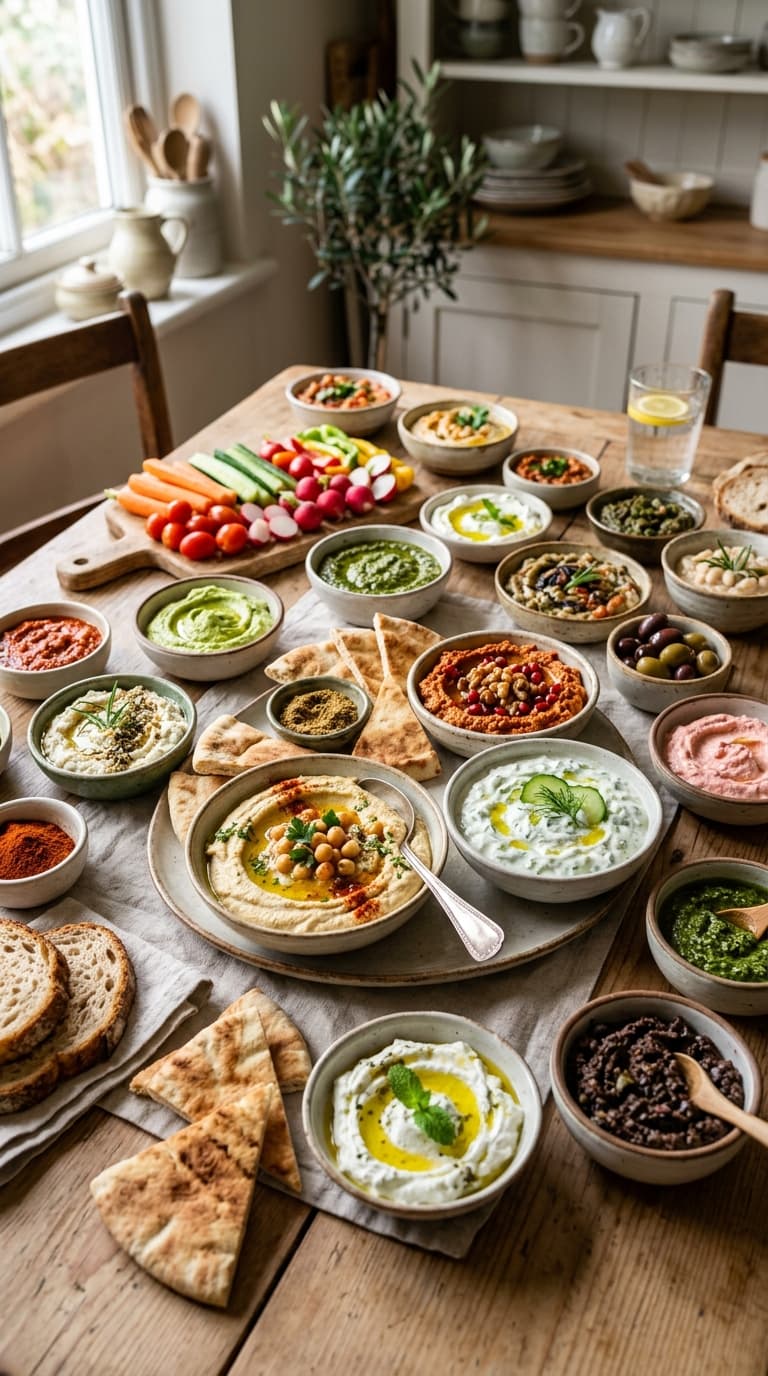
- Hummus (store-bought or DIY)
- Low-sodium soy sauce
- Low-sodium chicken broth
- Tahini
- Salsa (low-sodium)
- Honey
- Cinnamon
- Everything bagel seasoning (low-sodium)
- Dried herbs: oregano, thyme, rosemary, cumin
- Canned diced tomatoes (2 cans)
Nuts & Seeds
- Unsalted almonds
- Walnuts
- Unsalted cashews
- Pecans
- Pumpkin seeds
- Low-sugar granola
Sodium Tips That Actually Make a Difference
Sodium is the big one on the DASH diet, and honestly, it sneaks in everywhere. Here’s where to watch out:
- Canned goods — always choose no-salt-added or rinse your beans before using
- Store-bought sauces — most pasta sauces, soy sauce, and salad dressings are sodium bombs
- Bread and deli meats — surprising but true; they often have more sodium than you’d expect
- Restaurant food — even “healthy” options can wreck your daily sodium budget in one sitting
Small swaps make a real impact. Use herbs, citrus, and spices to add flavor instead of salt. Smoked paprika, fresh lemon juice, garlic, and fresh herbs can completely transform a bland dish — no shaker required.
How the DASH Diet Compares to Other Approaches
You might be wondering how DASH stacks up against other popular plans. Here’s an honest take:
DASH vs. Mediterranean Diet: These two are actually very similar. The Mediterranean diet leans a little more into healthy fats and fish, while DASH is more structured around sodium and blood pressure. If you love Mediterranean meal prep, you’ll feel right at home with DASH — the crossover is huge.
DASH vs. Keto: Pretty different philosophies. Keto eliminates most carbs; DASH embraces whole grains and fruit. If you’re looking for long-term sustainability without restriction, DASH wins for most people.
DASH vs. Calorie Counting: DASH doesn’t require you to obsessively count calories, which is a relief. That said, if weight loss is also a goal, pairing DASH principles with calorie-deficit-friendly meal prep makes a lot of sense.
Snacks That Fit Perfectly Into the DASH Diet
Snacking gets a bad rap, but on DASH, the right snacks are part of the plan. The key is choosing snacks with potassium, magnesium, fiber, and low sodium — all nutrients that directly support blood pressure management.
Great DASH-approved snacks:
- Banana with almond butter
- Low-fat yogurt with berries
- Unsalted nuts and seeds
- Baby carrots and hummus
- Apple with peanut butter
- Hard-boiled eggs
- Whole grain crackers with avocado
- Celery sticks with cottage cheese
If you’re trying to stay full between meals without reaching for processed stuff, these snacks do the job. And if you want to batch prep your snacks for the week — which honestly saves so much mental energy — check out these high-protein meal prep ideas for stacking your snacks with real nutritional value.
Staying Consistent: The Real Talk
Here’s the part nobody likes to say out loud — following any eating plan for 14 days requires actual effort. It’s not magic. It won’t be perfect every day. And that’s completely fine.
What makes DASH more sustainable than most is that it doesn’t ban anything outright. It just shifts your proportions. More vegetables, more whole grains, more lean protein. Less salt, less sugar, fewer processed foods. Anyone can work with that framework without feeling deprived.
If you hit day 5 and you really want pizza :/ — make a DASH-friendly version with a whole wheat crust, low-sodium tomato sauce, and loads of veggie toppings. Done. You’re still in the game.
And if you’re the type who likes to rotate meals across the month to stay sane, these meal prep bowls you can rotate all month are worth bookmarking right now.
Final Thoughts
Fourteen days might sound like a commitment, but it really flies by when your meals are planned and your fridge is stocked. The DASH diet isn’t a punishment — it’s a practical framework built around real food that genuinely supports your health.
Start with Week 1. Get comfortable. Let Week 2 feel like you’re already in your groove. By the time you hit day 14, you’ll have built a set of habits and recipes that you can actually keep going — no white-knuckling required.
Take the grocery list, do a quick fridge audit, and make it yours. That’s really all there is to it. Your heart (literally) will thank you.