7 Days Mediterranean Diet For Gut Health: What To Eat & Avoid
7 Days Mediterranean Diet For Gut Health: What To Eat & Avoid
Your gut has been sending you signals for years. Bloating after meals, low energy, mood swings that seem to come out of nowhere — sound familiar? The Mediterranean diet might just be the reset your digestive system has been quietly begging for.
I stumbled onto this eating style a couple of years ago when my stomach was basically staging a full-blown protest after every meal. No dramatic diagnosis, just general misery. A friend suggested the Mediterranean approach, and honestly? Best accidental health decision I ever made.
So let’s break down exactly what a 7-day Mediterranean diet for gut health looks like — what to pile on your plate, what to ditch, and why your microbiome will thank you.
Why the Mediterranean Diet Is a Gut Health Game-Changer
Before we get into the day-by-day breakdown, let’s talk about why this diet works so well for your gut specifically.
The Mediterranean diet is loaded with fiber, fermented foods, healthy fats, and polyphenols — basically everything your gut bacteria love to feast on. It’s not a restrictive “only eat sad salads” situation. It’s colorful, satisfying, and genuinely delicious.
Your gut microbiome thrives on variety. The more diverse your plant intake, the more diverse your microbial community — and a diverse gut is a healthy gut. Studies consistently link the Mediterranean pattern to reduced gut inflammation, better digestion, and even improved mental clarity (hello, gut-brain axis).
The Core Principles: What Makes This Diet “Mediterranean”
Think of the Mediterranean diet less as a rulebook and more as a food philosophy. Here’s what it centers on:
- Vegetables and legumes — the foundation of every meal
- Whole grains over refined carbs
- Healthy fats like olive oil, nuts, and avocado
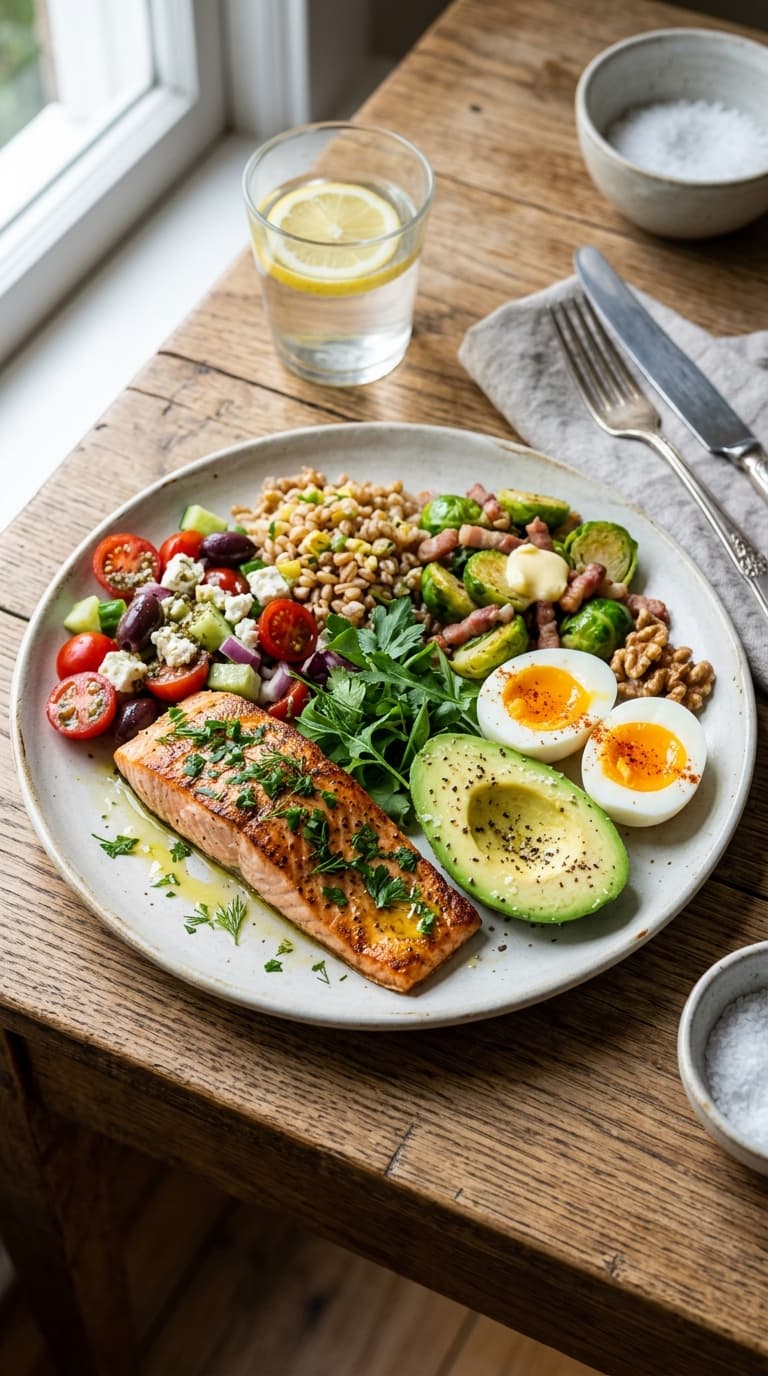
- Lean proteins — fish, especially fatty fish like salmon and sardines, plus eggs and poultry
- Fermented foods like yogurt, kefir, and olives
- Fresh herbs and spices instead of heavy sauces
- Minimal red meat and processed food
FYI, the “Mediterranean” part isn’t just geographic flavor — it reflects how people in places like Greece, Italy, and Southern France have eaten for generations, and their gut health markers tend to be enviable.
Foods That Support Gut Health on This Diet
Fermented Foods (Your Gut’s Best Friend)
Fermented foods are non-negotiable if gut health is your goal. They deliver live probiotics directly to your digestive tract.
- Greek yogurt (full-fat, plain)
- Kefir
- Olives (naturally fermented, not the vinegar-brined kind)
- Aged cheeses in small amounts
Even a small daily serving of Greek yogurt can meaningfully shift your gut microbiome composition over a week. That’s not nothing.
High-Fiber Plant Foods
Fiber is the prebiotic fuel that feeds your good gut bacteria. Without it, those probiotics have nothing to eat — which is, IMO, the biggest mistake people make when they try to “fix” their gut with supplements alone.
- Legumes: lentils, chickpeas, black beans
- Vegetables: artichokes, broccoli, leeks, garlic, onions
- Fruits: berries, figs, pears
- Whole grains: oats, farro, barley, quinoa
Healthy Fats
Extra virgin olive oil is the cornerstone fat here, and it earns that status. It contains oleocanthal, a compound with anti-inflammatory properties that directly benefits gut lining health. Drizzle it generously — no need to be shy.
Fatty fish like salmon, mackerel, and sardines bring omega-3s that reduce gut inflammation and support a healthy intestinal barrier.
Foods to Avoid for Gut Health
Here’s the part where we have a little tough love conversation :/ Some foods actively work against your gut microbiome, and they’re worth minimizing seriously — not just “cutting back a little.”
Processed and Ultra-Processed Foods
Anything with a long list of additives, artificial emulsifiers, or preservatives disrupts your gut lining and feeds the wrong bacteria. This includes:
- Packaged snacks and crackers
- Fast food
- Deli meats with preservatives
- Sugary cereals
Refined Sugars and Refined Carbs
Sugar feeds pathogenic gut bacteria and yeast, tipping your microbiome out of balance fast. White bread, pastries, and sugary drinks have essentially no fiber to offset the damage.
Alcohol (In Excess)
The Mediterranean diet does include a glass of red wine occasionally — the polyphenols in red wine actually have modest prebiotic benefits. But heavy alcohol consumption inflames the gut lining and wrecks your microbiome diversity. One glass occasionally? Fine. A bottle because it’s Friday? Your gut knows. 🙂
Seed Oils and Processed Fats
Vegetable oils high in omega-6 fatty acids (like soybean, canola, and corn oil) promote gut inflammation when consumed in large amounts. Stick to extra virgin olive oil as your primary cooking fat.
7-Day Mediterranean Diet Meal Plan for Gut Health
Ready to see what a full week actually looks like? This plan emphasizes gut-supporting foods at every meal. You can absolutely prep a lot of these in advance — if you want a head start, these quick Mediterranean meal prep ideas for busy weeks are a great companion resource.
Day 1 — Reset and Rebuild
- Breakfast: Greek yogurt with mixed berries, ground flaxseed, and a drizzle of honey
- Lunch: Lentil soup with crusty whole-grain bread and a side of olives
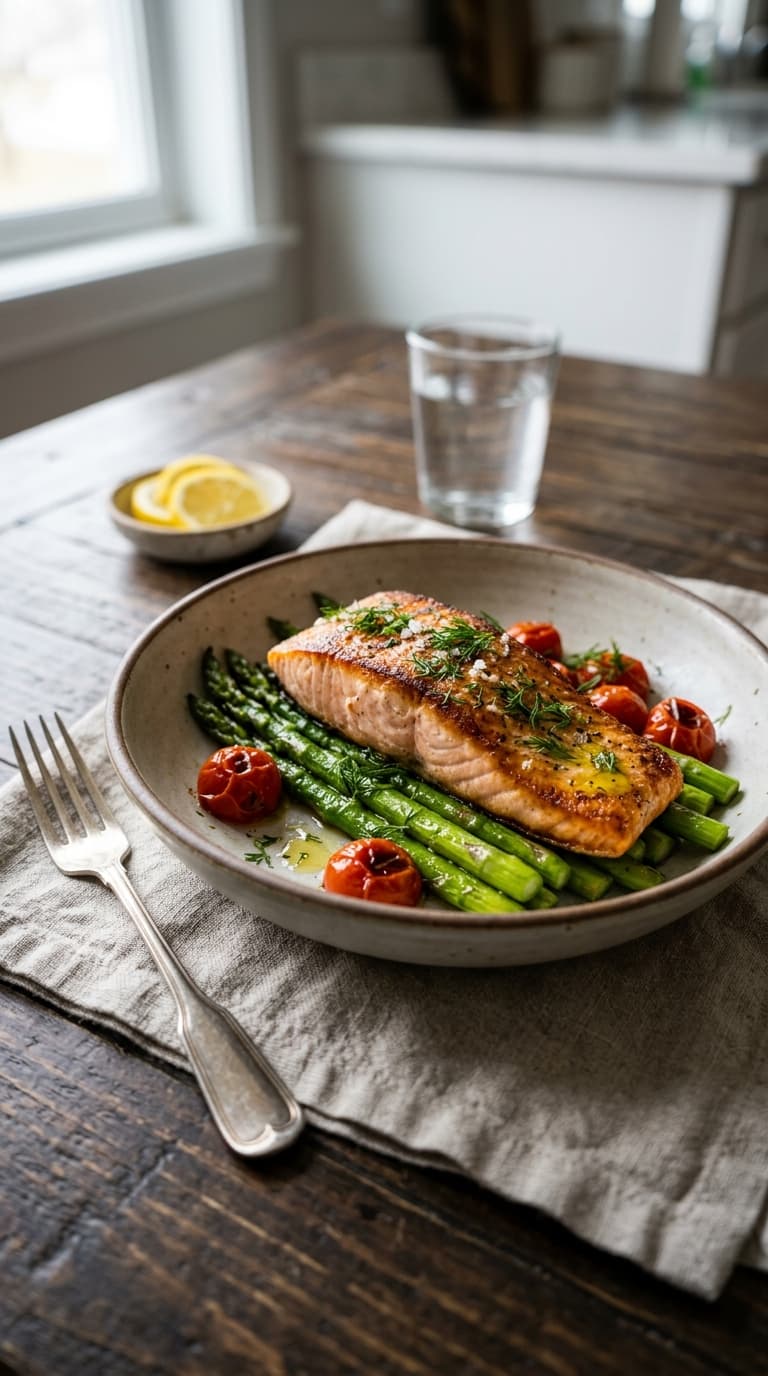
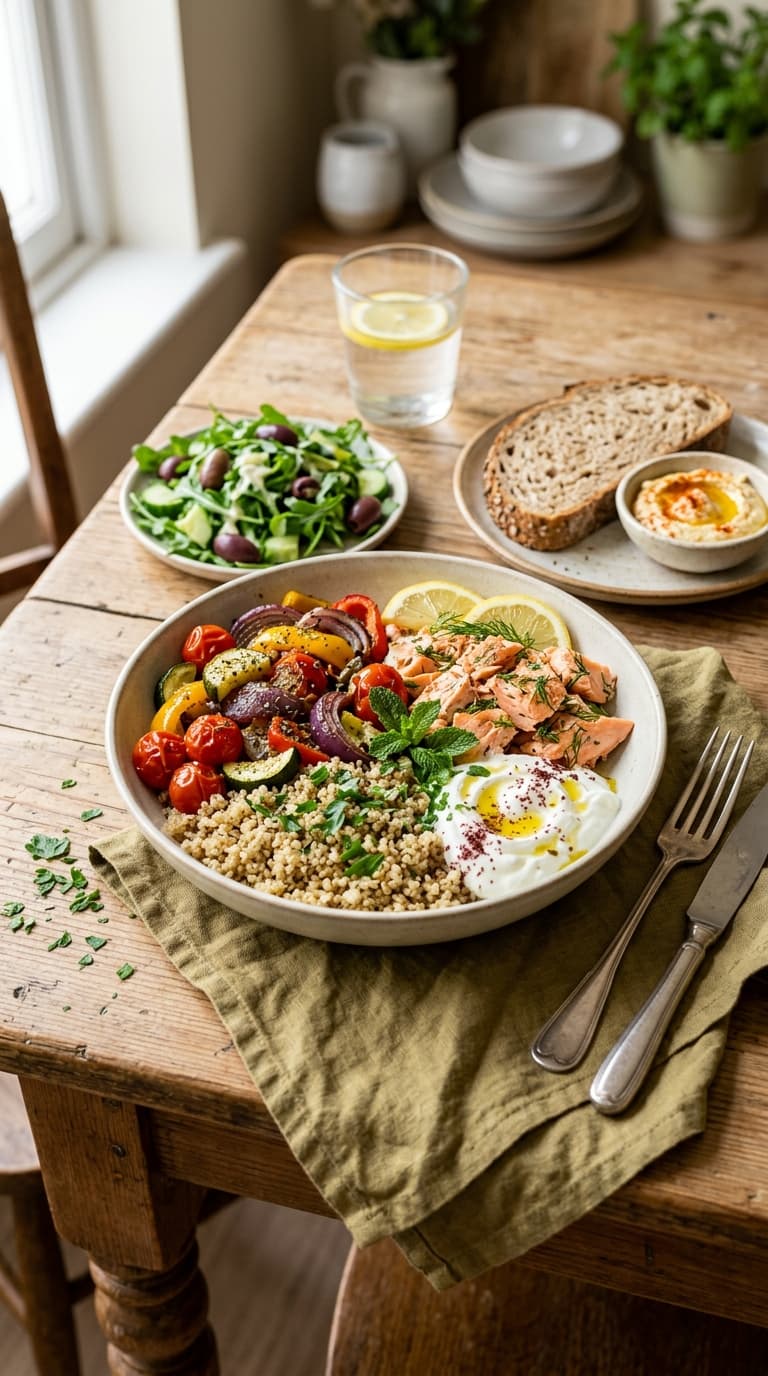
- Dinner: Baked salmon with roasted artichokes and a simple olive oil and lemon dressing
- Snack: Handful of walnuts and a pear
Day 2 — Load Up on Legumes
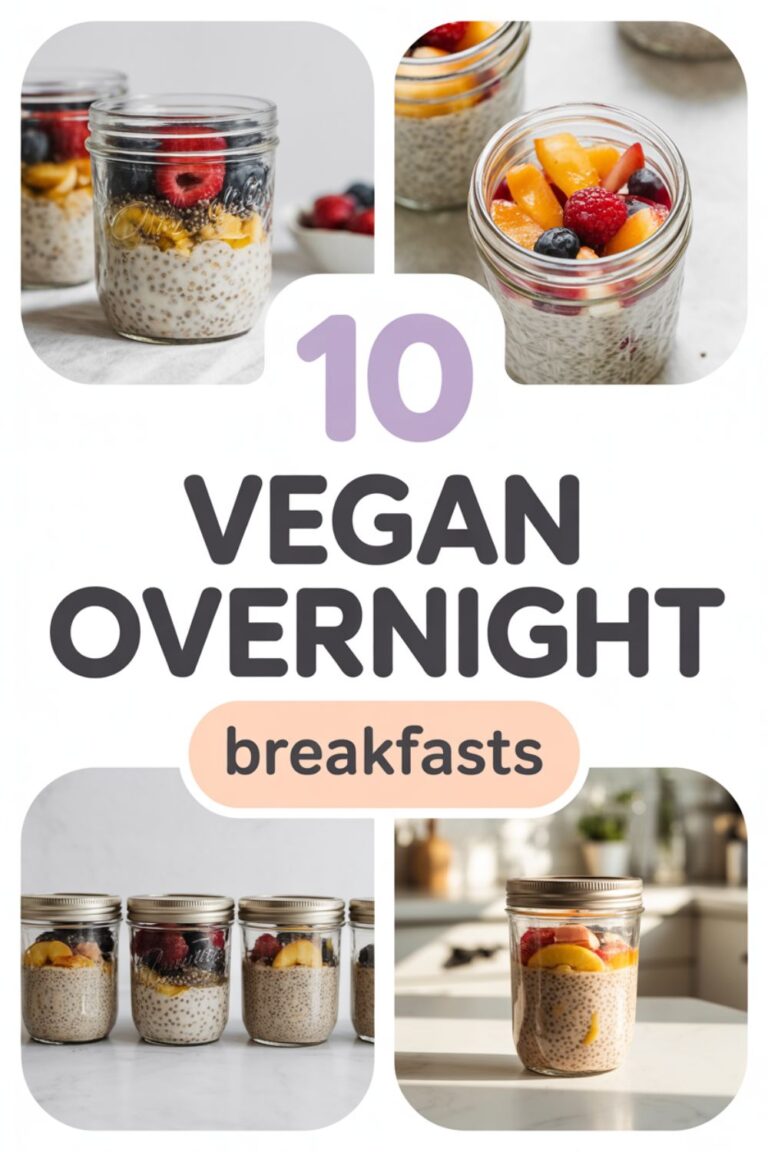
- Breakfast: Overnight oats with chia seeds, kefir, and sliced banana
- Lunch: Chickpea salad with cucumber, tomato, red onion, and feta
- Dinner: Grilled sardines with farro and sautéed garlic spinach
- Snack: Hummus with sliced veggies
Day 3 — Ferment Everything
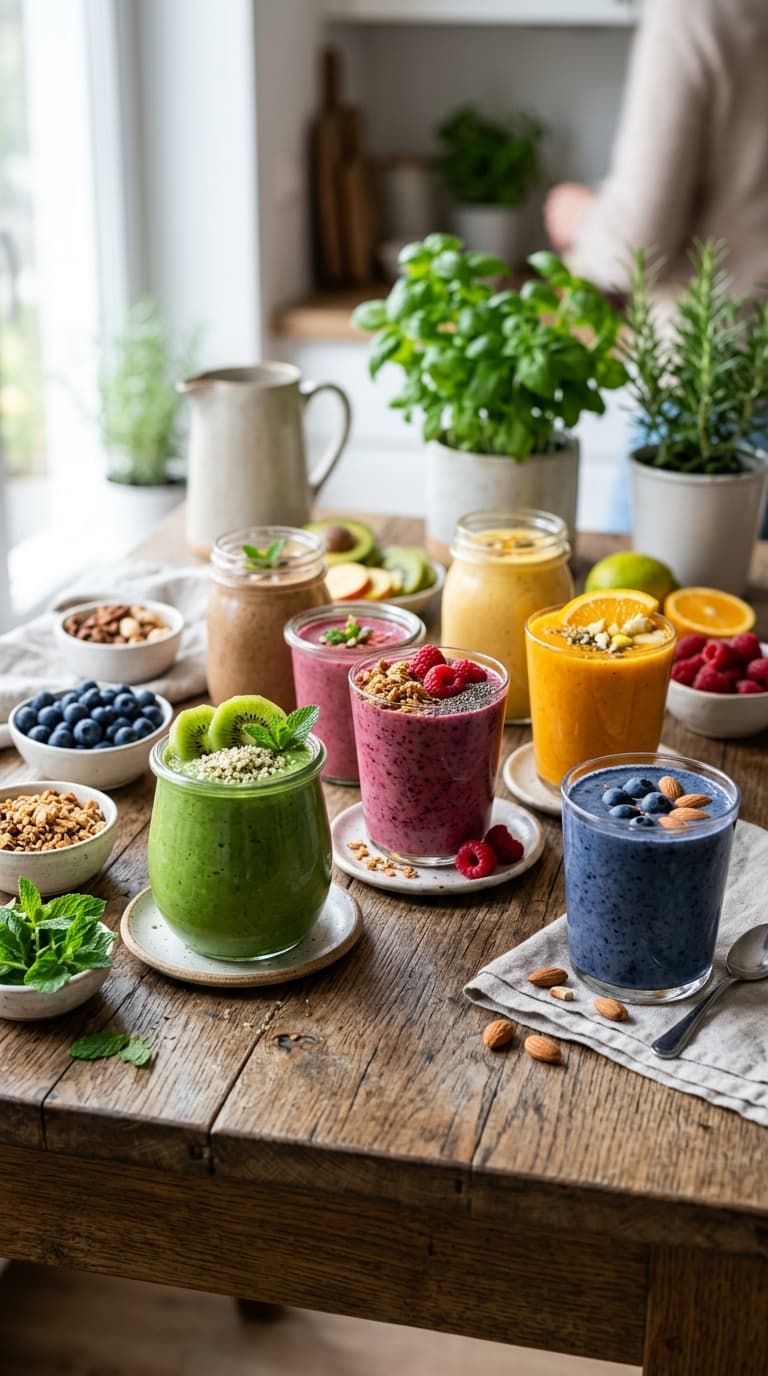
- Breakfast: Kefir smoothie with frozen berries and a handful of oats
- Lunch: Greek salad with whole-grain pita and a generous pour of olive oil
- Dinner: Baked chicken thighs with roasted leeks, zucchini, and herbed quinoa
- Snack: Small bowl of plain Greek yogurt with a few crushed walnuts
Day 4 — Midweek Fiber Boost
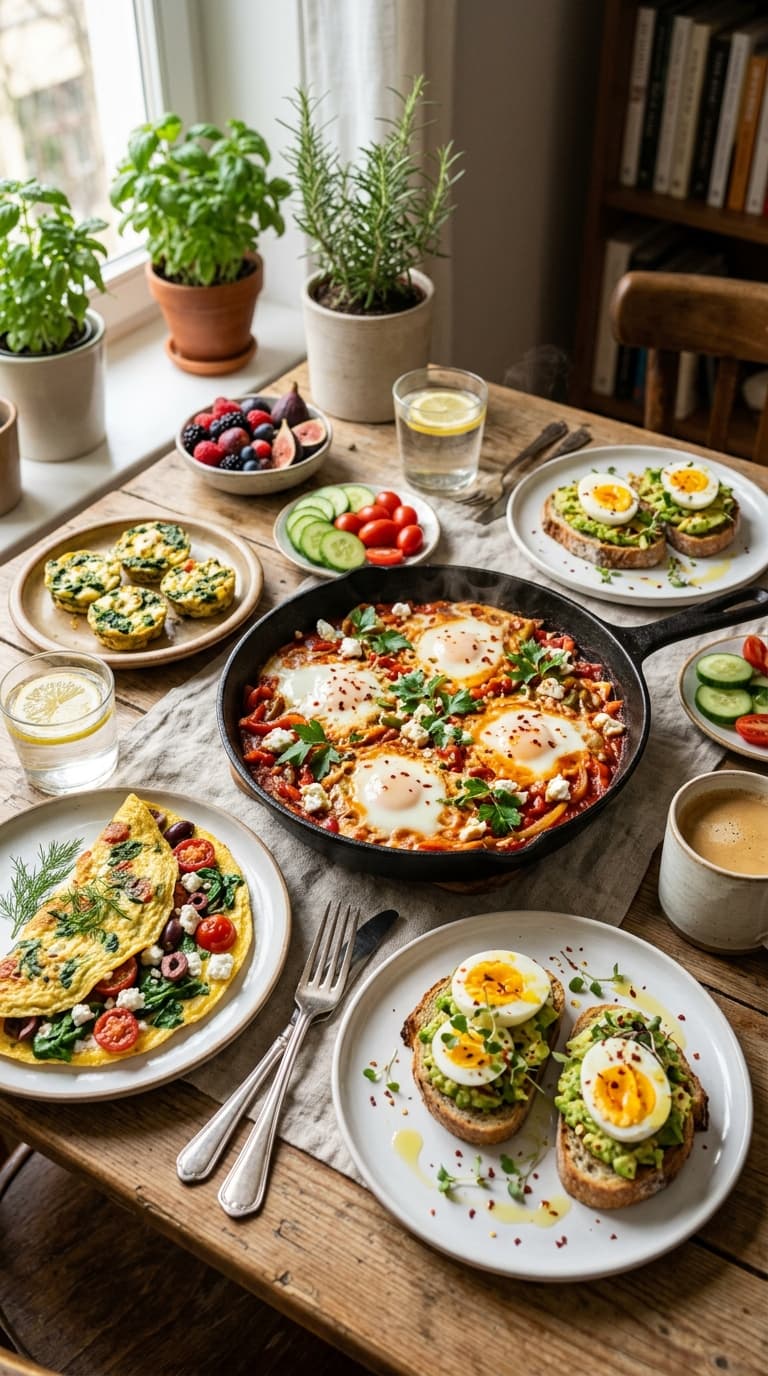
- Breakfast: Scrambled eggs with sautéed onions, spinach, and whole-grain toast
- Lunch: White bean and vegetable stew with crusty bread
- Dinner: Tuna steak with roasted beets, arugula, and a tahini drizzle
- Snack: Apple slices with almond butter
Day 5 — Anti-Inflammatory Focus
- Breakfast: Chia seed pudding made with kefir, topped with mango and hemp seeds
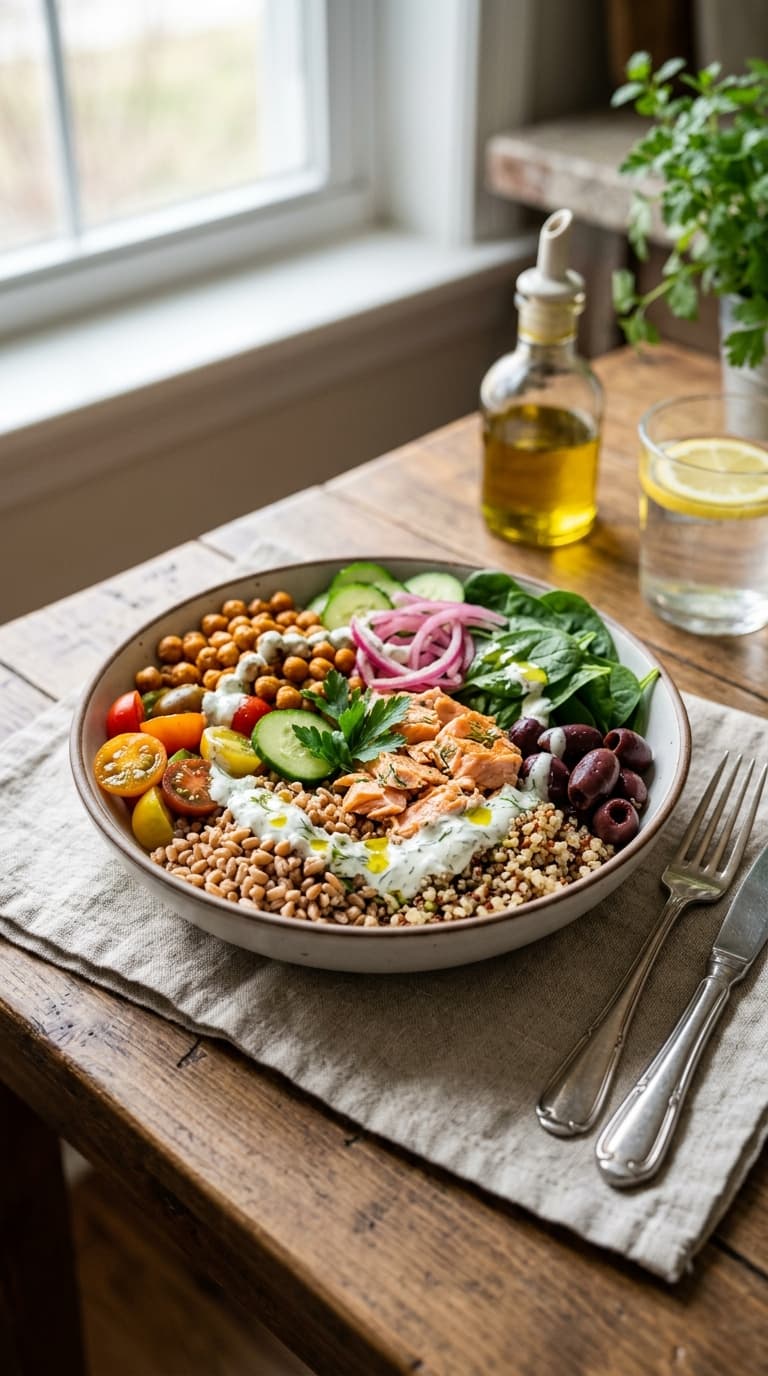
- Lunch: Mediterranean-style bowls with roasted vegetables, falafel, tzatziki, and brown rice
- Dinner: Baked mackerel with roasted garlic cauliflower and herbed lentils
- Snack: Handful of mixed olives and a small piece of aged cheese
Day 6 — Polyphenol Power
- Breakfast: Overnight oats with walnuts, dark cherries, and a spoonful of tahini
- Lunch: Grilled vegetable wrap in a whole-grain tortilla with hummus and greens
- Dinner: Shrimp stir-fry with cherry tomatoes, garlic, olive oil, and whole-grain pasta
- Snack: Fresh figs with a small drizzle of honey and crushed pistachios
Day 7 — End Strong
- Breakfast: Greek yogurt parfait with granola, blueberries, and ground flaxseed
- Lunch: Big lentil and roasted vegetable salad dressed generously with olive oil and lemon
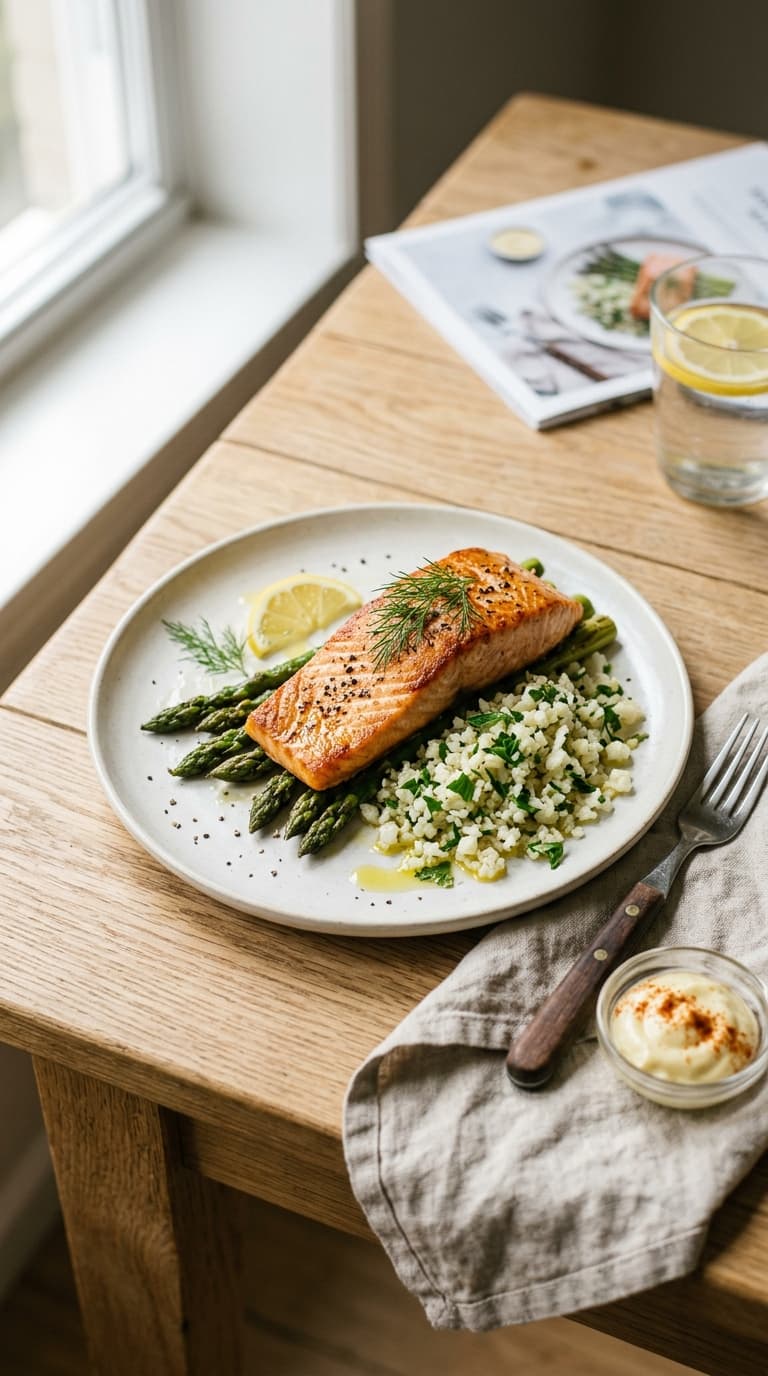
- Dinner: Herb-baked sea bass with roasted asparagus, olives, and couscous
- Snack: A handful of mixed nuts and a small glass of red wine if you fancy it
Mediterranean Meal Prep Tips for Gut Health Success
Ever tried to eat healthy on a Monday after zero Sunday prep? It goes about as well as you’d expect. Prepping ahead is what makes this lifestyle stick rather than fall apart by Wednesday.
Batch-cook your legumes at the start of the week — a big pot of lentils or chickpeas covers lunches and dinners easily. Roast a sheet pan of seasonal vegetables to mix and match across meals. Pre-portion your snacks so you’re not standing in the kitchen at 10pm rationalizing a bag of chips.
If you want structured ideas, this 7-day Mediterranean meal prep plan lays out a full week with a printable format you can actually use. And if mornings are your weak spot, these Mediterranean breakfast meal prep recipes will make waking up significantly less painful.
For stocking your kitchen, a solid Mediterranean grocery list takes the guesswork out of your weekly shop entirely.
What Happens to Your Gut During This 7-Day Plan
Here’s the honest timeline so you know what to expect:
Days 1–2: Your gut starts adjusting. If you weren’t eating much fiber before, you might feel some bloating initially. This is normal — your microbiome is shifting.
Days 3–4: The bloating typically settles. Many people notice improved digestion and more regular bathroom habits around this point.
Days 5–6: Energy tends to improve noticeably. The anti-inflammatory fats and reduced processed food load start making a real difference.
Day 7: By the end of the week, most people report feeling lighter, less inflamed, and noticeably less sluggish after meals. The gut changes happening internally are just beginning though — consistency over weeks and months is where the real magic compounds.
Mediterranean Snacks That Actually Help Your Gut
Snacking on the Mediterranean diet isn’t complicated, but choosing the right snacks makes a real difference for gut health between meals.
Top gut-friendly Mediterranean snacks:
- Hummus with raw vegetables (fiber + prebiotics)
- Plain Greek yogurt with berries (probiotics + antioxidants)
- A small handful of walnuts or almonds (healthy fats + prebiotic fiber)
- Olives (fermented, polyphenol-rich)
- Fresh fruit with nut butter
- Chia seed pudding (omega-3s + fiber)
For a full batch-prep approach to snacking, these Mediterranean snacks you can batch prep on Sunday are worth bookmarking.
A Quick Note on Hydration and Gut Health
People sleep on hydration when they talk about gut health, and it genuinely matters. Water helps move fiber through your digestive system — without adequate hydration, all that lovely fiber you’re eating can actually cause constipation instead of preventing it.
Aim for at least 6–8 glasses of water daily. Herbal teas like ginger, fennel, or peppermint also support digestion and count toward your fluid intake. The Mediterranean diet naturally includes a lot of water-rich foods like cucumbers, tomatoes, and leafy greens, which helps too.
Common Mistakes to Avoid
A few pitfalls worth watching out for so you don’t accidentally undermine your own gut health efforts:
- Not eating enough fiber variety — rotating your plant sources matters more than eating large amounts of just one or two
- Overdoing olive oil on an already heavy meal — it’s healthy, but portion awareness still applies
- Skipping fermented foods — yogurt and kefir are easy adds; don’t skip them
- Relying on supplements instead of food — probiotic pills without prebiotic food to support them have limited impact
- Eating too fast — chewing thoroughly genuinely helps digestion; your stomach will thank you
Wrapping It Up
Seven days on the Mediterranean diet won’t completely transform your gut microbiome overnight — let’s be real. But it absolutely sets the foundation in motion. You’re introducing diverse fiber, live probiotics, anti-inflammatory fats, and a stunning reduction in processed junk. That combination works.
The best part? This isn’t a diet you white-knuckle through for a week and abandon. The food is genuinely good. The meals are satisfying. And your gut? It starts responding faster than you’d expect.
Start with the 7-day plan, get your prep game sorted, and lean into the habit. If you want to keep building on this momentum with structured bowls that fit perfectly into the Mediterranean framework, these balanced bowls for easy meal planning are a great next step.
Your gut has been patient. Time to finally give it something worth celebrating.